
Reactive Dogs and Dog Parks: Can They Coexist? A Guide to Dog Park Aggression Training
Hey there, friends — it's me, Auggie, your favorite Golden Doodle blogger and self-appointed expert on all things dog park life! Let me tell you, I've seen some things at the park. Zoomies gone wrong. Sniff-greetings that turned into full-blown arguments. The occasional pup who just couldn't keep it together around other dogs. And honestly? I've had my own moments where my hackles went up and my mom Lacey had to step in. That's why I want to talk about dog park aggression training — because every dog deserves a shot at enjoying the park, even the reactive ones. Whether your furry family member lunges at other dogs, guards resources, or just gets overwhelmed by all the stimulation, there's hope. So grab a bully stick, settle in, and let me walk you through what I've learned from personal experience, my mom's research, and the experts who know their stuff.
Understanding Dog Park Aggression: Why Dogs React
Before we dive snout-first into dog park aggression training, let's talk about why some dogs lose their cool at the park. Trust me, as a dog, I can tell you it's rarely because we're "mean." Most of the time, aggression at dog parks comes from fear, frustration, or overstimulation.
According to Today's Veterinary Practice, aggression in dogs frequently stems from fear-based triggers, and treatment plans should emphasize environmental management and reward-based behavior modification rather than punishment. That makes total sense to me — when I'm scared, the last thing I need is someone yelling at me.
North Park Veterinary Hospital explains that dog park aggression often develops from pack mentality dynamics, dominance conflicts, or fear toward perceived intruders. Think about it from our perspective: you're suddenly thrown into a fenced area with a dozen strangers of different sizes, energy levels, and play styles. For some dogs, that's a party. For others, it's a nightmare.
Common triggers for dog park aggression include:
- Size differences — a tiny Chihuahua and a giant Great Dane may not see eye to eye (literally)
- Resource guarding — balls, water bowls, even their favorite human
- Overstimulation — too many dogs, too much noise, too much chaos
- Pain or medical issues — a dog who's hurting may snap unexpectedly
- Poor socialization history — dogs who missed critical socialization windows
- Leash frustration — transitioning from leash to off-leash can create pent-up energy
My mom Lacey always says, "Auggie, knowing the 'why' is half the battle." She's right. (Don't tell her I said that — she already thinks she's the pack leader.)
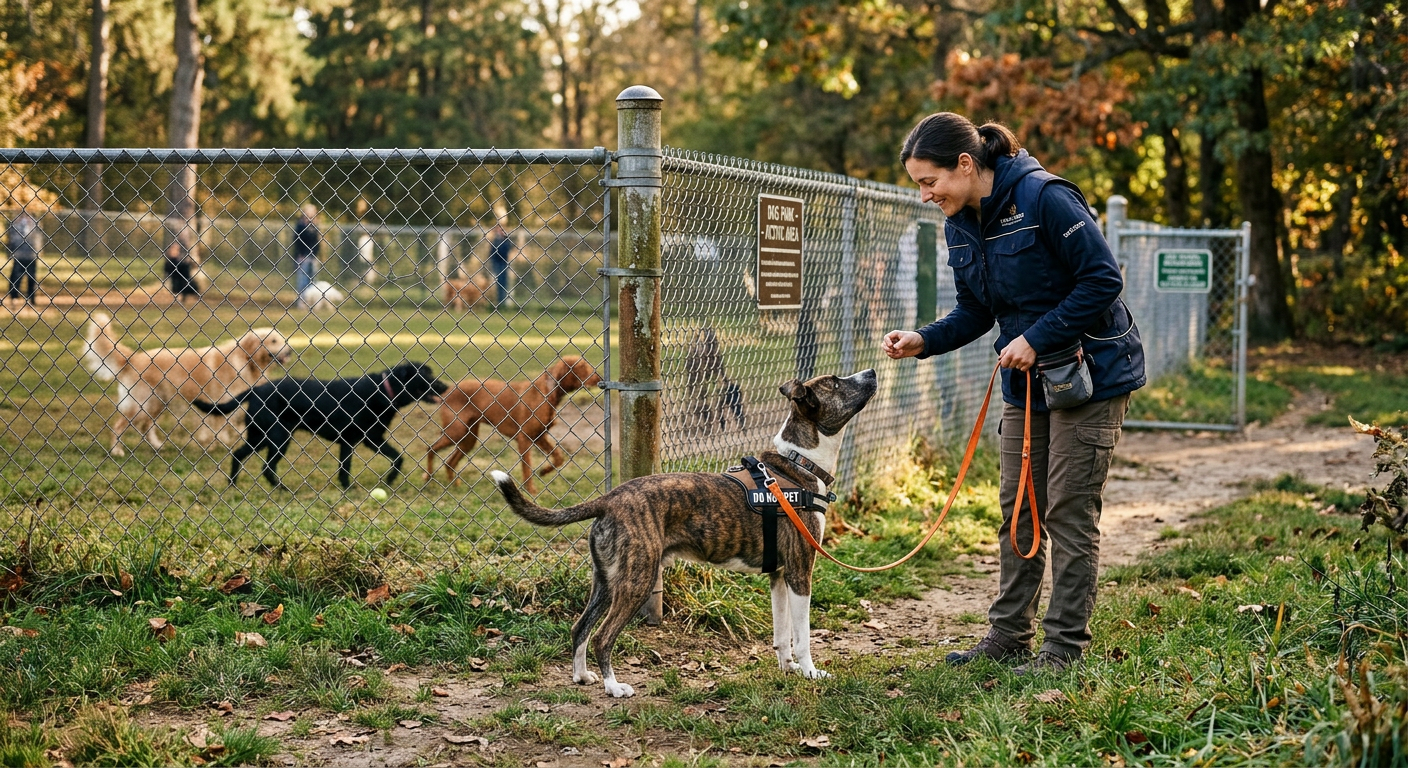
The Importance of Medical Screening Before Training
Here's something a lot of pet parents overlook: sometimes dog park aggression isn't a behavior problem at all — it's a medical one. According to Today's Veterinary Practice, medical screening is essential because pain, thyroid conditions, and other health issues can significantly lower a dog's aggression threshold.
Before you start any dog park aggression training program, have your vet do a thorough exam including bloodwork. I get my checkups regularly, and while I'm not a fan of the thermometer (you know where that goes), it's worth ruling out physical causes first.
Conditions that can contribute to reactive behavior include:
- Hypothyroidism
- Chronic pain from arthritis or injuries
- Neurological conditions
- Vision or hearing loss
- Dental pain
If your pup gets a clean bill of health, then you know you're dealing with a behavioral issue — and that's where the real training work begins.
Step-by-Step Dog Park Aggression Training Protocol
Alright, this is the good stuff. Here's a structured approach to dog park aggression training that actually works. I'm pulling from expert sources and my mom Lacey's own experience working with me through my puppy-stage reactivity.
Step 1: Take a Complete Park Break
I know, I know — this sounds like the opposite of what you want. But Wagbar's step-by-step rehabilitation guide recommends a complete park ban during early rehab — typically 6 to 12 weeks minimum. This prevents your dog from "rehearsing" aggressive behavior, and most dogs show reduced arousal in just 3 to 4 weeks with consistent desensitization.
During this break, focus on structured walks, mental enrichment, and controlled socialization. I personally love a good puzzle toy during downtime — the Outward Hound Nina Ottosson Dog Puzzle Toy is one of my favorites for keeping my brain busy when the park is off-limits.
Step 2: Identify Your Dog's Specific Triggers
Not all reactive dogs are reactive to the same things. Spend time observing (from a safe distance) what sets your dog off. Is it:
- Dogs of a certain size?
- Specific play styles (rough play, chase games)?
- Resource-related situations?
- Certain environments or noise levels?
Write it down! My mom Lacey keeps a little journal about my behavior, and honestly, it's been a game-changer. Having that data helps you create a targeted training plan rather than a one-size-fits-all approach.
Step 3: Master Basic Obedience First
The Animal Medical Center stresses that training dogs in basic obedience commands and hand signals significantly reduces aggression and biting risks at dog parks. Before you even think about reintroducing your pup to the park, they need a rock-solid foundation in:
- Recall ("Come!") — this is non-negotiable
- Leave it — for when another dog's ball looks too tempting
- Sit/Down/Stay — impulse control basics
- Watch me/Focus — redirecting attention back to you
For training sessions, high-value treats are essential. I go absolutely bonkers for the Zuke's Mini Naturals Dog Training Treats — they're small, smelly (in a good way, to us dogs), and perfect for rapid reward-based training.
Step 4: Desensitization and Counter-Conditioning
This is the heart of dog socialization training. The goal is to change your dog's emotional response to their triggers — from "DANGER! BARK! LUNGE!" to "Oh look, another dog. Anyway, where's my treat?"
Here's how it works:
- Find your dog's threshold distance — the point where they notice another dog but haven't reacted yet
- Reward calm behavior at that distance with high-value treats
- Gradually decrease the distance over days and weeks
- Never push too fast — if your dog reacts, you've gone too close
Reward-based training outperforms aversive methods every single time. Studies cited by Today's Veterinary Practice show that positive reinforcement leads to fewer behavior problems, more confident play, and significantly higher success rates compared to punishment-based approaches.
For controlled training walks during desensitization, I highly recommend the PetSafe Easy Walk Dog Harness. It gives your human better control without putting pressure on your neck — which, speaking from experience, makes a dog MORE stressed, not less.
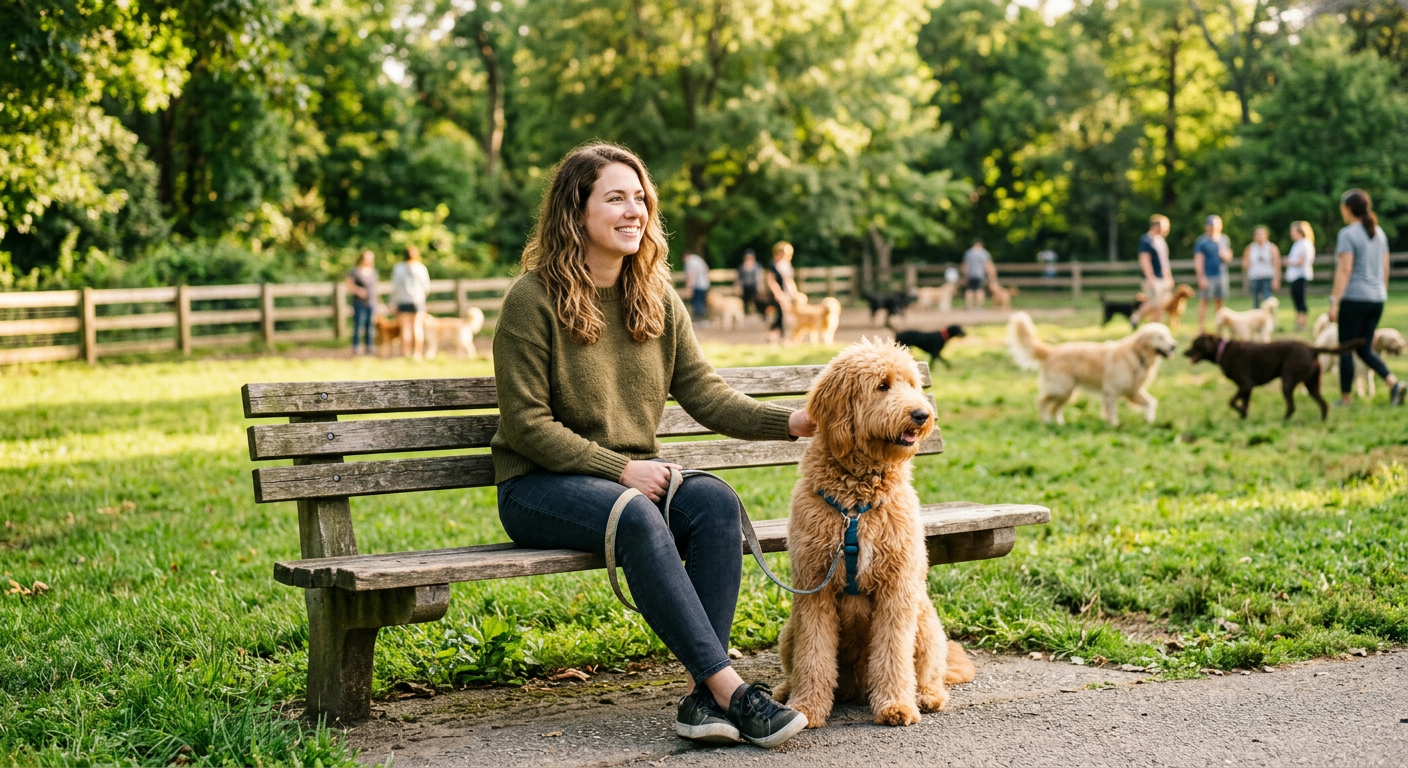
Step 5: Controlled Introductions Before the Park
Before returning to an off-leash dog park, practice with known, calm dogs in controlled environments. Think of it as a playdate, not a free-for-all. Look for:
- A friend's well-mannered dog
- A professional dog socialization training group in your area
- Sniff-and-greet sessions on neutral territory
Keep initial sessions short — 5 to 10 minutes — and end on a positive note. My mom Lacey always ends our training sessions before I get tired or frustrated, which keeps me wanting more.
Step 6: Gradual Park Reintroduction
When it's finally time to revisit the dog park near you, follow these guidelines:
- Start during off-peak hours when fewer dogs are present
- Keep visits short — 10 to 15 minutes initially
- Have an exit strategy — always position yourself near the gate
- Bring high-value treats for rewarding good behavior
- Watch body language constantly — yours and your dog's
For mild cases of dog park aggression, Wagbar notes that the full rehabilitation timeline typically runs 8 to 12 weeks. Severe cases involving deep-rooted fear or trauma may need 4 to 9 months and potentially medication prescribed by a veterinary behaviorist.
Recognizing Warning Signs: The Aggression Ladder
VCA Animal Hospitals provides an excellent breakdown of aggression signals that escalate in severity. As a dog, let me translate these for you:
- Stiffening/freezing — "I'm uncomfortable."
- Whale eye (showing whites of eyes) — "Please give me space."
- Lip licking or yawning — "I'm stressed."
- Growling — "I'm warning you. Back off."
- Snapping — "I SAID back off!"
- Biting — "You didn't listen."
The key to successful dog park aggression training is learning to read and respond to the EARLY signals — steps 1 through 3 — before things escalate. Too many humans ignore growling or punish it, which just removes the warning system and makes a bite more likely.
Essential Gear for Reactive Dog Training
Having the right equipment makes a world of difference in your dog socialization training journey. Beyond the treats and harness I already mentioned, here are a couple more essentials:
A long training lead gives your dog more freedom during desensitization work while keeping everyone safe. The Lynxking Long Training Leash is great for practicing recall and distance work in open areas near you.
For dogs who need a little extra calming support, the ThunderShirt Classic Dog Anxiety Jacket provides gentle, constant pressure that can help reduce anxiety during training sessions and park visits. It's like a hug you can wear — and I'm definitely a hug kind of guy.
When to Seek Professional Help for Dog Park Aggression
Let's be real: not every dog park aggression case can be solved with treats and patience alone. You should consult a certified professional if:
- Your dog has bitten another dog or person
- Aggression is escalating despite consistent training
- Your dog shows aggression in multiple contexts (not just the park)
- You suspect pain or a medical component
- You feel unsafe managing the behavior yourself
Look for a Certified Applied Animal Behaviorist (CAAB) or a Veterinary Behaviorist (DACVB) in your area. These professionals can develop customized dog park aggression training plans and determine if medication might help support the training process.
Accepting That Dog Parks Aren't for Every Dog
Here's some honest tail-talk: some dogs will never be dog park dogs, and that's completely okay. My mom Lacey reminds me that not every human likes crowded parties either. If your dog's aggression is severe, or if the park environment consistently triggers them despite months of dedicated training, there are wonderful alternatives:
- Structured walks with compatible dog friends
- Private dog parks or rented sniff spots near you
- Hiking trails during quiet hours
- Enrichment activities at home — agility courses, puzzle games, scent work
- Doggy daycare with temperament screening in your area
The goal of dog socialization training isn't necessarily to make your dog love the dog park. It's to help them feel safe and confident in the world — whatever that looks like for them.
Well, friends, we've covered a lot of ground today — almost as much as I cover during my zoomies! The truth about dog park aggression training is that it takes patience, consistency, and a whole lot of treats. But with the right approach — medical screening, identifying triggers, reward-based desensitization, and gradual reintroduction — many reactive dogs can learn to coexist peacefully at the park. And for those who can't? There's absolutely no shame in finding alternative ways to give your pup a happy, enriched life.
My mom Lacey and I are rooting for you and your reactive pup every step of the way. If this guide helped you, please share it with another dog parent who might be struggling. And don't forget to check out our other posts on doggieparknearme.com for more tips on finding the perfect dog park near you, keeping your pup healthy, and living your best dog life. Now if you'll excuse me, I have a squirrel to stare at. 🐾
Woof and love, Auggie
Frequently Asked Questions
What is the 7 7 7 rule for dogs?
The 7-7-7 rule is a socialization guideline suggesting that by the time a puppy is 7 weeks old, they should have walked on 7 different surfaces, eaten from 7 different containers, been to 7 different locations, met 7 different people, been exposed to 7 different challenges, eaten from 7 different containers, and played with 7 different toys. This broad exposure during the critical socialization window helps prevent fear-based aggression later in life, including at dog parks. It's a foundational step that can make dog park aggression training much easier down the road.
How to deal with an aggressive dog at dog park?
If you encounter an aggressive dog at the dog park, stay calm and avoid yelling, which can escalate the situation. Call your dog to you using a strong recall command and move toward the exit. Do not reach between fighting dogs — instead, use a distraction like a loud noise or spraying water. If your own dog is the aggressor, leash them immediately and leave the park. Report persistently aggressive dogs to park management. For ongoing issues, invest in dog park aggression training with a certified behaviorist before returning.
What is the 3-3-3 rule for dog training?
The 3-3-3 rule is an adjustment guideline primarily for rescue and newly adopted dogs. In the first 3 days, your dog may feel overwhelmed and shut down. After 3 weeks, they begin settling into the routine and showing their true personality. After 3 months, they feel fully at home and bonded. This rule is important for dog socialization training because pushing a new dog into a dog park environment before they've completed these adjustment phases can trigger reactive or aggressive behaviors.
Why don't vets recommend dog parks?
Many veterinarians express caution about dog parks due to several legitimate risks: exposure to infectious diseases (like kennel cough, parvovirus, and intestinal parasites), the potential for dog fights and injuries, and the unpredictability of other dogs' vaccination and training status. Puppies under 16 weeks who haven't completed their vaccination series are especially vulnerable. Vets also note that poorly managed dog parks can actually worsen behavioral issues. However, well-maintained parks with responsible owners can be beneficial — the key is proper training, supervision, and knowing your dog's limits.
How long does dog park aggression training typically take?
The timeline varies depending on the severity of the aggression. For mild cases — such as occasional overarousal or selective reactivity — most dogs show significant improvement within 8 to 12 weeks of consistent desensitization and counter-conditioning work. Severe cases involving deep-rooted fear, trauma, or multi-trigger aggression may require 4 to 9 months of dedicated training, potentially with medication support prescribed by a veterinary behaviorist. The initial 6-12 week park break is critical for preventing rehearsal of aggressive behaviors.
Can you use dog parks for socialization training?
Dog parks can eventually be part of a socialization training plan, but they shouldn't be the starting point — especially for reactive dogs. Begin with controlled one-on-one introductions with calm, well-socialized dogs in neutral territory. Practice obedience in increasingly distracting environments. When your dog shows consistent calm behavior around other dogs, you can gradually reintroduce the dog park during off-peak hours for short, supervised visits. Always have an exit strategy and watch for stress signals.
About Auggie
Hi, I'm Auggie! I'm a Golden Doodle who's been to more dog parks than most humans. My mom Lacey and I started Doggie Park Near Me to help every pup find their perfect park. When I'm not sniffing out new spots, you'll find me napping in the sun or begging for treats.
Learn more about us →More From Auggie

How to Handle a Dog Fight at the Dog Park: Tips from a Golden Doodle Who's Seen It All
Woof! It's Auggie here, and today I'm tackling a topic every dog park visitor needs to know: dog park aggression. From recognizing warning signs to safely breaking up a fight, I'm sharing everything my mom Lacey and I have learned about keeping pups safe at the park. Let's dig in!

Body Language 101: Reading Dogs at the Dog Park to Prevent Aggression
Woof! I'm Auggie, and I've spent enough time at dog parks to know that dog park aggression doesn't come out of nowhere. In this guide, I break down canine body language — the stiff stares, the freezes, the hackles — so you can spot trouble before it starts and keep every park visit safe and tail-waggingly fun.

Dog Aggression at the Park: Warning Signs and What to Do
Hey, it's Auggie! Dog park aggression is no joke — I've seen sunny park days turn tense in seconds. In this post, I break down the warning signs of aggression, what to do if a fight breaks out, and how to keep your pup safe. From body language cues to training tips, let's make every park visit a good one. 🐾