
How to Handle a Dog Fight at the Dog Park: Tips from a Golden Doodle Who's Seen It All
Hey there, friends — it's Auggie here, your favorite curly-coated correspondent. Let me tell you something: I love the dog park more than I love peanut butter, and that's saying a LOT. But I'd be lying if I said every visit is all zoomies and butt-sniffs. The truth is, dog park aggression is real, it's scary, and it can happen faster than I can devour a dropped hot dog. I've seen it firsthand — a perfectly sunny afternoon at the park turning tense in seconds when two dogs lock eyes the wrong way. My mom Lacey and I have spent a lot of time learning how to read those moments, prevent them, and handle them when prevention isn't enough. So today, I'm sharing everything we've learned about how to handle a dog fight at the dog park — because every human and every pup deserves to feel safe out there.
Understanding Dog Park Aggression: Why Do Dogs Fight?
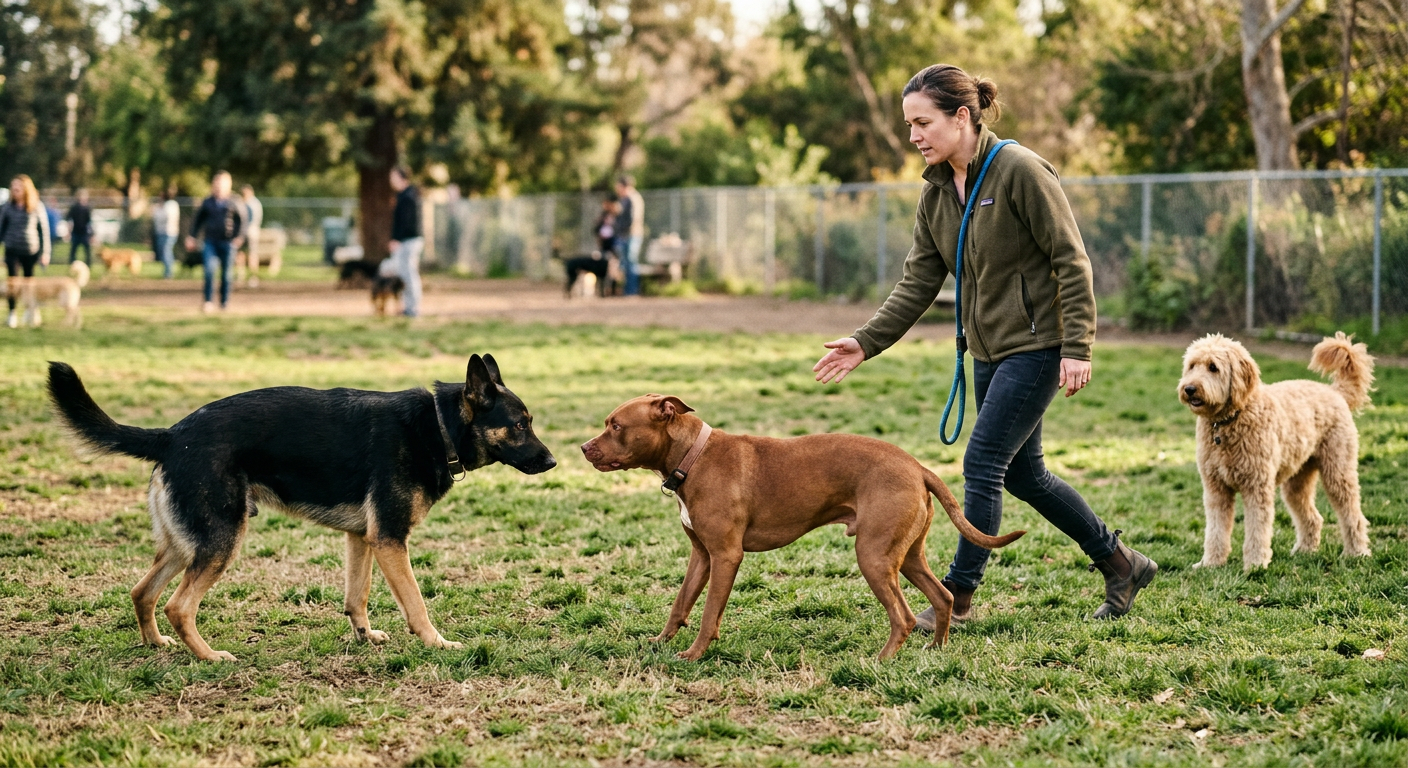
Before we talk about breaking up fights, let's talk about why dog park aggression happens in the first place. Because trust me — dogs don't just wake up and choose violence. There's always a reason, even if it's not obvious to human eyes.
According to VCA Animal Hospitals, aggression in dogs can stem from fear, territorial instincts, dominance, pain, or even underlying medical conditions like hormonal imbalances, epilepsy, or arthritis. That's right — sometimes a dog who snaps at the park is actually a dog in pain. Medical conditions including rabies, dental disease, and painful joint issues can cause or predispose dogs to aggression, which means some park incidents have medical roots that need a vet's attention, not just training.
The Animal Hospital of West Lake Forest identifies dominance aggression and prey aggression as the two primary culprits at dog parks specifically. Dominance aggression shows up when a dog feels the need to assert control over resources — a tennis ball, a water bowl, or even a favorite human. Prey aggression kicks in when a dog's chase instinct gets triggered by a smaller, faster dog zooming by. Both types can escalate rapidly if not addressed.
Here's what I've noticed from my own park visits: the energy shifts before the fight does. A stiff tail, a hard stare, a dog who suddenly stops playing and goes very still — those are the canine equivalent of storm clouds rolling in. Research published in PubMed Central found that signs of fear, like backward-pinned ears, may actually disappear as a dog's arousal heightens, making aggression harder to predict in the moment. That's why it's so important to learn the earlier, subtler signals.
Recognizing the Warning Signs of Dog Aggression at Dog Park Visits
My mom Lacey always says, "Auggie, you've got better instincts than most people at this park." And she's right — us dogs can feel tension building before humans even notice. But I want to help you humans get better at reading the room (or, well, the park).
Here are the key warning signs of dog aggression at dog park settings that every owner should know:
Body Language Red Flags
- Stiff, rigid posture — A dog who suddenly looks like a furry statue is not relaxed
- Hard, unblinking stare — This is a direct challenge in dog language
- Raised hackles — That ridge of fur standing up along the back means high arousal
- Lip curling or showing teeth — This one's obvious, but people ignore it more than you'd think
- Low, rumbling growl — Please don't punish growling; it's a warning system that keeps everyone safer
- Tail held high and stiff — A wagging tail doesn't always mean happy; a stiff, high wag can signal dominance
- Mounting or placing head over another dog's shoulders — This isn't always playful; it can be a dominance move
Situational Triggers
- Resource guarding — Toys, treats, water bowls, or even favorite humans
- Overcrowding — Too many dogs in too small a space increases stress for everyone
- Unfamiliar dogs entering the park — New arrivals can disrupt the existing social dynamic
- Mismatched play styles — A rough player paired with a gentle soul is a recipe for conflict
- Intact (unneutered) males — They can trigger heightened responses from other dogs
A systematic review published in PubMed Central found that dog park design, crowding levels, and management strategies all significantly impact the frequency and severity of aggressive incidents. Dogs in unfamiliar, crowded environments show elevated stress responses — heart rates averaging 20 bpm higher than in comfortable, familiar settings. That stress is the kindling that can ignite a fight.
One thing I always recommend? Carry a quality dog whistle like the Acme 211.5 Dog Training Whistle. A sharp, unexpected sound can interrupt escalating tension before it turns into a full-blown altercation. My mom Lacey keeps one clipped to her leash bag at all times.
How to Safely Break Up a Dog Fight at the Dog Park
Okay, let's get to the big one. Despite your best efforts at prevention, sometimes a fight just happens. When it does, here's what my mom Lacey has learned — and what I've watched work from the ground level (literally, I'm a dog).
What TO Do
1. Stay as Calm as Possible I know, I know — easier said than done when you're watching your best friend in a scuffle. But panicked screaming escalates the situation. Dogs feed off human energy. Take a breath.
2. Use the Wheelbarrow Method This is the safest technique most experts recommend. Two humans each grab the back legs of one dog and slowly walk backward, pulling them apart in an arc (not straight back — that can cause a dog to redirect and bite). Think of it like wheelbarrowing a person by their legs.
3. Use a Barrier If you can't safely grab legs, put something between the dogs. A large piece of cardboard, a trash can lid, a backpack, or even a jacket thrown over one dog's head can interrupt their focus. I've seen my mom use a Pet Parents Pawtect Blanket thrown over an aggressor to safely disorient and separate.
4. Make a Loud, Startling Noise Air horns, whistles, or even banging a metal water bowl can snap dogs out of fight mode. The Safety Sport Personal Air Horn is compact enough to fit in a pocket and loud enough to break through the chaos.
5. Use Water A blast from a water bottle or hose aimed at the dogs' faces can interrupt a fight. It's not harmful, but it's surprising enough to create a pause.
What NOT to Do
- Never reach for the collar or head area — This is the #1 way humans get bitten during dog fights. In the heat of the moment, a dog doesn't distinguish between an enemy and a helping hand near their face.
- Never kick or hit the dogs — Violence escalates violence. Period.
- Never pull dogs apart by their tails — This can cause serious spinal injury.
- Never put your face near the fight — I love your face. Keep it attached to your body.
According to DVM360, bite wound treatment averages $361 and head trauma from fights averages $591. Those are real dollars that prevention and safe intervention techniques can save.
After the Fight: Immediate Steps for Your Dog's Safety
So the fight's been broken up. Adrenaline is pumping — yours AND your dog's. Here's what to do next:
1. Separate and Leash Immediately
Get your dog on a leash and move to a quiet area away from the other dog. Don't rush to examine injuries — let your dog decompress for a minute. A stressed dog might snap even at their beloved human.
2. Do a Full Body Check
Once your dog has calmed slightly, run your hands gently over their entire body. Check for:
- Puncture wounds (these can be hidden under thick fur — trust me, my coat hides everything)
- Swelling or tenderness
- Limping or favoring a leg
- Blood in the mouth or ears
- Excessive panting or signs of shock
Keep a RC Pet Products Pet First Aid Kit in your car for exactly these moments. Having gauze, antiseptic wipes, and bandaging materials on hand can make the difference between a calm response and a panicked one.
3. Exchange Information
Just like a fender bender, exchange contact information with the other dog's owner. You may need it for vet bills or to share vaccination records.
4. Visit Your Veterinarian
Even if injuries look minor, get your pup checked. Puncture wounds are particularly sneaky — they seal on the surface but can harbor bacteria underneath, leading to dangerous abscesses. Dog park aggression injuries that seem superficial can have complications that only a vet can properly assess.
5. Monitor Behavior in the Days Following
After a fight, watch for behavioral changes: increased fearfulness, reluctance to go outside, aggression toward other dogs, or signs of pain. Traumatic experiences can have lasting effects on a dog's psyche, just like they do for humans.
Preventing Dog Park Aggression Before It Starts
Here's where I get on my soapbox — well, my dog bed, but you get the idea. The best fight is the one that never happens. Here's how my mom Lacey and I approach every park visit to minimize the risk of dog aggression at dog park outings:
Know Your Dog
Be brutally honest about your dog's temperament. Not every dog is a dog park dog, and that's okay. If your pup has a history of reactivity, resource guarding, or fear-based responses, there are so many other wonderful ways to exercise and socialize. A long sniff walk with a buddy can be way more enriching than a chaotic park visit.
Choose Your Park Wisely
Look for dog parks near you that have separate areas for large and small dogs. Parks with good sightlines (so you can see the whole space), adequate square footage, and double-gated entries tend to have fewer incidents. Check out our park finder at doggieparknearme.com to scope out well-designed options in your area.
Time Your Visits
Peak hours — usually early morning and after-work evenings — mean more dogs and more potential for conflict. If your dog is on the sensitive side, try visiting during off-peak times when the park is less crowded. My mom and I often do mid-morning visits and have the whole place practically to ourselves.
Keep Moving
Don't just park yourself on a bench and scroll your phone (I see you, humans). Walk the perimeter, stay engaged, and keep your dog moving. Stationary groups of dogs and distracted owners are where trouble brews.
Bring the Right Gear
Always have a leash within arm's reach, fresh water for your dog (dehydrated dogs are cranky dogs — relatable), and cleanup supplies. I also recommend the Mighty Paw Hands-Free Bungee Leash for the walk to and from the park — it keeps your hands free while maintaining control during those critical leash-on transitions.
Leave Before Trouble Starts
If you notice your dog getting overstimulated, or if a new dog enters the park with concerning energy, just leave. There's no shame in a short visit. My mom Lacey has a rule: if her gut says go, we go. Every time.
When to Skip the Dog Park Entirely
I love the dog park. I really do. But I also love honesty, and here's the truth: dog parks aren't for every dog, and they're not always safe for any dog.
Consider skipping the dog park if:
- Your dog has shown signs of dog park aggression in the past
- Your dog is under-socialized or newly adopted
- Your puppy hasn't completed their full vaccination series
- Your dog is elderly, injured, or recovering from surgery
- The park in your area is poorly maintained, overcrowded, or lacks separate sections for different dog sizes
- You notice a pattern of aggressive dogs or inattentive owners at your local park
Alternatives that still give your dog a rich social life include:
- Structured playgroups with a professional trainer or doggy daycare
- One-on-one playdates with known, compatible dogs
- Sniff walks in nature — honestly, a good trail walk satisfies my soul more than most park visits
- Training classes where dogs learn to be calm around each other in a controlled environment
- Fetch sessions in fenced yards or empty baseball fields
The goal is a happy, well-adjusted dog — and there are many paths to get there.
Listen, friends — dog park aggression is something every dog owner needs to take seriously, but it doesn't have to keep you and your pup from enjoying the great outdoors together. By learning the warning signs, knowing how to safely intervene, and making smart choices about when and where to visit, you're already ahead of the pack.
My mom Lacey always says the best dog park visits start with preparation and end with a tired, happy pup — and I couldn't agree more (especially the tired part; I love a good post-park nap). Whether you're finding new parks near you on doggieparknearme.com or brushing up on your canine body language, every step you take makes the park safer for everyone.
Stay safe, stay aware, and give your pup an extra belly rub from me tonight. If this post helped you, share it with your dog park crew — because the more humans who know this stuff, the better off all of us dogs will be. 🐾
Until next time, keep your tails wagging!
— Auggie 🐕
Frequently Asked Questions
Why is my dog aggressive at dog park?
There are several reasons your dog might show aggression at the dog park. Common causes include fear (especially in under-socialized dogs), resource guarding over toys or water bowls, dominance behavior, prey drive triggered by smaller or faster dogs, overstimulation from the chaotic environment, or even underlying medical conditions like pain from arthritis or dental disease. Dogs also show elevated stress in unfamiliar, crowded environments — research shows heart rates can average 20 bpm higher in these settings. If your dog's aggression is sudden or out of character, a vet visit is an important first step to rule out medical causes. A certified dog behaviorist can help identify specific triggers and create a desensitization plan.
What is the 7 7 7 rule for dogs?
The 7-7-7 rule is a helpful guideline for newly adopted dogs. It suggests that it takes roughly 7 days for a dog to decompress in a new home, 7 weeks to start learning your routine and feel more comfortable, and 7 months to fully settle in and show their true personality. This rule is especially relevant to dog park visits because bringing a newly adopted dog to a high-stimulation environment like an off-leash park too soon can trigger fear-based aggression or overwhelm. Give your new pup time to bond with you, learn basic commands, and build confidence before introducing the unpredictable social dynamics of a dog park.
Why don't vets recommend dog parks?
Many veterinarians express caution about dog parks for several valid reasons. First, disease transmission risk is high — parks can harbor parvovirus, kennel cough, canine influenza, and intestinal parasites, especially if not all visiting dogs are fully vaccinated. Second, the risk of physical injury from fights or rough play is significant, with bite wound treatment averaging $361 and head trauma averaging $591 according to veterinary data. Third, poorly supervised interactions can cause lasting behavioral trauma. That said, not all vets are against dog parks entirely — many acknowledge the benefits of exercise and socialization but recommend choosing well-maintained parks, ensuring your dog is fully vaccinated, and actively supervising every visit.
What is cobbing in dogs?
Cobbing is when a dog gently nibbles on you (or another dog) using their front teeth in a quick, corn-on-the-cob-like motion — hence the name! It's generally a sign of affection, grooming behavior, or playful interaction. Puppies often cob on their littermates and carry the habit into adulthood. It's usually harmless and even endearing. However, at the dog park, it's important to distinguish cobbing from mouthing that escalates in intensity. If nibbling becomes harder, faster, or is accompanied by stiff body language, it could be tipping into overstimulation or dominance behavior. Context matters — gentle cobbing on your arm at home is very different from intense mouthing directed at a stranger's dog at the park.
How do I know if dogs are playing or fighting at the dog park?
This is one of the most common questions at the park! Healthy play includes loose, bouncy body language, play bows (front legs down, rear end up), taking turns chasing, and voluntary pauses where both dogs re-engage willingly. Fighting, on the other hand, involves stiff bodies, hard staring, pinned ears, raised hackles, deep growling (not the playful grumbly kind), snapping, and one dog trying to escape while the other pursues relentlessly. A key indicator: in play, both dogs look like they're having fun and they self-regulate with breaks. In aggression, the energy is tense, one-sided, and escalating. When in doubt, call your dog away for a quick break — if they return to play happily, it was probably fine.
Should I punish my dog for being aggressive at the dog park?
No — punishing your dog for aggression is counterproductive and can actually make the problem worse. Punishment (yelling, hitting, leash corrections) adds stress and fear to an already heightened situation, which can escalate aggression rather than reduce it. It can also damage the trust between you and your dog. Instead, calmly remove your dog from the situation, give them space to decompress, and consult a certified professional dog trainer or veterinary behaviorist. They can help you identify the root cause — whether it's fear, overstimulation, resource guarding, or a medical issue — and develop a positive, science-based training plan. Prevention and management are always more effective than punishment.
About Auggie
Hi, I'm Auggie! I'm a Golden Doodle who's been to more dog parks than most humans. My mom Lacey and I started Doggie Park Near Me to help every pup find their perfect park. When I'm not sniffing out new spots, you'll find me napping in the sun or begging for treats.
Learn more about us →More From Auggie

Reactive Dogs and Dog Parks: Can They Coexist? A Guide to Dog Park Aggression Training
Hey friends, it's Auggie! Got a reactive pup who struggles at the dog park? I've been there! In this guide, I share expert-backed dog park aggression training tips — from medical screening and trigger identification to step-by-step desensitization. Every dog deserves a chance at a happy park life. 🐾

Body Language 101: Reading Dogs at the Dog Park to Prevent Aggression
Woof! I'm Auggie, and I've spent enough time at dog parks to know that dog park aggression doesn't come out of nowhere. In this guide, I break down canine body language — the stiff stares, the freezes, the hackles — so you can spot trouble before it starts and keep every park visit safe and tail-waggingly fun.

Dog Aggression at the Park: Warning Signs and What to Do
Hey, it's Auggie! Dog park aggression is no joke — I've seen sunny park days turn tense in seconds. In this post, I break down the warning signs of aggression, what to do if a fight breaks out, and how to keep your pup safe. From body language cues to training tips, let's make every park visit a good one. 🐾