
Dog Aggression at the Park: Warning Signs and What to Do
Hey there, friends — it's Auggie, your favorite curly-coated Golden Doodle, and today we need to have a serious heart-to-heart. I love a good romp at the park as much as the next pup, but dog park aggression is something every dog and human needs to understand before stepping through that double gate. I've seen it firsthand: a perfectly sunny afternoon at the park turning tense in a split second when one dog gets too pushy and another decides they've had enough. My mom Lacey always says, "An ounce of prevention is worth a pound of cure," and honestly? She's right (don't tell her I said that — she'll get smug). Whether you're a seasoned park-goer or thinking about your first visit, knowing the warning signs of aggression and exactly what to do can mean the difference between a great outing and an emergency vet visit. Let me walk you through everything I've learned with all four paws on the ground.
Understanding Dog Park Aggression: Why It Happens
Let me be real with you — dog park aggression doesn't come out of nowhere, even though it can feel that way. When you throw a bunch of unfamiliar dogs into an enclosed space with high energy, competing desires, and limited escape routes, you're creating conditions where conflict can spark.
According to VCA Animal Hospitals, fear-related aggression is one of the most common types veterinary behaviorists encounter in public settings like dog parks. A fearful dog doesn't always cower in the corner — sometimes fear looks like lunging, snapping, and snarling. I've met dogs at the park who seem "mean" but are actually terrified out of their minds.
Then there's resource guarding (that tennis ball is MINE), redirected frustration, prey drive (especially toward smaller dogs like me on a bad hair day), and plain old overstimulation. Animal Hospital of West Lake Forest explains that dominance displays and prey drives can escalate quickly between familiar or unfamiliar dogs, and timing your intervention is critical.
Here's a sobering stat: research cited by Stannyfield shows that over 80% of dogs display at least one stress-related behavior during dog park visits — tucked tails, pinned ears, whale eyes — and saliva cortisol levels are significantly higher after just 20 minutes at the park compared to a regular leash walk. That means even dogs who look like they're doing fine might be silently building toward a breaking point.
Warning Signs of Dog Aggression at Dog Parks
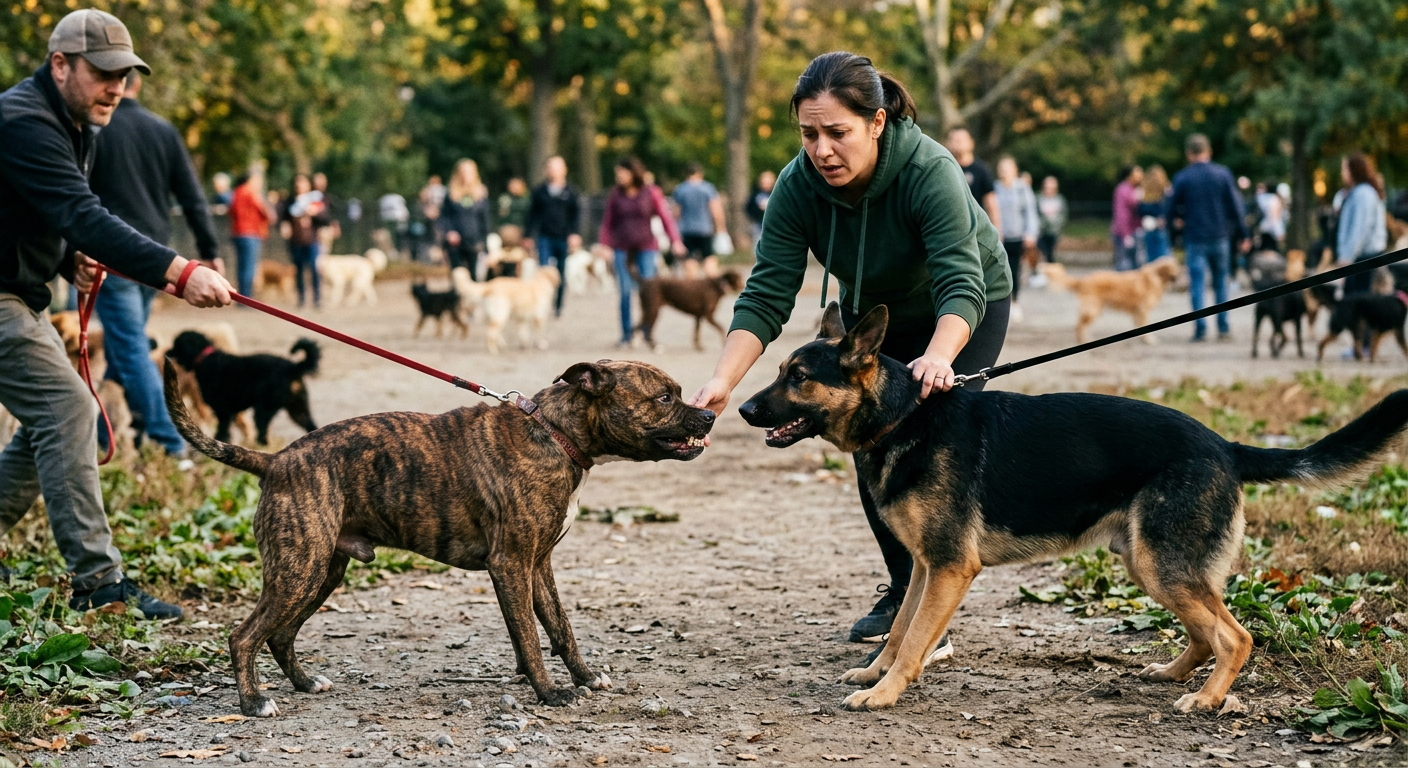
This is the part where I really want you to pay attention, because my mom Lacey and I have spent a LOT of time learning canine body language. The warning signs of dog aggression at dog parks often appear well before the first growl or snap. Here's what to watch for:
Subtle Early Warning Signs
- Stiff body posture — A dog who suddenly goes rigid, like they're made of wood, is NOT relaxed
- Hard stare or fixed gaze — If a dog is locked onto another dog and won't break eye contact, trouble is brewing
- Whale eye — When you can see the whites of a dog's eyes in a crescent shape, they're stressed or fearful
- Closed mouth with tension — Happy dogs have loose, open mouths. A suddenly closed, tight mouth is a red flag
- Raised hackles — That ridge of fur standing up along the back and shoulders (piloerection) signals arousal
- Freeze — A dog who stops mid-motion and becomes still as a statue is often about to escalate
Escalating Warning Signs
- Low, guttural growling — Different from play growling, which is higher-pitched and loose
- Lip curling or showing teeth — This is a clear "back off" signal
- Snapping at air — An "air snap" is a deliberate warning shot
- T-posturing — When one dog places their head or chin over another dog's shoulders, asserting dominance
- Mounting that won't stop — Persistent mounting, especially with stiff body language, isn't play
- Chasing that becomes relentless — Play chasing involves role reversals; predatory chasing does not
My mom Lacey always tells people: "Watch the whole body, not just the tail." A wagging tail does NOT always mean a happy dog. A high, stiff, fast wag can actually indicate agitation and arousal. Trust me — I know my own tail, and there's a big difference between my wiggly-butt happy wag and the stiff flag-pole wag I see on stressed dogs at the park.
Why Dog Park Aggression Escalates So Quickly
One thing that really concerns my mom and me is how fast situations deteriorate. A systematic review published in PubMed Central (PMC) analyzed dog park conflicts and found that the physical design of parks — combined with the social dynamics of unfamiliar dogs — creates unique pressure points that can turn minor tension into full-blown fights.
Here's why things escalate:
1. Enclosed spaces limit escape. In the wild, a nervous dog can simply leave. At the park, they're fenced in. When flight isn't an option, fight becomes the default.
2. Owners are distracted. I hate to call you out, but I see SO many humans on their phones at the park while their dogs are sending up flare signals. My mom Lacey is practically a hawk — eyes on me at all times — and that vigilance has saved us from dicey situations more than once.
3. Repeated exposure worsens fear. This is counterintuitive, but taking a fearful dog back to the park over and over doesn't "socialize" them — it actually strengthens the neural pathways that associate parks with threats. The fear gets worse, not better.
4. Pack mentality kicks in. When one dog starts chasing or cornering another, other dogs in the park may join in. What started as a one-on-one conflict can become a group attack in seconds.
5. The injuries are real. According to dvm360, common aggression-related injuries include lacerations and bite wounds averaging $361 in treatment costs, sprains at $225, and head trauma at a whopping $591. Deep puncture wounds, chest injuries, and even bitten-off ears have been documented in dog park fights requiring emergency veterinary care.
What to Do When You See Dog Park Aggression
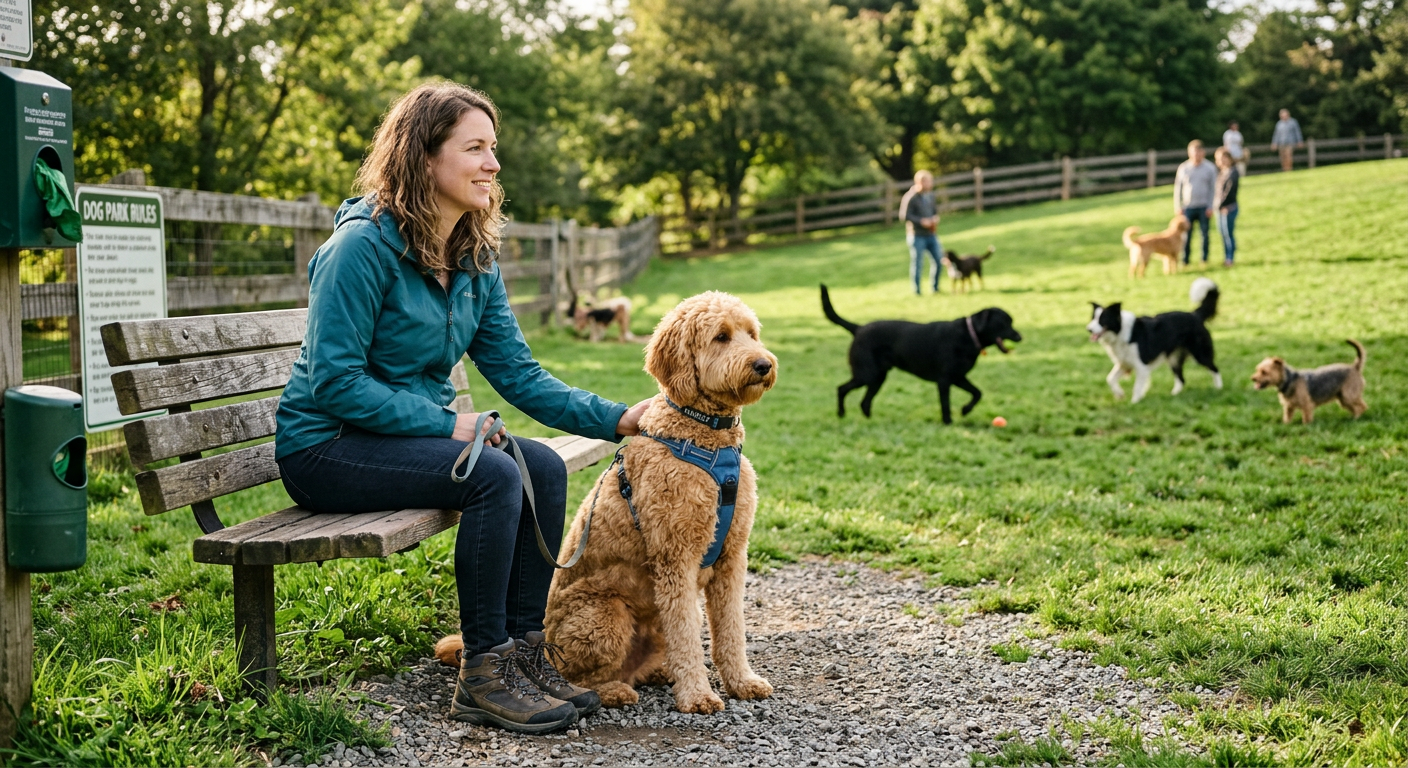
Okay, so you've spotted the warning signs. Now what? Here's my step-by-step guide for handling dog park aggression in real time:
Step 1: Stay Calm (Seriously)
I know your adrenaline is spiking — mine does too — but screaming, panicking, or running toward fighting dogs can actually escalate the situation. Dogs feed off human energy. Take a breath.
Step 2: Recall Your Dog Immediately
If YOUR dog isn't yet involved, call them to you right away. This is where having a rock-solid recall matters. Practice it at home, practice it in your yard, practice it everywhere. My mom Lacey uses high-value treats (we're talking chicken, people) to keep my recall sharp.
For training sessions, I highly recommend keeping some Zuke's Mini Naturals Dog Treats in your pocket — they're small, stinky (in a good way, trust me), and perfect for reinforcing that life-saving recall command.
Step 3: Create Distance
If two dogs are posturing but haven't made contact yet, calmly move between them while angling your body to block their line of sight. Don't grab collars yet — this is about breaking the visual lock.
Step 4: If a Fight Breaks Out — The Wheelbarrow Method
If dogs are actively fighting, the safest technique for humans is the wheelbarrow method: two people each grab the hind legs of their respective dog and pull them apart in an arc (not straight back). This reduces the chance of getting bitten while separating the dogs.
Never reach for collars or heads during an active fight. That's the fastest way to the emergency room — for you.
Step 5: Leave the Park
Once separated, leash up and leave. Even if things seem to calm down, the arousal levels are too high for safe continued play. Go home, decompress, and assess any injuries.
I always feel safer when my mom has me on a sturdy, reliable leash for the walk to and from the park. The TaoTronics Retractable Dog Leash gives us flexibility on walks while keeping me secure in higher-stress situations near park entrances.
Dog Park Aggression Training: Prevention That Actually Works
Let's talk about dog park aggression training — because the best fight is the one that never happens. Here's what my mom Lacey and I have learned about prevention:
Socialization Done Right
Socialization doesn't mean throwing your puppy into a dog park and hoping for the best. Proper socialization means controlled, positive exposures to other dogs of various sizes and temperaments. Puppy classes, supervised playdates with known-friendly dogs, and gradual introductions are the gold standard.
Obedience Training as a Foundation
A dog who responds to "leave it," "come," and "sit" under distraction has an emergency toolkit that can prevent aggression from escalating. My mom worked with me on these commands daily, and they've literally saved my fluffy behind.
For structured training sessions, we love the PetSafe Treat Pouch Sport. Having treats accessible and ready means you can reinforce good behavior the instant it happens — timing is everything in training, friends.
Know Your Dog's Limits
Not every dog is a dog park dog. And that's OKAY. If your pup is fearful, reactive, or resource-guards toys, the dog park might not be the right environment for them. There are so many other wonderful ways to exercise and socialize — hiking trails, sniff walks, private playdates. Your dog won't judge you for skipping the park. I promise.
Timing Matters
Visit during off-peak hours when the park is less crowded. My mom and I often go early in the morning or during weekday afternoons in our area. Fewer dogs means less competition, less overstimulation, and more space for everyone.
Physical Preparation
A dog who arrives at the park already buzzing with pent-up energy is more likely to play too rough or become reactive. Take a short walk before entering the park to burn off that initial edge. I always appreciate a little warm-up lap around the block.
Keeping Your Dog Safe Near You: Essential Gear
Part of responsible park-going is being prepared. Beyond training, having the right gear can make a real difference in managing or preventing dog park aggression.
I'm a big fan of having a breakstick or safety tool in your park bag (for emergency separation), plenty of water (dehydrated dogs get cranky — same, honestly), and a solid first aid kit. The RC Pet Products Adventure Dog First Aid Kit is compact enough to toss in your bag and has the essentials for treating minor wounds until you can get to your vet.
Also? A high-visibility vest or bandana that says "IN TRAINING" or "NEEDS SPACE" can be a game-changer for reactive dogs who are working through their issues. It signals to other owners that your dog needs some breathing room, and most respectful park-goers will accommodate.
And for calming nerves after a stressful encounter, the ThunderShirt Classic Dog Anxiety Jacket works wonders. My mom Lacey got me one for thunderstorms, but it's also fantastic for post-park decompression when I've had a rough outing.
When to Seek Professional Help for Dog Park Aggression
Sometimes, despite our best efforts, aggression becomes a pattern. If your dog is repeatedly displaying aggressive behavior at the park — or if they've been the victim of attacks and are now fearful or reactive — it's time to call in the professionals.
A certified veterinary behaviorist (look for DACVB credentials) can diagnose whether the aggression is fear-based, territorial, pain-related, or something else entirely. VCA Animal Hospitals emphasizes that proper diagnosis is critical because the treatment approach varies significantly based on the type of aggression.
A certified professional dog trainer (CPDT-KA) who specializes in reactivity can create a desensitization and counter-conditioning plan tailored to your dog.
Search for qualified professionals in your area through the IAABC or CCPDT directories. Your dog deserves expert help, not YouTube guesswork.
And please — don't use punishment-based methods to address aggression. Shock collars, prong collars, and alpha rolls can suppress warning signals without addressing the underlying emotion, making the dog MORE dangerous because they'll eventually bite without warning. Positive reinforcement-based approaches are supported by the science and are far more effective long-term.
Tips for Finding Safe Dog Parks Near You
Not all dog parks are created equal, and choosing the right one in your area can significantly reduce your risk of encountering dog aggression at dog parks. Here's what to look for:
- Separate areas for large and small dogs — This is non-negotiable in my book. Size-segregated areas prevent predatory drift and reduce injury risk.
- Double-gated entry — Prevents escape and allows controlled entry so you can assess the park before unleashing your dog.
- Good visibility — You should be able to see the entire park from any point. Blind corners and heavy brush create ambush scenarios.
- Adequate space — Overcrowded parks breed conflict. If it looks packed, come back later.
- Engaged owners — If you walk up and see three humans on their phones while their dogs are body-slamming each other, keep walking.
- Clean, well-maintained grounds — Parks that are well cared for tend to attract more responsible owners.
Use our dog park finder on doggieparknearme.com to locate parks near you and read reviews from other dog owners in your community. Knowledge is power — and safety.
Look, friends — I'm a dog who genuinely loves the park. The smells! The zoomies! The social butterfly life! But dog park aggression is real, and pretending it doesn't exist puts pups and people at risk. My mom Lacey and I have made it our mission to help you recognize the warning signs, respond safely, and — most importantly — prevent aggressive encounters before they start. Whether you're training a new puppy or managing a reactive rescue, remember that every dog deserves to feel safe, and every owner has the power to make that happen.
Keep those tails wagging safely, stay alert at the park near you, and never stop learning about your dog's body language. If this post helped you, share it with your dog park crew — because a safer park starts with educated humans. Now if you'll excuse me, my mom Lacey owes me a belly rub for all this hard work. 🐾
Sniffs and licks, Auggie
Frequently Asked Questions
What is the 7 7 7 rule for dogs?
The 7 7 7 rule is a socialization guideline suggesting that by the time a puppy is 7 weeks old, they should have been on 7 different surfaces, played with 7 different toys, been to 7 different locations, met 7 new people, and been exposed to 7 different challenges. Some variations extend this to 7 months. The idea is to build a confident, well-rounded dog through controlled positive exposures — which is far more effective (and safer!) than relying on dog parks alone for socialization. My mom Lacey followed a version of this when I was a pup, and I think it's a big reason I'm so well-adjusted today. Well, that and the treats.
Why don't vets recommend dog parks?
Many veterinarians express caution about dog parks due to the risk of disease transmission (like canine influenza, kennel cough, and parasites), the high potential for aggression-related injuries, and the stress they can cause. Research shows that over 80% of dogs display stress-related behaviors during park visits, and cortisol levels spike significantly. Dog park fights can result in costly injuries averaging $225 to $591 depending on severity. That said, not all vets are anti-park — many recommend them with caveats: make sure your dog is fully vaccinated, well-socialized, and that you actively supervise the entire visit. The key is knowing whether your individual dog thrives in that environment.
What is cobbing in dogs?
Cobbing is when a dog gently nibbles on you (or another dog) using their front teeth in a corn-on-the-cob motion — hence the name! It's usually a sign of affection, grooming behavior, or mild anxiety. I do this to my mom Lacey's arm sometimes when I'm feeling extra lovey. In the context of dog parks, cobbing directed at other dogs is generally harmless, but if it's accompanied by stiff body language, growling, or escalation, it could indicate overstimulation or a precursor to more assertive behavior. Context and body language always matter more than any single behavior.
How to stop dog fighting at a dog park?
If a fight breaks out, stay as calm as possible. The safest intervention is the wheelbarrow method: two people each grab the hind legs of their respective dog and walk backward in an arc to separate them. Never reach for collars or put your hands near the dogs' heads during an active fight — that's how humans get bitten. Once separated, immediately leash your dog and leave the park. After you're safe, check for injuries and contact your vet if you find any puncture wounds. For long-term prevention, focus on reliable recall training, learning canine body language, visiting during off-peak hours, and honestly assessing whether your dog is suited for off-leash dog park play.
Can aggressive dogs be rehabilitated for dog park visits?
It depends on the type and severity of aggression. Many dogs with fear-based or reactivity issues can make significant progress with professional help from a certified veterinary behaviorist or a CPDT-KA trainer specializing in reactivity. Treatment typically involves desensitization, counter-conditioning, and sometimes medication. However, not every dog will become a 'dog park dog,' and that's perfectly okay. Some dogs are happier and safer enjoying structured walks, hiking trails, or private playdates. The goal should always be your dog's well-being, not forcing them into an environment that causes them stress.
What should I bring to the dog park to stay safe?
I recommend bringing high-value recall treats (like Zuke's Mini Naturals), fresh water and a portable bowl, a sturdy leash for entering and exiting, a pet first aid kit for minor injuries, and your full attention — yes, that means pocketing the phone! A breakstick can be useful for emergency fight separation, and a calming tool like a ThunderShirt in your car can help your dog decompress after a stressful visit. Most importantly, bring your knowledge of canine body language. That's the most powerful safety tool you can carry.
About Auggie
Hi, I'm Auggie! I'm a Golden Doodle who's been to more dog parks than most humans. My mom Lacey and I started Doggie Park Near Me to help every pup find their perfect park. When I'm not sniffing out new spots, you'll find me napping in the sun or begging for treats.
Learn more about us →More From Auggie

How to Handle a Dog Fight at the Dog Park: Tips from a Golden Doodle Who's Seen It All
Woof! It's Auggie here, and today I'm tackling a topic every dog park visitor needs to know: dog park aggression. From recognizing warning signs to safely breaking up a fight, I'm sharing everything my mom Lacey and I have learned about keeping pups safe at the park. Let's dig in!

Reactive Dogs and Dog Parks: Can They Coexist? A Guide to Dog Park Aggression Training
Hey friends, it's Auggie! Got a reactive pup who struggles at the dog park? I've been there! In this guide, I share expert-backed dog park aggression training tips — from medical screening and trigger identification to step-by-step desensitization. Every dog deserves a chance at a happy park life. 🐾

Body Language 101: Reading Dogs at the Dog Park to Prevent Aggression
Woof! I'm Auggie, and I've spent enough time at dog parks to know that dog park aggression doesn't come out of nowhere. In this guide, I break down canine body language — the stiff stares, the freezes, the hackles — so you can spot trouble before it starts and keep every park visit safe and tail-waggingly fun.