
Heatstroke at the Dog Park: Signs, Prevention, and First Aid Every Dog Parent Needs
Hey friends, Auggie here — your favorite curly-coated Golden Doodle and unofficial dog park safety ambassador. Listen, I need to have a serious heart-to-heart with you today about something that genuinely scares me: dog heatstroke. Last summer, I watched a beautiful Bulldog at our local park go from happily chasing a tennis ball to wobbling, drooling, and collapsing on the ground in what felt like minutes. His human was panicked. My mom Lacey was panicked. I was panicked. Thankfully, some quick-thinking park-goers and an emergency vet visit saved that sweet boy's life. But it shook all of us to our cores. Dog heatstroke is a genuine medical emergency that can turn fatal faster than you'd believe — and the dog park, with all its excitement and sun exposure, is one of the most common places it happens. So grab a cold bowl of water (for both of us), and let me walk you through everything you need to know about recognizing, preventing, and treating heatstroke before your next visit to a dog park near you.
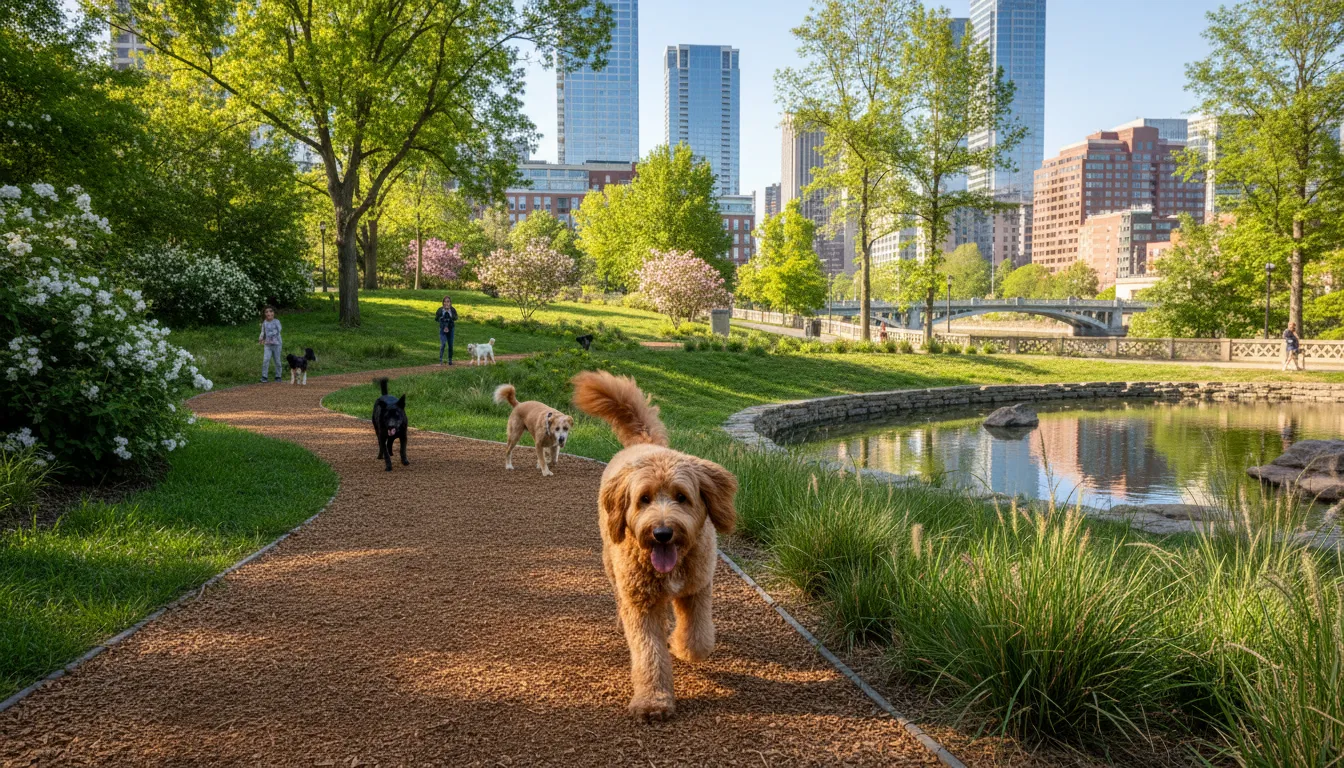
What Is Dog Heatstroke and Why Is It So Dangerous?
Let me put this in terms even a puppy can understand. Dog heatstroke occurs when our body temperature rises above 104°F (40°C) and our internal cooling systems — mainly panting and minor sweating through our paw pads — can't keep up. According to Cornell University College of Veterinary Medicine, heatstroke is a nonpyrogenic hyperthermia, meaning it's not caused by a fever or infection. It's caused by the environment overwhelming our bodies.
And here's the really scary part: once our internal temperature climbs above 41°C (about 106°F), we're at serious risk of multiple organ dysfunction. A peer-reviewed study published on PubMed Central (National Library of Medicine) details how heatstroke triggers a cascading inflammatory response that can damage the brain, kidneys, liver, and gastrointestinal tract. In fatal cases, necropsy findings have revealed pulmonary edema, organ hemorrhage, brain necrosis, and kidney tubular degeneration.
I'm not telling you this to scare you away from the dog park — trust me, the dog park is my happy place. But I need you to understand that dog heatstroke isn't just "being a little too hot." It's a full-blown medical emergency that can kill even young, healthy dogs.
Why the Dog Park Is a Heatstroke Hotspot
Here's the thing about dog park safety that most humans overlook: we dogs are terrible at regulating our own fun. When I see my buddy Biscuit sprinting across the field, every cell in my fluffy body screams "CHASE HIM!" even if it's 95°F outside and I'm already panting like a freight train. We don't think, "Hmm, perhaps I should sit this one out and hydrate." That's your job.
Dog parks create the perfect storm for heatstroke because:
- High excitement levels mean we run harder and longer than on a normal walk
- Limited shade at many parks leaves us exposed to direct sunlight
- Hot surfaces like concrete pathways, gravel, and even compacted dirt radiate heat upward
- Social pressure — yes, even dogs feel it — keeps us moving when we should be resting
- Water stations may be empty, broken, or contaminated
My mom Lacey always scopes out shade and water availability before we even enter the gate. That's one of the most important dog park safety tips I can share — if the park doesn't have adequate shade and fresh water in your area, it's not the right day for a visit.
Recognizing the Signs of Dog Heatstroke
This is arguably the most important section of this entire post. Knowing the signs of dog heatstroke can literally save your best friend's life. According to VCA Animal Hospitals, the signs tend to progress through stages, and the earlier you catch them, the better the outcome.
Early Warning Signs
- Excessive, heavy panting that doesn't slow down even at rest
- Thick, ropy drool — more than normal slobbering
- Bright red tongue and gums
- Restlessness or agitation — your dog seems uncomfortable and can't settle
- Seeking shade obsessively or trying to dig into cool ground
Moderate Signs (Act Immediately)
- Vomiting or diarrhea (sometimes with blood)
- Stumbling, wobbly gait, or loss of coordination
- Glazed eyes or a dazed, distant expression
- Rapid heart rate
- Dark red or purple gums
Severe/Critical Signs (Life-Threatening Emergency)
- Collapse and inability to stand
- Seizures or tremors
- Loss of consciousness
- Blue or gray gums (indicating oxygen deprivation)
- Bloody diarrhea or vomit
As noted by Today's Veterinary Practice, severe heatstroke can lead to disseminated intravascular coagulation (DIC) — a condition where the blood's clotting system goes haywire — and sepsis from gut bacteria leaking into the bloodstream. This is why every second counts.
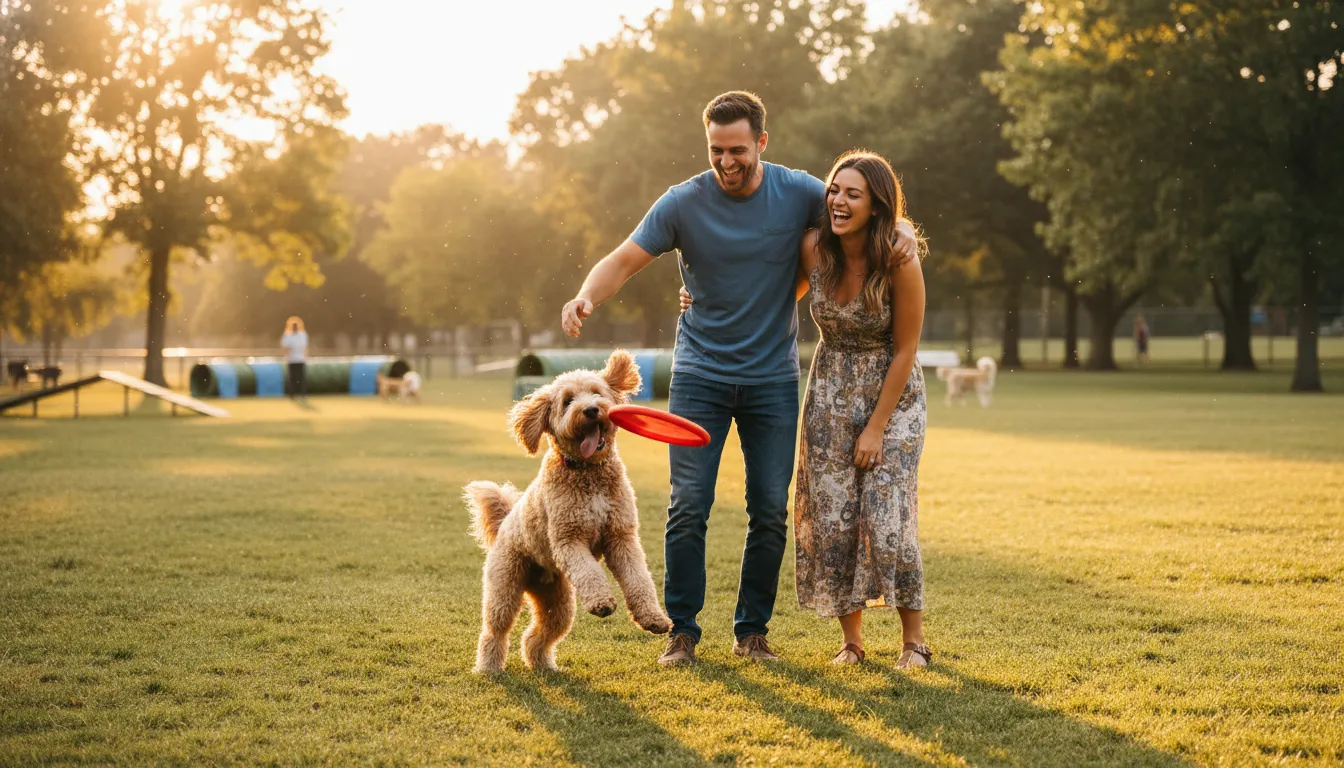
Which Dogs Are Most at Risk for Heatstroke?
While any dog can develop heatstroke — yes, even athletic, young pups like me — certain dogs face a significantly higher risk. Both VCA Animal Hospitals and PetMD highlight the following risk factors:
- Brachycephalic breeds (Bulldogs, Pugs, French Bulldogs, Boston Terriers, Boxers) — their shortened airways make it physically harder to cool down through panting
- Overweight or obese dogs — extra insulation traps heat
- Dogs with thick or dark coats — like my gorgeous Golden Doodle fluff, which absorbs heat
- Senior dogs and puppies — less efficient thermoregulation
- Dogs with heart disease, laryngeal paralysis, or respiratory conditions
- Dogs not acclimated to heat — if you just moved to a warmer climate or it's the first hot week of spring, be extra cautious
If your pup falls into any of these categories, dog park safety should be your top priority during warm months. Adjust your visit times, keep sessions short, and always — always — have a cooling plan ready.
Dog Park Safety Tips: How to Prevent Heatstroke
Prevention is worth a thousand emergency vet bills. My mom Lacey and I have developed a warm-weather routine that keeps me safe, and I want to share these dog park safety tips with every dog parent reading this.
1. Time Your Visits Wisely
The absolute best times to visit a dog park near you during summer are early morning (before 9 AM) and evening (after 6 PM). The midday sun is brutal, and pavement temperatures can reach 150°F+ when ambient air temperature is only 85°F. If you can't comfortably hold the back of your hand on the ground for 7 seconds, it's too hot for our paws — and too hot for vigorous play.
2. Bring Your Own Water Supply
Don't rely on the park's water fountains or communal bowls. My mom always brings our RUFFWEAR Trail Runner Portable Dog Bowl — it's lightweight, collapsible, and clips right onto her belt loop. She fills it frequently so I always have fresh, cool water available. I recommend offering water every 15-20 minutes during play.
3. Use a Cooling Vest
This is a game-changer, friends. A good cooling vest can lower your dog's body temperature by several degrees during outdoor activity. I'm a big fan of the Ruffwear Swamp Cooler Evaporative Dog Cooling Vest. You soak it in cold water, wring it out, and put it on your pup. It uses evaporative cooling — the same principle behind human sweat — to keep us comfortable. It's been a lifesaver during Texas summers.
4. Enforce Rest Breaks
I know, I know — we don't want to stop playing. But responsible dog park safety means being the "bad guy" occasionally. Every 10-15 minutes of active play, leash your dog and move to the shade for a mandatory rest and water break. Look for signs of heavy panting or reluctance to move.
5. Know When to Stay Home
Sometimes the safest dog park safety tip is the simplest: don't go. If the temperature is above 90°F, humidity is high, and there's limited shade at your local park, opt for indoor play, a frozen Kong session, or an early-morning sniff walk instead. Your dog would rather miss one park day than end up in the emergency room.
6. Keep a Thermometer in Your Dog Kit
A rectal thermometer is the most accurate way to check your dog's temperature. Normal is 99.5°F to 102.5°F. Anything approaching 104°F means it's time to cool down immediately. The iProven Pet Thermometer is fast, accurate, and flexible-tipped (thank you for that, humans).
First Aid for Dog Heatstroke: What to Do at the Park
Okay, so despite your best prevention efforts, you notice your dog showing signs of heatstroke. What now? Every second matters. Here's a step-by-step first aid protocol based on veterinary guidance from Cornell University College of Veterinary Medicine and VCA Animal Hospitals.
Step 1: Stop All Activity Immediately
Get your dog out of the sun and into the coolest area available — shade, an air-conditioned car (engine running with AC blasting), or even a nearby building.
Step 2: Begin Active Cooling
- Pour cool (NOT ice cold) water over your dog's body, focusing on the neck, armpits, and groin where blood vessels are close to the surface
- Place wet towels on these areas, but swap them frequently — towels can actually trap heat if left in place too long
- Fan your dog while applying water to enhance evaporative cooling
- If available, place your dog on a The Green Pet Shop Self-Cooling Pet Pad — these pressure-activated gel pads don't require refrigeration and can drop surface temperature significantly
CRITICAL WARNING: Do NOT use ice water or ice baths. This causes peripheral blood vessels to constrict, which actually traps heat in the core and can make things worse. Cool water only!
Step 3: Offer Small Amounts of Water
If your dog is conscious and can swallow, offer small sips of cool water. Don't force water into an unconscious or semi-conscious dog, as this risks aspiration pneumonia.
Step 4: Monitor Temperature
If you have a rectal thermometer, check your dog's temperature every 2-3 minutes. Stop active cooling once temperature reaches 103°F to prevent hypothermia (overcooling), which brings its own set of dangerous complications.
Step 5: Get to the Vet — No Exceptions
Even if your dog seems to be recovering, you must see a veterinarian immediately. Dog heatstroke can cause internal damage that isn't visible from the outside. According to PetMD, hospital treatment may include IV fluids (at shock doses up to 90ml/kg), anti-emetics, antibiotics to prevent sepsis, oxygen therapy, and careful monitoring of organ function. Some complications don't appear for 24-72 hours after the initial event.
Call your emergency vet while someone else drives so they can prepare for your arrival.
Creating a Dog Park Heatstroke Emergency Kit
My mom Lacey never goes to the dog park in warm weather without her "hot weather kit." Here's what she packs, and I highly recommend you do the same for optimal dog park safety:
- Collapsible water bowl and at least 32 oz of fresh water
- Cooling vest (pre-soaked before leaving the house)
- Rectal thermometer with lubricant
- Spray bottle filled with cool water
- Small towels (2-3) that can be wetted
- Self-cooling mat for the car ride home
- Your vet's phone number and nearest emergency vet already saved in your phone
- A Kurgo Dog First Aid Kit for general emergencies — it includes gauze, antiseptic, tweezers, and other essentials that complement your heat-specific supplies
Having this kit isn't paranoia — it's preparation. And in an emergency, the difference between having supplies ready and scrambling to improvise can be the difference between life and death.
Long-Term Consequences of Dog Heatstroke
I want to be honest with you about something many articles gloss over. Dog heatstroke isn't always a "treat it and move on" situation. Even dogs who survive can face lasting complications:
- Kidney damage requiring ongoing monitoring or treatment
- Liver dysfunction
- Neurological issues including changes in behavior, coordination, or cognition
- Gastrointestinal problems from damaged gut lining
- Increased susceptibility to future heat events — once a dog has had heatstroke, they're more likely to experience it again
This is why prevention is so much more important than treatment. The damage from severe heatstroke can reshape a dog's entire quality of life.
Seasonal Dog Park Safety: A Month-by-Month Mindset
Don't assume heatstroke is only a July problem. In many parts of the country, dangerous heat can arrive as early as April or May and linger through October. Dogs who haven't been exposed to heat in months are especially vulnerable in early spring when temperatures spike suddenly.
Here's my rule of paw:
- Below 75°F: Play freely with normal hydration breaks
- 75-85°F: Shorter sessions (30-45 minutes max), extra water, shade breaks mandatory
- 85-90°F: Early morning or evening visits only, cooling gear required
- Above 90°F: Stay home. Seriously. I'll find my own fun with a frozen peanut butter Kong.
Always factor in humidity too. High humidity reduces the effectiveness of panting, which is our primary cooling mechanism. A "moderate" 82°F day with 80% humidity can be more dangerous than a dry 90°F day.
Alright, friends — I know this was a heavy one, but dog heatstroke is something I feel passionately about because I've seen it happen right in front of my big brown eyes. It's fast, it's terrifying, and it's almost always preventable with the right knowledge and preparation. My mom Lacey always says, "A little caution goes a long way when you love something this much," and she's right (don't tell her I admitted that — she'll get smug). So before your next trip to the dog park near you, check the forecast, pack your cooling supplies, and commit to watching your pup as closely as they watch you when you're eating cheese. Be the human your dog already thinks you are. If you found this guide helpful, share it with your dog park friends — the more humans who know these dog park safety tips, the more tails keep wagging. Stay cool, stay hydrated, and I'll see you in the shade!
🐾 Licks and love, Auggie
Frequently Asked Questions
How do I know if my dog has heat stroke?
The earliest signs of dog heatstroke include excessive heavy panting that doesn't subside with rest, thick ropy drool, bright red tongue and gums, and restlessness or agitation. As heatstroke progresses, you may notice vomiting, diarrhea (sometimes bloody), stumbling or loss of coordination, glazed eyes, and rapid heart rate. In severe cases, dogs may collapse, have seizures, lose consciousness, or develop blue/gray gums. A rectal temperature above 104°F confirms heatstroke. If you observe any of these signs after heat exposure or vigorous exercise, begin cooling your dog immediately with cool (not ice cold) water and get to a veterinarian right away — even if symptoms seem to improve.
Can a dog recover from heat stroke?
Yes, many dogs can recover from heatstroke, especially when it's caught early and treated promptly. The key factors in recovery include how high the body temperature climbed, how long it remained elevated, and how quickly cooling and veterinary treatment began. Dogs with mild to moderate heatstroke who receive immediate first aid and veterinary care often recover fully within days. However, severe heatstroke can cause lasting damage to the kidneys, liver, brain, and gastrointestinal system. Some dogs may need ongoing monitoring or treatment for organ complications. Dogs who have experienced heatstroke are also more susceptible to future heat-related emergencies, so extra precautions should be taken during warm weather going forward.
What are the three stages of heat exhaustion in dogs?
Heat-related illness in dogs generally progresses through three stages. **Stage 1 — Heat Stress:** Your dog pants more heavily than usual, seeks shade, drinks excessively, and may slow down during activity. This is the body working hard to cool itself and is the ideal time to intervene. **Stage 2 — Heat Exhaustion:** Panting becomes extreme, drooling is excessive, gums turn bright red, and your dog may become unsteady, vomit, or have diarrhea. Body temperature rises above 104°F. Immediate cooling is critical at this stage. **Stage 3 — Heatstroke:** This is a life-threatening emergency. The dog may collapse, have seizures, lose consciousness, or develop blue/gray gums. Internal organs begin to fail, and without emergency veterinary treatment including IV fluids and organ support, heatstroke at this stage can be fatal.
How long does it take for a dog to get heatstroke?
Dog heatstroke can develop shockingly fast — sometimes in as little as 10 to 15 minutes of vigorous exercise in hot, humid conditions. Dogs left in parked cars can develop fatal heatstroke in under 30 minutes, even with windows cracked. The speed depends on factors like ambient temperature, humidity, your dog's breed, coat type, fitness level, and hydration status. Brachycephalic breeds (Bulldogs, Pugs, French Bulldogs), overweight dogs, and those with respiratory or cardiac conditions can overheat even faster. This is why constant monitoring during outdoor activities in warm weather is so important.
What should I NOT do if my dog has heatstroke?
There are several critical mistakes to avoid when treating dog heatstroke. Do NOT use ice water or ice baths — this causes blood vessels near the skin to constrict, trapping heat in the core and potentially worsening the condition. Do NOT force water into an unconscious or semi-conscious dog, as this can cause aspiration pneumonia. Do NOT leave wet towels on your dog without frequently swapping them, since they can trap heat rather than release it. Do NOT assume your dog is fine just because symptoms seem to improve — internal organ damage may not be immediately apparent, so a veterinary visit is always necessary after a heatstroke episode. Finally, do NOT over-cool your dog below 103°F, as hypothermia is a dangerous secondary risk.
Is it safe to take my dog to the dog park in summer?
Yes, but with careful precautions. Visit the dog park during cooler parts of the day — early morning before 9 AM or evening after 6 PM. Bring plenty of fresh water, use a cooling vest, enforce regular shade and rest breaks every 10-15 minutes, and watch closely for any signs of overheating. Check the ground temperature before entering (hold the back of your hand on the surface for 7 seconds — if it's too hot for you, it's too hot for paws). If temperatures exceed 90°F with high humidity, it's safest to skip the park entirely and opt for indoor activities. Know your dog's individual risk factors and always have a heatstroke emergency kit ready.
About Auggie
Hi, I'm Auggie! I'm a Golden Doodle who's been to more dog parks than most humans. My mom Lacey and I started Doggie Park Near Me to help every pup find their perfect park. When I'm not sniffing out new spots, you'll find me napping in the sun or begging for treats.
Learn more about us →More From Auggie
Dog Park Near Me: What to Know Before Your First Visit
Everything you need to know before your first dog park visit — from checking if your pup is ready, to what makes a great park, to the etiquette that keeps everyone safe.

Vaccination Requirements for Dog Parks: What's Required in 2025?
Wondering about dog park vaccination requirements before your first visit? It's me, Auggie the Golden Doodle, breaking down every vaccine your pup needs — from rabies and DHPP to Bordetella — plus timelines, tips, and what to bring as proof. Let's keep park time safe and fun!

Dog Park Injuries: Common Accidents and When to See the Vet
Hey, it's Auggie! Dog park injuries are more common than you'd think — from bite wounds and sprains to hidden infections. I'm breaking down the most common accidents, sharing my personal experiences, and helping you know exactly when to rush to the vet. Let's keep park time safe and fun! 🐾