
Puppy Socialization: The Critical Window You Can't Miss
Woof, friends! It's your pal Auggie here — a proud Golden Doodle with a fluffy coat and an even fluffier heart. Today I want to bark about something that literally shaped the dog I am today: puppy socialization. Honestly, if my mom Lacey hadn't prioritized getting me out into the world when I was just a tiny puffball, I might not be the confident, tail-wagging, park-loving pup I am now. I could've been that dog who hides behind the couch every time the doorbell rings (no judgment if that's you — we're going to help fix that!). Puppy socialization is the single most important investment you can make in your new furry family member's future, and there's a ticking clock on it that most people don't even know about. So settle in, maybe toss me a treat, and let me walk you through everything you need to know about this critical developmental window — from a dog who actually lived it.
What Is Puppy Socialization and Why Does It Matter?
Let me put it in dog terms: puppy socialization is the process of introducing a young pup to the world — people, other dogs, sounds, surfaces, environments, smells, and experiences — in a safe, positive way so they grow up feeling confident instead of terrified. Think of it as building a mental toolkit. Every positive experience I had as a puppy became a tool I could pull out later when faced with something unfamiliar.
According to UC Davis School of Veterinary Medicine, puppy socialization means teaching appropriate interactions with people, dogs, and environments to build confidence and reduce future behavioral issues. That's the science of it. The Auggie version? It's why I can strut into a crowded dog park, greet strangers at the farmer's market, and ride in the car without turning into a trembling mess.
Here's the thing that keeps veterinary behaviorists up at night: behavioral problems are the number one reason dogs are surrendered to shelters. Not health issues. Not logistics. Fear, aggression, and anxiety — many of which are directly linked to insufficient puppy socialization. That's why my mom Lacey is so passionate about spreading the word. She saw firsthand how investing those early weeks with me paid off for a lifetime.
Understanding the Puppy Socialization Window
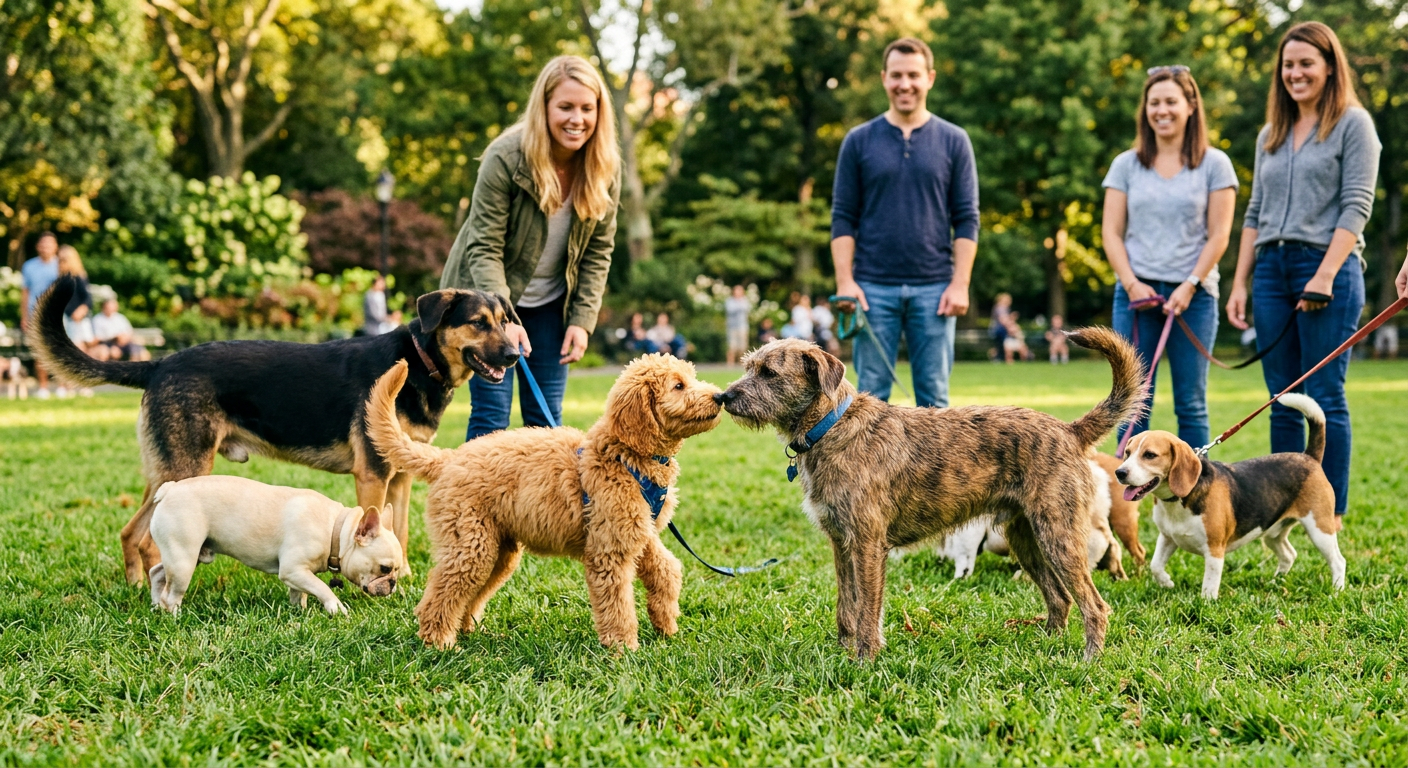
Okay, here's where things get really important, so perk up those ears. The puppy socialization window — also called the critical or sensitive period — is the stretch of time when a puppy's brain is essentially a sponge, soaking up experiences and deciding what's safe and what's scary.
Research consistently shows that the critical puppy socialization periods fall between 7 and 14 weeks of age. During this window, puppies naturally accept new experiences and form lifelong positive associations. After about 14-16 weeks, that window starts to close, and the brain shifts from "curious and open" to "cautious and skeptical."
I remember being a little guy, maybe 8 weeks old, and my mom Lacey took me to sit on a blanket in a park near our home. I heard kids laughing, felt grass under my paws for the first time, saw a jogger zip by, and smelled approximately 47,000 interesting things. My brain was filing all of it away under "normal, no big deal." That's the magic of early socialization.
The American Veterinary Society of Animal Behavior actually recommends that puppy classes start as early as 7-8 weeks of age, right after initial vaccinations, in sanitized, positive-reinforcement environments. They've concluded that the behavioral risks of waiting outweigh the minimal disease risks when proper protocols are followed.
The Timeline Breakdown
Here's a quick look at how the puppy socialization periods unfold:
- 3-5 weeks: Puppies begin interacting with littermates and mom. This is where they learn basic dog communication — bite inhibition, play signals, body language.
- 5-7 weeks: Curiosity peaks. Puppies start exploring beyond the litter and respond to human handling.
- 7-12 weeks: The prime puppy socialization window. This is your golden opportunity (Golden Doodle opportunity?) to expose your pup to as many positive new experiences as possible.
- 12-14 weeks: The window begins to narrow. Puppies become more cautious of unfamiliar things.
- 14-16 weeks: The window is closing. New experiences may trigger fear responses instead of curiosity.
This doesn't mean all hope is lost after 16 weeks — but it does mean the work gets significantly harder. It's like learning a language: immersion at age 3 is effortless, but picking up French at 40 requires a lot more flashcards and wine.
How to Socialize Your Puppy Safely (Before Full Vaccination)
I know what you're thinking: "But Auggie, my vet said not to take my puppy out until they're fully vaccinated!" I hear you, and your vet is right to be cautious about disease risks like parvovirus. But here's the nuance that VCA Animal Hospitals explains beautifully: early, safe socialization exposures act like "vaccinations" against fear, and the behavioral benefits outweigh disease risks when you limit contact to vaccinated puppies and clean environments.
The key is controlled exposure, not a free-for-all at the dog park. Here's what my mom Lacey did with me, and what I recommend for your new pup:
Safe Socialization Strategies
- Carry your puppy through pet-friendly stores, farmers' markets, and outdoor cafes. They experience new sights, sounds, and smells without touching contaminated ground.
- Use a blanket in public spaces. Spread it out at a park and let your puppy observe the world from a clean, safe spot.
- Host controlled playdates with fully vaccinated, healthy adult dogs or puppies from reputable puppy classes.
- Puppy socialization classes — look for ones that require proof of initial vaccines and use sanitized flooring. Many vets and trainers near you offer these starting at 7-8 weeks.
- Invite friends and family over to gently handle your puppy. Different ages, appearances, and energy levels help build comfort.
- Expose to household sounds — vacuum cleaners, doorbells, thunderstorm recordings, TV sounds.
PetMD recommends socializing your puppy 2-3 times per week until at least 6 months of age, and specifically avoiding dog parks until 16 weeks when your pup has their full series of vaccinations.
A great tool for those early outings is the Pecute Pet Sling Carrier — my mom Lacey used something similar to carry me around town when I was too small (and too unvaccinated) to walk everywhere. It kept me safe, close, and able to observe the world without risk.
What to Expose Your Puppy To During Socialization
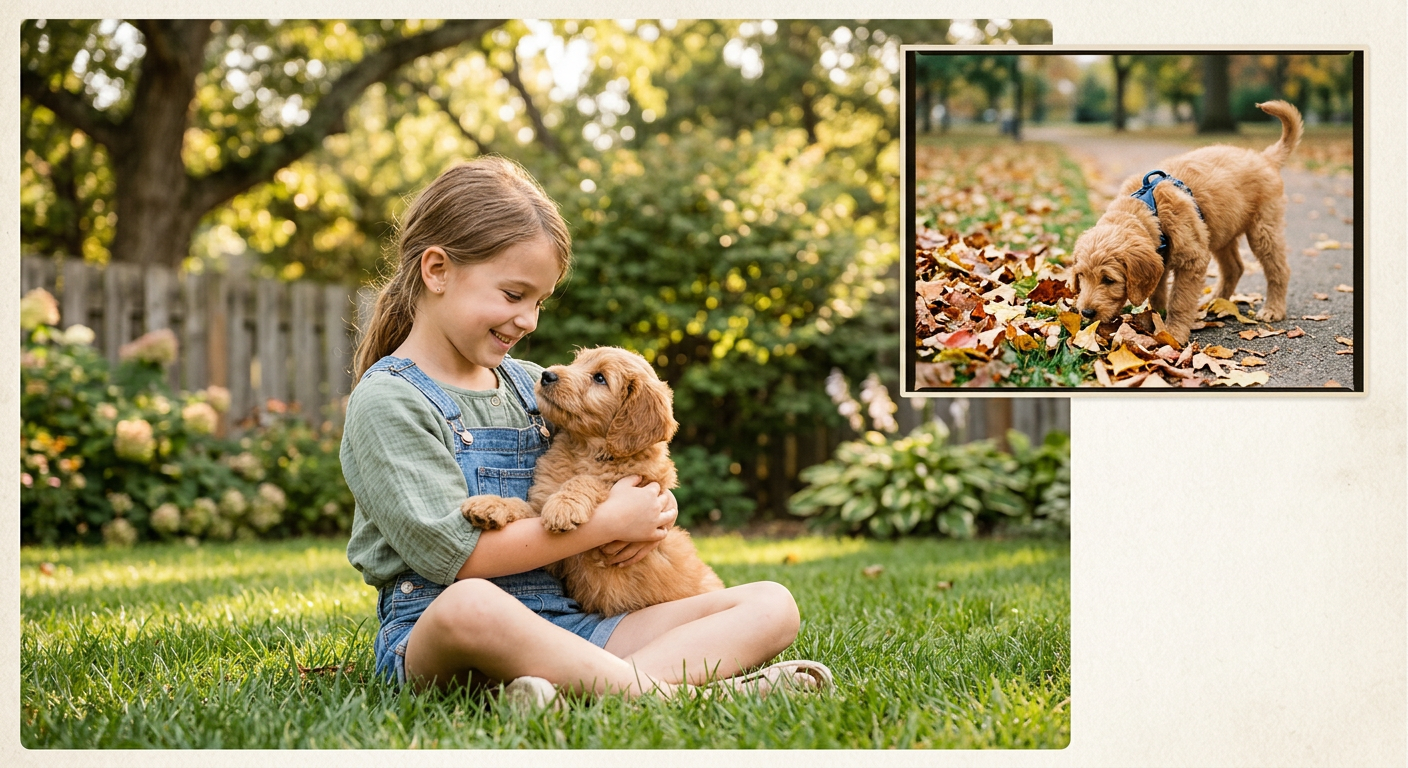
Let me tell you — the list is longer than you think. Puppy socialization isn't just about meeting other dogs. It's about building a complete picture of the world. Here's my comprehensive checklist:
People
- Men and women of different ages
- Children (gentle ones, please!)
- People wearing hats, sunglasses, uniforms, and backpacks
- People with beards, wheelchairs, walkers, or canes
- Delivery drivers and mail carriers (we're going to see them A LOT)
Animals
- Vaccinated, friendly dogs of different sizes and breeds
- Cats (if possible — I'm still working on this one)
- Livestock if you live in a rural area
Environments
- Different floor surfaces: tile, hardwood, grass, gravel, metal grates
- Stairs and ramps
- Cars, buses, and traffic sounds
- Dog-friendly stores in your area
- Veterinary offices (just for happy visits — treats and nothing scary)
- Grooming facilities
Sounds
- Fireworks recordings (start low volume!)
- Thunder and rain
- Construction noise
- Appliances: blenders, vacuums, dishwashers
- Sirens and horns
Handling
- Touching paws, ears, mouth, and tail
- Nail trimming (even if you're just touching the clippers to their nails)
- Brushing and bathing
- Being picked up and held
The American Veterinary Medical Association (AVMA) advises using praise, play, and treats for all positive socialization exposures, and — this is crucial — allowing your puppy to withdraw if they're uncomfortable. Socialization should never be forced. If your pup backs away from something, let them. Try again later with more distance or at lower intensity.
For reward-based training during socialization sessions, I'm a huge fan of Zuke's Mini Naturals Training Treats. They're small, soft, low-calorie, and absolutely delicious — trust me, I've done extensive taste testing. They're perfect for rewarding brave puppy behavior during new experiences.
Signs of Good vs. Poor Puppy Socialization
How do you know if your puppy socialization efforts are working? Let me give you both sides of the coin.
Signs Your Puppy Is Well-Socialized
- Approaches new people and dogs with a relaxed, wiggly body
- Recovers quickly from startling sounds or experiences
- Explores new environments with curiosity, not cowering
- Plays appropriately with other dogs (takes turns, respects signals)
- Tolerates handling by different people, including the vet and groomer
Signs of Insufficient Socialization
- Excessive barking, lunging, or growling at strangers or other dogs
- Hiding, trembling, or freezing in new environments
- Inability to recover from surprising or mildly stressful events
- Resource guarding or snapping when touched
- Generalized anxiety on walks or in the car
If you're noticing fear-based behaviors, don't panic — but do act quickly. The earlier you address these issues with a certified trainer or veterinary behaviorist near you, the better the outcome. Fear doesn't resolve on its own; it tends to compound.
Puppy Socialization Beyond the Critical Window
I want to be really clear about something: while the puppy socialization window of 7-14 weeks is the most impactful period, socialization doesn't stop there. Think of those early weeks as laying the foundation, and everything after as building the house.
After 14 weeks, continue exposing your puppy to new experiences 2-3 times per week. Many puppies go through a secondary fear period between 6-14 months where things they previously seemed fine with suddenly become scary. This is totally normal — it happened to me around 8 months when I randomly decided that the recycling bin was a monster. My mom Lacey just patiently reintroduced me to it with treats, and within a few days I was back to ignoring it like a pro.
For structured socialization as your puppy grows, consider enrolling in group training classes in your area. The social exposure combined with obedience training is an incredibly powerful combination.
A product that really helped me during my ongoing socialization was the ADAPTIL Junior Calming Collar. It releases dog-appeasing pheromones that mimic the calming signals from a nursing mother dog. My mom Lacey put one on me during my early puppy classes and outings, and it seemed to take the edge off during those "everything is new and overwhelming" moments.
Creating a Puppy Socialization Checklist
My mom Lacey is a list person (she has lists for her lists), and when it came to my puppy socialization, she created a checklist to make sure we were covering all our bases. I highly recommend you do the same.
Here's a simplified version to get you started:
Week 7-8:
- First puppy class enrollment
- Meet 5 different people at home
- Introduce 3 different floor surfaces
- Handle paws, ears, and mouth daily
- Play calming music and household sounds
Week 9-10:
- Carry puppy to a pet-friendly store
- First car ride (short and positive!)
- Meet children under supervision
- Introduce crate training
- Practice gentle grooming
Week 11-12:
- Controlled playdate with vaccinated dog
- Visit the vet for a "happy visit" (treats only, no procedures)
- Outdoor blanket session at a park near you
- Exposure to umbrellas, hats, and other visual stimuli
Week 13-16:
- Continue puppy classes
- Expand environments (different neighborhoods, parking lots, cafes)
- Introduce nail clippers and toothbrush
- Practice being alone for short periods
- Meet people of varying appearances and mobility
To keep track of everything and support your training journey, I recommend the Puppy Training Log Book by Petfancy. It helps you record socialization experiences, track milestones, and stay organized during those hectic (but adorable) early weeks.
Common Puppy Socialization Mistakes to Avoid
Even with the best intentions, humans sometimes get puppy socialization wrong. I've seen it at the dog park, and I've heard the stories. Here are the most common mistakes to steer clear of:
- Flooding instead of gradual exposure. Taking your 8-week-old puppy to a loud street festival is not socialization — it's overwhelming. Start small, build up.
- Waiting until full vaccination to begin. As we discussed, the behavioral risks of waiting far outweigh the disease risks when you use safe, controlled methods.
- Forcing interactions. If your puppy hides behind your legs when meeting a new person, don't drag them out. Let them observe from a distance and approach on their own terms.
- Skipping the "boring" stuff. Sounds, surfaces, and handling are just as important as meeting new dogs. Don't neglect desensitization to everyday stimuli.
- Stopping too soon. Puppy socialization doesn't end at 16 weeks. Continue regular exposure through at least the first year.
- Only socializing with other dogs. A dog who loves dogs but panics around humans, bikes, or strollers isn't well-socialized.
One more product I want to mention for those of you working on sound desensitization at home: the PetAcoustics Pet Tunes Bluetooth Speaker plays frequency-modified calming music specifically designed for dogs. It's great for creating a soothing background during new experiences or for winding down after a big socialization outing.
Finding Puppy Socialization Resources Near You
One of the best things you can do is find puppy socialization classes, playgroups, and dog-friendly spaces in your area. Here's how:
- Ask your veterinarian — most clinics have referral lists for reputable puppy classes nearby.
- Check local training facilities — look for trainers who use positive reinforcement methods exclusively.
- Visit doggieparknearme.com — we help you find dog parks, off-leash areas, and puppy-friendly spaces near you. Once your pup is fully vaccinated, dog parks become an incredible ongoing socialization resource.
- Join local puppy meetup groups on social media — many communities have organized, safe puppy playdate groups.
- Pet-friendly businesses in your area (hardware stores, some bookshops, outdoor dining patios) are great training grounds for real-world exposure.
Listen, friends — if there's one thing I want you to take away from everything I've shared today, it's this: the puppy socialization window is short, but its impact lasts a lifetime. Those early weeks between 7 and 14 weeks are your golden opportunity to shape a confident, happy, well-adjusted dog. My mom Lacey invested the time, patience, and treats (so many treats) to make sure I experienced the world in a safe, positive way — and I'm living proof that it works. I'm the dog who happily greets every stranger, plays nicely at the park, and rides in the car with my head held high.
Don't let this critical window close without taking action. Start today — even if it's just carrying your puppy through a pet store or inviting a friend over for a treat-filled meet and greet. Your future dog will thank you with a lifetime of tail wags.
Got questions about finding dog parks and puppy-friendly spaces near you? Head over to doggieparknearme.com and let us help you start the adventure!
Paws and love, 🐾 Auggie
Frequently Asked Questions
What is the 7 7 7 rule for puppies?
The 7 7 7 rule is a puppy socialization guideline suggesting that by the time your puppy is 7 weeks old, they should have walked on 7 different surfaces, played with 7 different toys, been to 7 different locations, met 7 different people, been exposed to 7 different challenges (like climbing small steps), eaten from 7 different containers, and eaten in 7 different locations. It's a simple framework to ensure broad, positive exposure during those early critical weeks. My mom Lacey used a version of this with me, and it's a great way to make sure you're not accidentally limiting your puppy's experiences to just your living room!
What is the 3-3-3 rule with puppies?
The 3-3-3 rule is actually more commonly associated with rescue and adopted dogs, but it applies to new puppies too. It breaks down the adjustment period: in the first 3 days, your puppy may feel overwhelmed and shut down — give them space and keep things calm. In the first 3 weeks, they start settling into a routine, learning your household rules, and showing more of their personality. After 3 months, they typically feel fully at home and bonded to you. During all three phases, gentle puppy socialization should be happening — just calibrate the intensity to your pup's comfort level.
What is the 10 10 10 rule for puppies?
The 10 10 10 rule is another socialization framework that suggests your puppy should meet 10 different people, visit 10 different places, and be exposed to 10 different surfaces or environments before they're 10 weeks old. Some variations expand this to include 10 different sounds, 10 different objects, and 10 different handling experiences. The goal is the same as other socialization rules: broad, positive exposure during the critical puppy socialization window. I love this rule because it gives humans a concrete, measurable target to work toward rather than a vague 'socialize your puppy' instruction.
Is 20 weeks too late to socialize a puppy?
It's not too late, but it is past the critical puppy socialization window of 7-14 weeks, which means the work will be harder and require more patience. At 20 weeks, your puppy's brain has shifted from its default 'curious and accepting' mode to a more cautious approach to new stimuli. You can absolutely still socialize a 20-week-old puppy — you'll just need to go slower, use high-value rewards, and potentially work with a professional trainer or behaviorist if fear-based reactions have already developed. The most important thing is to start now rather than waiting any longer. Every positive experience still counts, regardless of age.
About Auggie
Hi, I'm Auggie! I'm a Golden Doodle who's been to more dog parks than most humans. My mom Lacey and I started Doggie Park Near Me to help every pup find their perfect park. When I'm not sniffing out new spots, you'll find me napping in the sun or begging for treats.
Learn more about us →More From Auggie

Dog Parks as Socialization Tools: Do's and Don'ts for a Happy, Well-Adjusted Pup
Hey, it's Auggie! Dog park socialization can be a game-changer — or a total disaster if you do it wrong. I'm sharing the do's and don'ts of using dog parks as socialization tools, from vaccination must-knows to reading canine body language. Let's make every park visit a tail-wagging success!

Puppy Socialization Checklist: Everything Your Pup Needs to Experience
Hey there, it's Auggie! I put together the ultimate puppy socialization checklist so your new pup can experience everything — people, sounds, surfaces, and more — during that critical 3-16 week window. Packed with expert tips, product picks, and my own Golden Doodle wisdom!

Auggie’s playful guide to a doggie park near me
Hi, I'm Auggie the Golden Doodle and I'm on a mission to uncover the best doggie park near me! In my ultimate guide, you'll discover local adventure tips, safety insights, and the must-have gear for fun, tail-wagging visits. Join me as I sniff out the perfect park spots and share firsthand advice on making every park day a joyous, healthy romp. Come along on this local journey—click to learn more!