
Dog Parks as Socialization Tools: Do's and Don'ts for a Happy, Well-Adjusted Pup
Hey there, friends — it's your favorite curly-coated correspondent, Auggie! If there's one thing I know a thing or two about, it's dog park socialization. From the first time my mom Lacey carried me through those double gates as a fluffy little puppy to the confident, tail-wagging regular I am today, the dog park has shaped who I am. But here's the thing — not every trip to the park is created equal, and not every dog is ready for the free-for-all that an off-leash park can be. I've seen the magic that happens when socialization goes right: new friendships, zoomies that could power a small city, and dogs learning to speak each other's language fluently. I've also seen what happens when it goes wrong — snapping, cowering, and owners scrambling to separate tangled leashes. So let's dig into this together (and I mean that literally — I love digging). Here are the do's and don'ts of using dog parks as socialization tools, straight from a dog who's lived it.
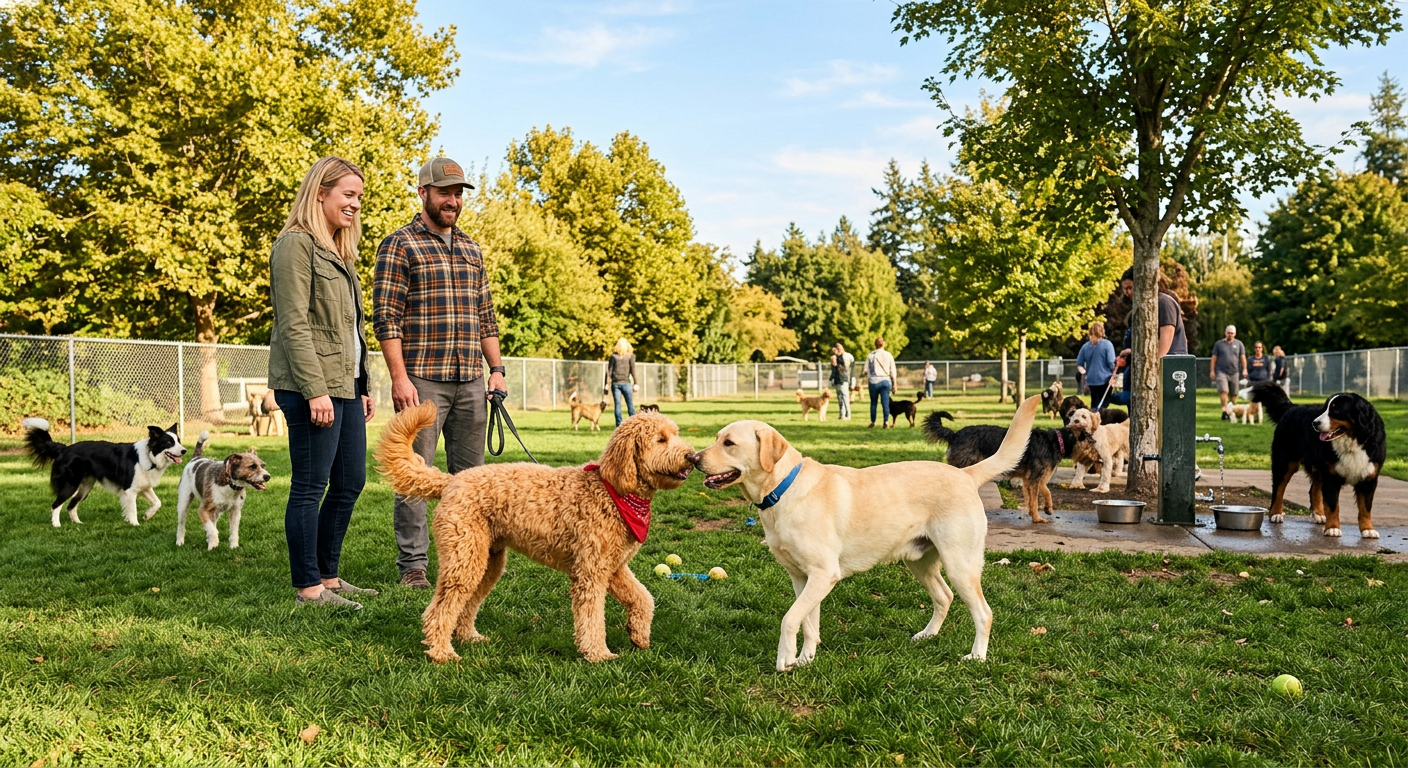
Why Dog Park Socialization Matters for Every Pup
Let me start with the basics: dog socialization is the process by which we dogs learn to interact confidently and calmly with other dogs, humans, environments, sounds, and experiences. It's not just about playing — it's about building emotional resilience and communication skills that last a lifetime.
According to a peer-reviewed systematic review published by PubMed Central (PMC), dog parks improve dogs' physical and social health, boost owner community cohesion, and even increase moderate-to-vigorous physical activity for the humans on the other end of the leash. That's a win-win if I've ever sniffed one out.
Regular dog park socialization helps us become well-adjusted members of the neighborhood. Whole Dog Journal reports that dogs who are properly socialized through parks and structured play show fewer behavioral problems like aggression, hyperactivity, and destructive tendencies — which, honestly, can reduce shelter surrenders and those dreaded "nuisance" complaints from neighbors who don't appreciate a bored dog's creative redecorating.
For my mom Lacey, taking me to the park wasn't just about tiring me out (although, let's be real, that was part of it). It was about helping me learn that the world is a safe, exciting place full of friends I haven't met yet. And that lesson has stuck with me through every new trail, every vet visit, and every encounter with a suspicious-looking mailman.
Understanding the Critical Socialization Window
Now, here's where things get a little science-y, but stick with me — I'm a smart boy.
The most critical period for dog socialization training is between 8 and 12 weeks of age. This is when our brains are like little sponges, soaking up every experience and filing it under "safe" or "scary." According to Texas A&M University's College of Veterinary Medicine, controlled exposures during this window can prevent future anxiety and behavioral issues.
But — and this is a big but (not the kind I like to sniff) — puppies in this age range haven't completed their full vaccination series, which typically wraps up around 16–18 weeks. That means the big, bustling dog park with its rotating cast of unknown dogs isn't the safest place for a tiny pup whose immune system is still under construction.
So what's a well-meaning dog parent to do? The answer isn't to lock your puppy in a bubble. It's to find controlled socialization opportunities during this critical window:
- Puppy socialization classes with verified vaccinations
- Playdates with known, healthy, vaccinated dogs
- Exposure walks past the dog park (on leash, at a distance) so your puppy can observe without diving in
- Varied environments like pet-friendly stores, different floor surfaces, and car rides
My mom Lacey did all of this before I ever set paw inside an off-leash area. She took me to puppy kindergarten, arranged playdates with her friends' dogs, and let me watch the big kids play at the park from the safety of her arms. By the time I was fully vaccinated and ready for the real deal, I already had a solid social foundation.
The Do's of Dog Park Socialization
Alright, let's get into the good stuff — the things you absolutely SHOULD do to make dog park socialization a positive experience.
Do: Make Sure Vaccinations Are Current
This one is non-negotiable, friends. Wagbar's veterinary guide emphasizes that dog parks increase exposure to contagious diseases like kennel cough (spread through airborne droplets) and parasites like giardia. Before your dog hits the park, make sure they're up to date on core vaccinations — including rabies, distemper, parvovirus, and bordetella.
I personally carry my vaccination records in style. My mom keeps them organized, and she also keeps a digital copy on her phone. If you want to stay organized on the go, a Mighty Paw Dog Gear Travel Bag is a great way to keep essentials like vaccination records, waste bags, and a collapsible water bowl all in one place.
Do: Observe Before Entering
This is my mom Lacey's golden rule. Before she ever opens that gate, she stands outside and watches. She's looking at the energy level inside, the size of the dogs, whether anyone seems aggressive or overly aroused, and how attentive the other owners are.
I've learned to do this too — I give the park a good sniff from the outside before I commit. If the vibe feels off, we walk away and come back later. There's no shame in that.
Do: Start Slow, Especially with New Dogs
If you're introducing your dog to the park for the first time, don't just fling the gate open during peak hours and hope for the best. Choose a quieter time — early morning or a weekday afternoon — when there are fewer dogs and less chaos. Let your dog acclimate to the sights, smells, and sounds at their own pace.
Do: Keep Moving
One of the best things you can do at the dog park is walk. Don't park yourself on a bench and scroll through your phone (I see you, bench sitters). Walking gives your dog a purpose and keeps the energy flowing naturally. Dogs who stand around near the entrance tend to form "greeting committees" that can overwhelm newcomers.
Do: Bring Fresh Water
Communal water bowls at dog parks can be a breeding ground for bacteria. I'm a big fan of having my own supply. My mom always brings a RUFFWEAR Trail Runner Collapsible Dog Bowl and a water bottle just for me. Staying hydrated is key, especially during those epic play sessions.
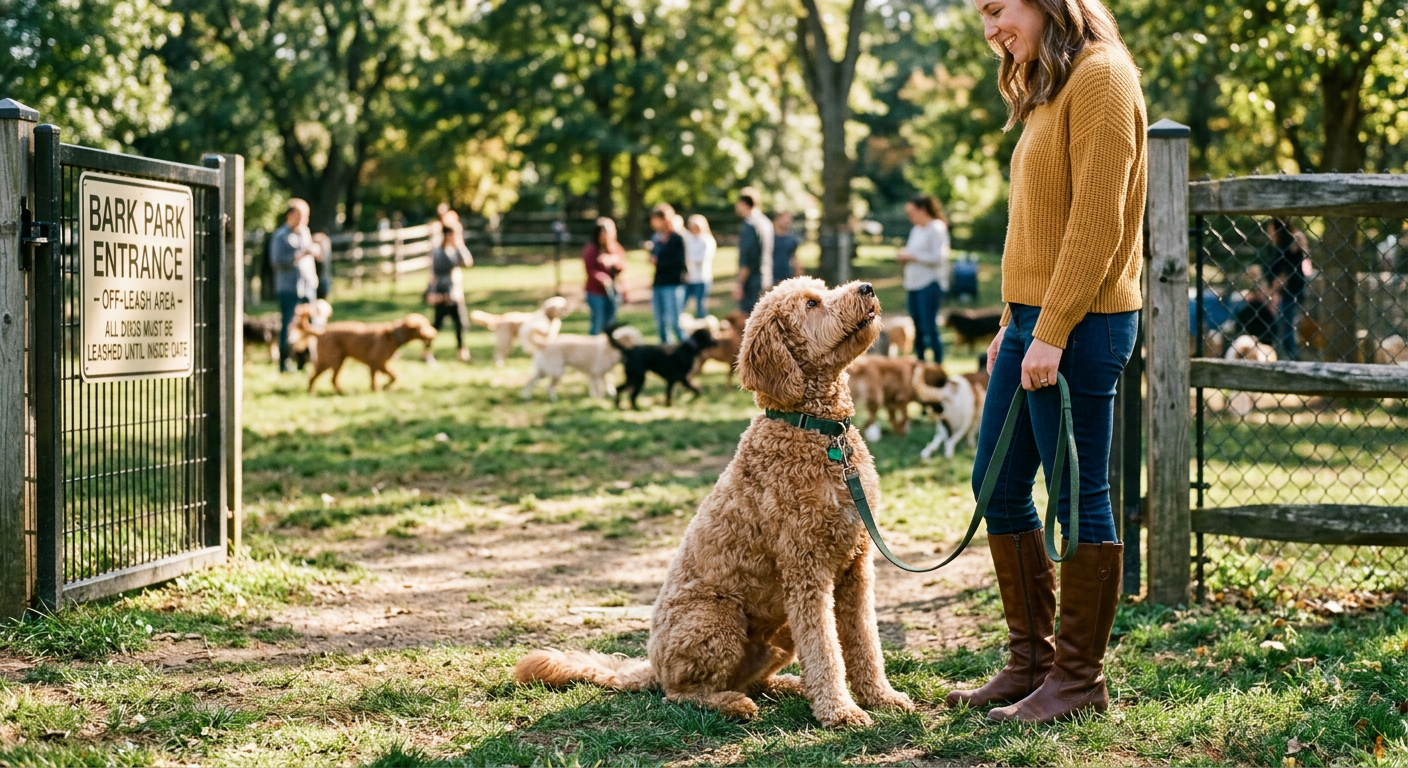
The Don'ts of Dog Park Socialization
Now for the stuff that makes my ears pin back. These are the mistakes I see way too often.
Don't: Bring an Unvaccinated Puppy
I know I already mentioned this, but it bears repeating. Puppies under 16 weeks who haven't completed their vaccination series are vulnerable to serious, potentially fatal diseases like parvovirus. The dog park is not the place for them yet. Stick to controlled environments until your vet gives the green light.
Don't: Bring a Reactive, Fearful, or Aggressive Dog
Texas A&M's veterinary experts are clear on this point: reactive, fearful, aggressive, intact (unspayed/unneutered), sick, or injured dogs should avoid dog parks. The park environment can overwhelm these dogs and worsen existing behavioral issues.
If your dog falls into any of these categories, that doesn't mean socialization is off the table — it just means you need a different approach. Dog socialization training through a certified professional trainer, structured daycare, or small, controlled playgroups is a much better option. VCA Animal Hospitals recommends seeking compatible playgroups through local networks for safer, more predictable experiences.
Don't: Use the Dog Park as a Substitute for Training
The dog park is not obedience school. If your dog doesn't have a reliable recall — meaning they come when called, every time — they're not ready for an off-leash environment. My mom Lacey spent weeks working on my recall before she ever unclipped my leash at the park. She used high-value treats (I'm partial to anything involving peanut butter) and a PetSafe Treat Pouch Sport clipped to her waist so she could reward me instantly.
Don't: Bring Toys, Food, or High-Value Resources
Resource guarding is real, folks. Bringing your dog's favorite ball or a bag of treats into a multi-dog environment is asking for trouble. Even the friendliest dogs can get possessive when their prized squeaky toy is at stake. Trust me, I've seen friendships end over a tennis ball.
Don't: Ignore Body Language
This is the biggest "don't" of them all. If you don't know how to read canine body language, you're flying blind at the dog park. Learn to recognize the difference between play and aggression:
- Play bow (front end down, rear end up) = Let's party!
- Loose, wiggly body = I'm having a great time
- Stiff body, hard stare = I'm uncomfortable
- Lip curling, growling, snapping = Time to intervene
- Whale eye (showing the whites of their eyes) = I'm stressed
- Tucked tail, cowering = Get me out of here
If your dog — or any dog near you — is showing stress signals, it's time to calmly remove your pup from the situation.
How to Build a Dog Park Socialization Routine
Consistency is the secret sauce of great dog socialization. Here's the routine my mom Lacey and I developed that works beautifully:
- Pre-park check: Vaccinations current? Flea and tick prevention applied? Feeling healthy and energetic? Let's go!
- Arrival assessment: Walk the perimeter. Observe the dogs inside. Is the energy level manageable? Are owners paying attention?
- Calm entry: Enter through the double gate. Keep the leash on for the first 30 seconds while I sniff and settle. Then unclip.
- Active supervision: My mom walks with me, always within voice range. She watches my interactions and reads the room.
- Short sessions: Especially for new dogs, keep visits to 20–30 minutes. Overstimulation is real. Better to leave on a positive note than to push it until something goes wrong.
- Post-park cool down: After every visit, Lacey gives me a once-over for ticks, scratches, or anything unusual. She uses Vet's Best Flea and Tick Wipes to give me a quick wipe-down, especially around my paws and belly.
Alternatives to Dog Parks for Socialization
Look, I love the dog park — it's my happy place. But I also know it's not the right fit for every dog or every situation. Here are some excellent alternatives for dog socialization training that are available near you:
- Puppy classes and obedience courses: These provide structured socialization in a controlled environment with professional guidance. Ask your local training facility about group classes in your area.
- Doggy daycare: Many daycares screen dogs for temperament and separate them by size and play style. This can be a safer, supervised alternative to the open dog park.
- Structured playgroups: VCA Animal Hospitals suggests connecting with local dog owner networks to arrange small, compatible playgroups.
- Hiking and on-leash adventures: Exploring new trails and neighborhoods exposes your dog to novel stimuli — new smells, sounds, terrain, and the occasional squirrel that absolutely must be investigated.
- Sniff walks: Sometimes the best socialization is environmental. A slow, leash-walk through a bustling park or downtown area lets your dog process the world at their own pace.
For on-leash adventures where you still want to give your pup some room to explore, I highly recommend a Mighty Paw Hands-Free Dog Leash. It clips around your waist and gives you freedom to move naturally while keeping your dog safely connected.
Signs Your Dog Is Thriving (or Struggling) at the Park
Since we dogs can't exactly tell you in words how we're feeling (I mean, I'm writing a blog, but you get the point), here are the signs to watch for:
Signs of positive socialization:
- Relaxed body posture
- Play bows and bouncy movements
- Taking turns during chase games
- Checking in with their human periodically
- Voluntarily approaching new dogs with a loose, waggy body
Signs your dog is overwhelmed:
- Hiding behind you or between your legs
- Excessive panting or drooling (not from exercise)
- Trying to leave the park or scratching at the gate
- Snapping or growling at dogs who approach
- Shutting down — standing still, refusing to engage
If you're seeing more of the second list than the first, it's time to take a step back and try a less intense socialization approach. There's absolutely no failure in that — it's just meeting your dog where they are.
Dog Park Etiquette: Being a Good Neighbor
Since we're all sharing the park, let's talk about being good citizens — both canine and human:
- Always pick up after your dog. Always. No exceptions. No "I'll get it on the way out." Now.
- Keep your phone in your pocket. Supervise your dog actively.
- Don't bring small children into the off-leash area. Even the friendliest dog can accidentally knock over a toddler during a case of the zoomies.
- Leave when your dog is tired. An overtired dog is a cranky dog.
- Intervene early. If play is escalating, redirect before it becomes a problem.
- Communicate with other owners. A simple "Is your dog friendly?" goes a long way.
Well, friends, there you have it — everything I've learned about dog park socialization from years of tail-wagging, butt-sniffing, and full-speed zooming with my four-legged friends. The dog park can be one of the most wonderful tools in your socialization toolkit, but only when used thoughtfully. Know your dog, read the room, keep those vaccinations current, and never be afraid to walk away when the vibe isn't right.
My mom Lacey and I are big believers in setting our dogs up for success. Whether that means the off-leash park, a structured puppy class, or just a slow sniff walk through the neighborhood near you, every positive experience builds a more confident, happier dog.
Now if you'll excuse me, I think I hear the jingle of my leash — park time! 🐾
Want to find the best dog parks in your area? Check out our Dog Park Finder and start your next adventure today!
Wags and wiggles, Auggie 🐕
Frequently Asked Questions
Are dog parks good for socialization?
Absolutely — when used correctly! Dog parks provide a unique opportunity for dogs to interact with a variety of breeds, sizes, and play styles in a natural, off-leash setting. Research published by PubMed Central shows that regular dog park use improves both physical and social health in dogs. However, the key word is 'correctly.' Dogs should be fully vaccinated, have a baseline of training (especially recall), and be temperamentally suited for the off-leash environment. Reactive, fearful, or aggressive dogs benefit more from structured alternatives like puppy classes or small playgroups. When used as one tool in a broader socialization strategy, dog parks can be incredibly beneficial.
What is the 3-3-3 rule with dogs?
The 3-3-3 rule is a guideline commonly used for rescue and newly adopted dogs. It describes the typical adjustment timeline: In the first 3 days, your new dog may feel overwhelmed, scared, or shut down — they're just figuring out where they are. After 3 weeks, they start settling in, learning routines, and showing more of their true personality. After 3 months, they generally feel secure and bonded with their new family. During this entire transition, socialization should be gradual and gentle — avoid the high-stimulation environment of a dog park until your dog is settled and comfortable in their new life.
What is the 7 7 7 rule for dogs?
The 7-7-7 rule is a puppy socialization guideline that suggests by 7 weeks of age, a puppy should have been on 7 different surfaces, played with 7 different toys, been in 7 different locations, met 7 different people, been exposed to 7 different challenges (like stairs or gentle obstacles), eaten from 7 different containers, and eaten in 7 different locations. This rule is designed to create a broad base of positive experiences during the critical socialization window, building a confident dog who can handle new situations with ease. It's a great framework to follow before your pup is old enough for the dog park.
Is it ever too late to socialize a dog?
It's never truly too late, but it does get harder after the critical socialization window closes around 12–16 weeks of age. Adult dogs who missed early socialization can still learn to be more comfortable around other dogs and people, but the process requires more patience, consistency, and often professional guidance. Instead of jumping straight to a dog park, work with a certified dog trainer or behaviorist to create a gradual desensitization plan. Structured playgroups, parallel walking with calm dogs, and positive reinforcement-based training are all excellent strategies. Every positive experience counts, no matter your dog's age.
How often should I take my dog to the dog park for socialization?
For most well-adjusted, healthy dogs, 2–4 visits per week is a great frequency for maintaining social skills and burning off energy. However, quality always matters more than quantity. A calm, positive 20-minute session is far more valuable than an hour-long visit where your dog is overstimulated or stressed. Pay attention to your individual dog's needs — some dogs thrive with daily visits, while others do best with a couple of trips per week supplemented by other activities like leash walks and training sessions.
What should I do if my dog gets into a fight at the dog park?
Stay as calm as possible — your panic will escalate the situation. Never reach between two fighting dogs with your hands. Instead, try to break the dogs' focus by making a loud noise (clapping, using a whistle, or banging something nearby). If that doesn't work, some trainers recommend the 'wheelbarrow method,' where each owner grabs their dog's hind legs and walks backward to separate them. After any altercation, calmly leash your dog and leave the park. Check for injuries and contact your vet if you notice any bites or wounds. Reflect on what triggered the incident — it may indicate that the dog park environment isn't the best fit right now.
About Auggie
Hi, I'm Auggie! I'm a Golden Doodle who's been to more dog parks than most humans. My mom Lacey and I started Doggie Park Near Me to help every pup find their perfect park. When I'm not sniffing out new spots, you'll find me napping in the sun or begging for treats.
Learn more about us →More From Auggie

Puppy Socialization Checklist: Everything Your Pup Needs to Experience
Hey there, it's Auggie! I put together the ultimate puppy socialization checklist so your new pup can experience everything — people, sounds, surfaces, and more — during that critical 3-16 week window. Packed with expert tips, product picks, and my own Golden Doodle wisdom!

Auggie’s playful guide to a doggie park near me
Hi, I'm Auggie the Golden Doodle and I'm on a mission to uncover the best doggie park near me! In my ultimate guide, you'll discover local adventure tips, safety insights, and the must-have gear for fun, tail-wagging visits. Join me as I sniff out the perfect park spots and share firsthand advice on making every park day a joyous, healthy romp. Come along on this local journey—click to learn more!

Puppy Socialization: The Critical Window You Can't Miss
Hey friends, it's Auggie! The puppy socialization window between 7-14 weeks is the most important period in your pup's life. I'm sharing everything my mom Lacey taught me about safe, positive socialization — from timelines and checklists to product recommendations — so your new furry friend grows up confident and happy!