
Puppy Socialization Checklist: Everything Your Pup Needs to Experience
Woof, friends! It's Auggie here — your favorite Golden Doodle blogger — and today I'm wagging my tail extra hard because we're talking about something near and dear to my fluffy heart: the ultimate puppy socialization checklist. Let me tell you, when I was a tiny ball of curls, my mom Lacey made sure I experienced everything from the rumble of a skateboard to the smell of a coffee shop patio. And honestly? That's why I'm the confident, tail-wagging, dog-park-loving guy I am today. Puppy socialization isn't just a nice-to-have — it's the single most important thing you can do for your new pup's future happiness and behavior. Without those early positive experiences, puppies can grow up fearful, reactive, and anxious. But don't worry — I've fetched all the research, sniffed out the best expert advice, and compiled everything into one big, beautiful guide. Let's dig in!
Why a Puppy Socialization Checklist Matters More Than You Think
Okay, let me get real with you for a second. I know "checklist for puppy socialization" sounds like just another to-do list your human has to manage alongside vet appointments and potty training. But this one could literally save your pup's life. According to the American Veterinary Society of Animal Behavior (AVSAB), under-socialized puppies face a significantly higher risk of developing behavior problems — and behavior issues are the number one reason dogs are surrendered to shelters and, tragically, euthanized.
Let that sink in. Not illness. Not old age. Behavior problems.
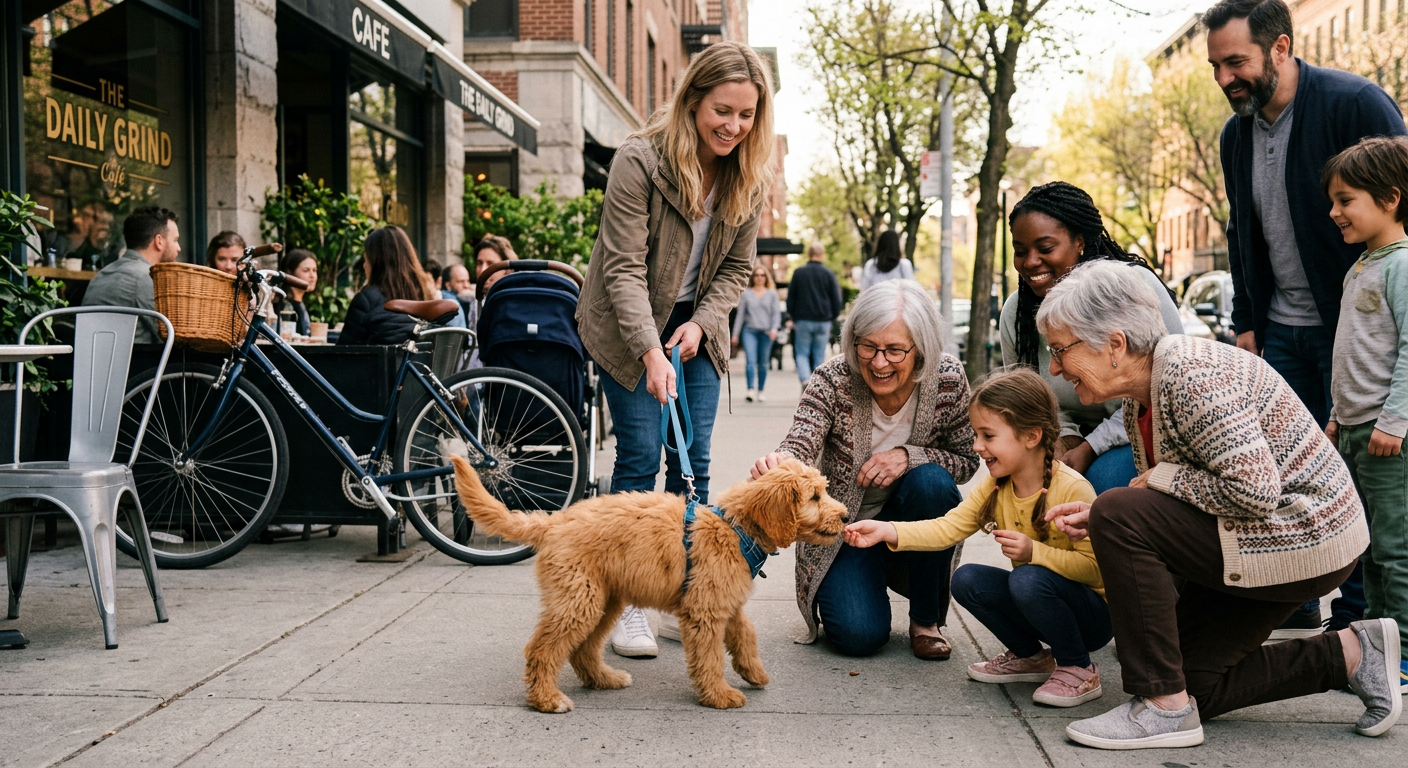
When my mom Lacey brought me home, she immediately started working through a puppy socialization checklist. She carried treats in her pocket everywhere we went. She let me sniff strange objects, hear weird noises, and meet all kinds of people — tall ones, short ones, people in hats, people with beards, kids on scooters. Every single experience was paired with something yummy or a cheerful "Good boy, Auggie!" And that's exactly the approach the experts recommend.
The goal isn't just exposure — it's positive exposure. There's a huge difference between dragging a terrified puppy through a loud festival and gently introducing them to new sounds from a comfortable distance with plenty of treats. Trust me, my nose knows the difference.
Understanding the Critical Puppy Socialization Window
Here's the science behind the snuggles: puppies have a critical socialization window that runs from approximately 3 to 16 weeks of age. During this magical period, our puppy brains are basically little sponges, soaking up every experience and deciding whether the world is a safe, wonderful place or a scary nightmare.
The UC Davis School of Veterinary Medicine emphasizes that this window is when puppies are most receptive to new experiences. After it closes, introducing novel stimuli becomes much harder and can even trigger fear responses instead of curiosity.
Now, I can already hear some of you asking: "But Auggie, my puppy hasn't finished all their vaccinations yet! Isn't it dangerous to take them out?" Great question, and the answer might surprise you. AVSAB's official position is that puppies can safely start socialization classes after their first set of vaccines and deworming (at least 7 days prior). The behavioral risks of not socializing during this window far outweigh the relatively small disease risk of controlled, clean environments.
My mom Lacey started taking me to a puppy class at 9 weeks old. I'd had my first round of shots, and the training facility required all puppies to be vaccinated. It was one of the best decisions she ever made for me.
Quick Timeline for Puppy Socialization
| Age | Priority |
|---|---|
| 3-5 weeks | Gentle handling by breeder/foster |
| 5-7 weeks | Introduction to household sounds, surfaces |
| 7-9 weeks | New home transition, puppy class enrollment |
| 9-12 weeks | Peak socialization — aim for 100+ positive experiences |
| 12-16 weeks | Continued exposure, reinforcement, confidence building |
The Complete Puppy Socialization Checklist: People
Let's get into the meat (mmm, meat) of this puppy socialization checklist. First up: people! The ASPCApro recommends exposing your puppy to at least 10 new people per week during the critical window. That sounds like a lot, but it adds up fast when you're intentional about it.
Here's your people checklist:
- Men and women of different ages
- Children — toddlers, school-age kids, teenagers
- People wearing hats, sunglasses, helmets, or hoods
- People with beards or unusual hairstyles
- People using mobility aids — wheelchairs, walkers, canes
- People in uniforms — mail carriers, delivery drivers, construction workers
- People of different ethnicities and body types
- Crowds of varying sizes (start small!)
- People carrying objects — umbrellas, bags, boxes
- Babies in strollers or carriers
- People with unusual gaits — limping, jogging, skipping
The trick is to make every encounter a tail-wagging good time. Have strangers offer your puppy a treat. Let your pup approach at their own pace — never force an interaction. If your puppy seems nervous, increase distance and try again another day.
I remember when Lacey introduced me to a man in a big floppy hat. I was a little suspicious at first (I mean, what was that thing on his head?!), but then he offered me a piece of cheese, and suddenly hats were my favorite thing ever.
For treat delivery during socialization outings, I highly recommend the PetSafe Treat Pouch Sport. It clips right onto your human's belt and keeps training treats accessible for those spontaneous positive-association moments.
Puppy Socialization Checklist: Animals
Next on our checklist for puppy socialization — other animals! Now, this one requires extra care because not every animal your puppy meets will be friendly, vaccinated, or appropriate for interaction.
Safe animal exposures include:
- Vaccinated, friendly adult dogs (known temperament)
- Other puppies in supervised playgroups or puppy classes
- Cats (from a safe distance at first)
- Livestock if you live in a rural area — horses, goats, chickens
- Small animals — rabbits, guinea pigs (supervised and through a barrier)
- Birds — at parks, near ponds, or at pet stores
Dog parks near you can be wonderful socialization tools, but I'd recommend waiting until your puppy is at least 16 weeks old and fully vaccinated before visiting an open dog park. In the meantime, organized puppy socialization classes in your area are the gold standard.
Puppy Socialization Checklist: Sounds and Environments
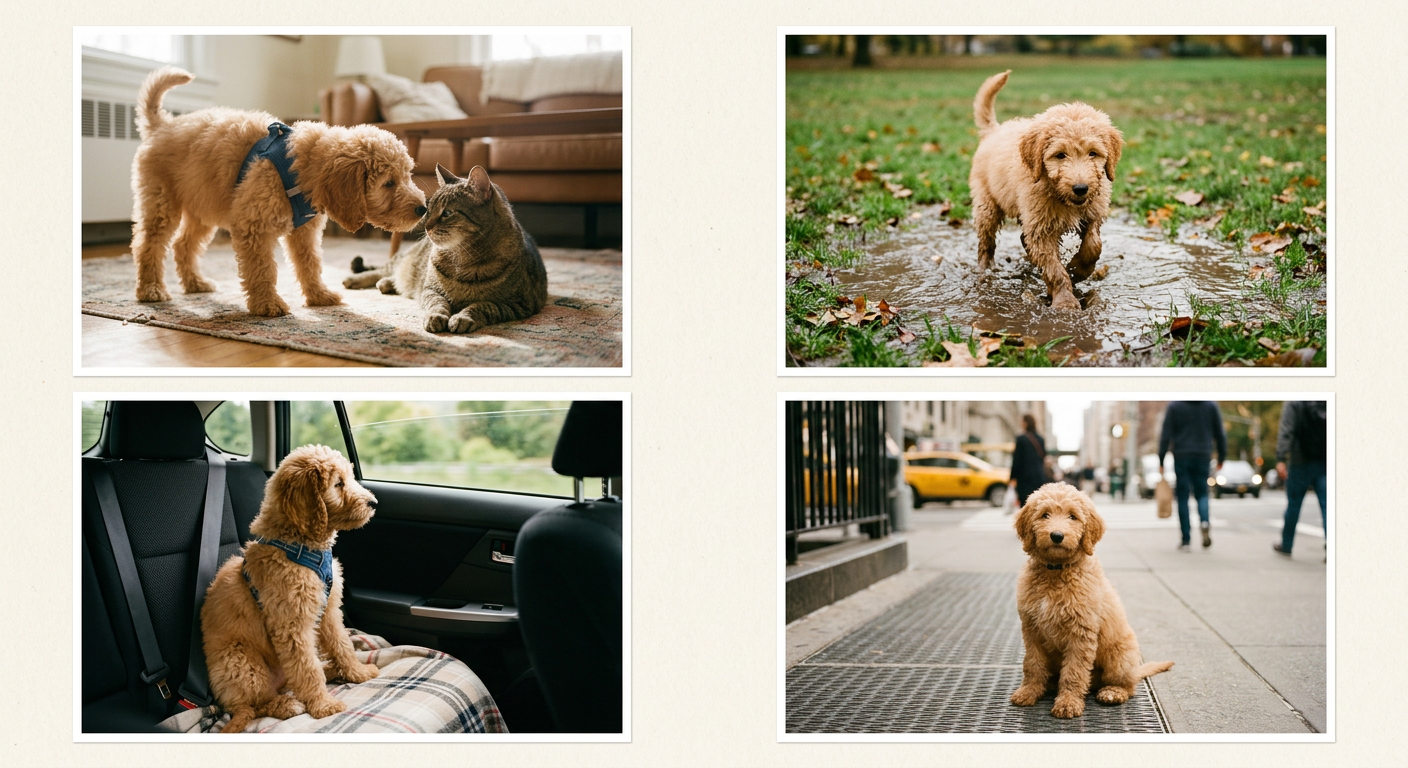
This is where things get really fun — and really important. The world is full of sounds that can terrify an unsocialized dog: thunderstorms, fireworks, vacuum cleaners, sirens. But if your puppy hears them during the socialization window with positive associations? They become background noise.
Sounds to Introduce
- Vacuum cleaner and hair dryer
- Thunderstorms and fireworks (use sound recordings at low volume first)
- Sirens and car horns
- Construction noise — hammers, drills, saws
- Musical instruments
- Doorbells and knocking
- Babies crying
- Dogs barking
- Lawnmowers and leaf blowers
- Kitchen sounds — blender, pots clanging, microwave beeps
Environments to Explore
- Urban streets with traffic noise
- Pet-friendly stores near you — many hardware stores and pet shops welcome puppies
- Parks and trails in your area
- Veterinary offices — just for happy visits with treats!
- Car rides to various destinations
- Different floor surfaces — tile, hardwood, grates, gravel, grass, sand
- Elevators and automatic doors
- Parking garages
- Outdoor cafés and patios
- Friend's houses
My mom Lacey used to play thunderstorm sounds on her phone at super low volume during my mealtimes. She gradually increased the volume over weeks. Now? I sleep right through real storms while she's the one hiding under the blankets. (Just kidding, Lacey. Sort of.)
For sound desensitization at home, the Adaptil Calming Diffuser is a fantastic companion product. It releases dog-appeasing pheromones that help your puppy feel calm and secure while experiencing new stimuli.
Puppy Socialization Checklist: Handling and Body Awareness
This part of the puppy socialization checklist is often overlooked, and it's one of the most important. Your puppy needs to be comfortable being handled — by you, by your vet, by groomers, and by well-meaning strangers who can't resist that puppy fluffiness.
Practice handling these areas daily:
- Paws and individual toes (for future nail trims)
- Ears — look inside, gently touch
- Mouth — lift lips, touch gums and teeth
- Tail — gentle handling
- Belly — getting comfortable with belly-up positions
- Collar and harness areas — neck, chest
- All over body — gentle restraint, hugging
Also practice:
- Nail trimming motions (even without actually cutting)
- Brushing and combing
- Bathing and towel drying
- Being lifted and carried
- Being held by different people
- Wearing a harness, collar, bandana, or coat
Every single handling session should end with treats and praise. You're building a puppy who enjoys vet visits and grooming sessions instead of one who trembles and snaps.
For at-home desensitization to grooming, I love the Hertzko Self-Cleaning Slicker Brush. It's gentle enough for puppy coats and makes brushing a pleasant experience from day one. Lacey still uses one on me, and honestly, it's basically a spa day.
Puppy Socialization Checklist: Objects and Novel Stimuli
Puppies need to learn that the world is full of weird stuff — and that weird stuff is totally fine. Here's your object exposure checklist:
- Umbrellas opening and closing
- Balloons
- Skateboards, bikes, and scooters
- Strollers and wagons
- Trash cans and recycling bins
- Flags and banners blowing in wind
- Plastic bags rustling
- Statues and yard decorations
- Shopping carts
- Brooms and mops
- Exercise equipment
I'll never forget the first time I saw a roomba. That flat, whirring disc was clearly a tiny alien spacecraft, and I was NOT having it. But Lacey tossed treats near it (while it was off), then turned it on from across the room, then gradually brought it closer over several sessions. Now I basically ignore it — although I still keep one eye open, just in case.
How to Socialize Your Puppy Safely Before Full Vaccination
This is one of the biggest concerns I hear from new puppy parents, and I want to address it head-on. The Humane Society of Southern Arizona (referencing AVMA and ASPCA guidelines) provides clear guidance: safe puppy socialization can and should happen before full vaccination.
Here's how to do it safely:
- Enroll in a puppy socialization class that requires proof of initial vaccination — many training facilities near you offer these starting at 7-8 weeks
- Avoid high-traffic dog areas like dog parks, pet stores with heavy foot traffic, and areas where unvaccinated dogs may roam
- Carry your puppy in public when possible — they get the sights, sounds, and smells without touching potentially contaminated ground
- Host puppy playdates with known, vaccinated dogs in clean environments
- Use your car as a mobile socialization station — park at a busy area and let your pup observe from the safety of the vehicle with the windows cracked
- Visit friends' homes where you know the dogs are vaccinated and the yard is clean
The North Seattle Veterinary Hospital recommends starting socialization classes after one vaccine set and deworming at least 7 days prior, emphasizing that the behavioral benefits far outweigh the minimal disease risk in controlled settings.
Common Puppy Socialization Mistakes to Avoid
Even with the best intentions, humans sometimes make mistakes during puppy socialization. Here are the big ones:
Flooding Instead of Gradual Exposure
Taking your puppy to a loud street festival on their first outing is like throwing a kid who can't swim into the deep end. Start small and build up gradually.
Forcing Interactions
If your puppy is showing signs of fear — tucked tail, whale eyes, cowering, lip licking — don't push it. Back off, create distance, and try again later at a lower intensity.
Stopping Socialization After the Window Closes
The critical window may close around 16 weeks, but socialization should continue throughout your dog's life. Keep introducing new experiences!
Not Using Treats and Positive Reinforcement
Every new experience should be paired with something your puppy loves — treats, toys, praise. This creates positive associations that last a lifetime.
Socializing Only at Dog Parks
Dog parks are just one piece of the puzzle. A comprehensive checklist for puppy socialization includes people, places, sounds, objects, surfaces, and handling — not just other dogs.
For reward-based training during socialization outings, keep a bag of Zuke's Mini Naturals Training Treats handy. They're small, soft, smelly (in a good way — at least to us dogs), and perfect for rapid-fire treating during exposure exercises.
Tracking Your Puppy Socialization Progress
One thing my mom Lacey did that I'm really grateful for was keeping a written log of my socialization experiences. She had a spreadsheet (because of course she did) tracking what I'd been exposed to, my reaction, and whether we needed to revisit anything.
You can create your own tracker or download one of the many free puppy socialization checklist PDFs available from organizations like the ASPCA. The key metrics to track:
- Date of exposure
- What the stimulus was (person, sound, object, environment)
- Puppy's reaction (confident, curious, cautious, fearful)
- What reward was used
- Notes for follow-up
Aim for those 100+ positive experiences by 12-14 weeks that the experts recommend. It sounds like a lot, but when you break it down — 10 new people per week, a few new sounds, a couple new environments — it's totally doable.
A great tool for staying organized on the go is the Dexdog Easy Walk Harness, which makes outings comfortable for your puppy and gives you better control during new experiences in your area.
Finding Puppy Socialization Classes Near You
If you're looking for structured puppy socialization opportunities in your area, here are some tips:
- Ask your veterinarian — most vet offices have referrals for reputable trainers and puppy classes nearby
- Search for positive-reinforcement trainers — look for certifications like CPDT-KA or KPA-CTP
- Check local pet stores — many offer puppy socialization workshops
- Look for puppy play groups — some dog daycares offer supervised puppy sessions
- Join local dog owner groups on social media to find recommended classes near you
The best puppy classes use force-free methods, require vaccination proof, and keep groups small enough for individual attention. If a trainer recommends prong collars, shock collars, or "dominance" methods — run. Run far, run fast, and find a better trainer.
Well, friends, we've covered a LOT of ground today — and my paws are tired from all that typing! But I hope this puppy socialization checklist gives you the confidence and structure you need to raise a happy, well-adjusted pup. My mom Lacey always says that the time she invested in socializing me during those first few months paid off a thousandfold. I'm the dog who greets every stranger with a wagging tail, sleeps through thunderstorms, and absolutely lives for dog park adventures.
Remember: go at your puppy's pace, pair every new experience with something wonderful, and don't wait until vaccinations are complete to start. The world is big, beautiful, and full of incredible smells — your puppy deserves to explore it with joy, not fear.
Now grab those treats, clip on that leash, and go make some positive memories! And if you found this guide helpful, share it with a fellow puppy parent. We're all in this together — one tail wag at a time. 🐾
Nose boops and belly rubs, Auggie
Frequently Asked Questions
When should I start using a puppy socialization checklist?
The ideal time to start is as early as 3 weeks (if you're a breeder) and continuing intensively from the moment your puppy comes home, typically around 7-8 weeks. The critical socialization window closes around 14-16 weeks, so every day counts. Start with gentle, positive exposures at home and expand outward as your puppy gains confidence.
Can I socialize my puppy before they are fully vaccinated?
Yes! The American Veterinary Society of Animal Behavior (AVSAB) recommends starting socialization after your puppy's first vaccine set and deworming (at least 7 days prior). Avoid high-risk areas like dog parks, but puppy classes, controlled playdates with vaccinated dogs, and carried outings in public are safe and highly beneficial.
How many new experiences should my puppy have during the socialization window?
Experts recommend at least 100 positive experiences by 12-14 weeks of age. This includes meeting at least 10 new people per week, exposure to various sounds, surfaces, environments, and objects. The key is that each experience is positive — paired with treats, praise, or play — and done at the puppy's pace.
What are signs that my puppy is overwhelmed during socialization?
Watch for a tucked tail, whale eyes (showing the whites of the eyes), cowering, excessive lip licking, yawning, trembling, trying to hide, or refusing treats. If you see these signs, immediately increase distance from the stimulus, offer comfort, and try again later at a lower intensity. Forcing a fearful puppy will make things worse.
Is it too late to socialize my puppy after 16 weeks?
It's never too late to work on socialization, but it does become more challenging after the critical window closes around 16 weeks. Older puppies and adult dogs can still learn to accept new experiences, but it may require more patience, slower introductions, and possibly the help of a certified professional dog trainer or veterinary behaviorist.
What's the difference between socialization and training?
Socialization is about exposing your puppy to a wide variety of people, animals, environments, sounds, and objects so they learn the world is a safe place. Training teaches specific behaviors like sit, stay, and come. Both are essential, and they complement each other beautifully — a well-socialized puppy is easier to train, and training reinforces socialization skills.
About Auggie
Hi, I'm Auggie! I'm a Golden Doodle who's been to more dog parks than most humans. My mom Lacey and I started Doggie Park Near Me to help every pup find their perfect park. When I'm not sniffing out new spots, you'll find me napping in the sun or begging for treats.
Learn more about us →More From Auggie

Dog Parks as Socialization Tools: Do's and Don'ts for a Happy, Well-Adjusted Pup
Hey, it's Auggie! Dog park socialization can be a game-changer — or a total disaster if you do it wrong. I'm sharing the do's and don'ts of using dog parks as socialization tools, from vaccination must-knows to reading canine body language. Let's make every park visit a tail-wagging success!

Auggie’s playful guide to a doggie park near me
Hi, I'm Auggie the Golden Doodle and I'm on a mission to uncover the best doggie park near me! In my ultimate guide, you'll discover local adventure tips, safety insights, and the must-have gear for fun, tail-wagging visits. Join me as I sniff out the perfect park spots and share firsthand advice on making every park day a joyous, healthy romp. Come along on this local journey—click to learn more!

Puppy Socialization: The Critical Window You Can't Miss
Hey friends, it's Auggie! The puppy socialization window between 7-14 weeks is the most important period in your pup's life. I'm sharing everything my mom Lacey taught me about safe, positive socialization — from timelines and checklists to product recommendations — so your new furry friend grows up confident and happy!