
How to Build a Backyard Dog Park (Step-by-Step Guide)
Woof, friends! It's your pal Auggie here, and let me tell you — there's nothing in the world quite like zooming around a wide-open space with the wind in your curly fur. But you know what's even better than driving to the nearest park? Having your very own backyard dog park just steps from your back door! My mom Lacey started dreaming up this idea after one too many rainy-day cancellations to our favorite off-leash spot, and honestly, it's been one of the best things she's ever done for me (right up there with discovering peanut butter Kongs). Whether you've got a sprawling yard or a cozy patch of grass, I'm going to walk you through — paw by paw — exactly how to create a safe, fun, tail-wagging paradise in your own backyard. Trust me, your pup will thank you with approximately ten thousand face licks.
Why Build a DIY Backyard Dog Park?
Before we dig into the how-to (and believe me, I love digging), let's talk about why a backyard dog park is such a brilliant idea. Public dog parks are wonderful — I've made some of my best friends at them — but they come with challenges. Unpredictable dogs, questionable vaccination histories, crowded weekends, and those awkward moments when a dog twice my size decides I look like a chew toy.
A backyard dog park gives you complete control over the environment. You decide who visits, when playtime happens, and how clean things stay. According to PetMD, dog parks offer essential green spaces for socialization and interaction with other dogs, benefiting well-socialized pets — and that benefit multiplies when you can curate the experience right in your own yard.
Plus, you can customize everything for your dog's size, energy level, and play style. My mom Lacey figured out early that I need room to sprint and a shady spot to flop down when I've burned through my zoomie energy. A DIY backyard dog park lets you design for exactly that.
Step 1: Plan Your Backyard Dog Park Layout
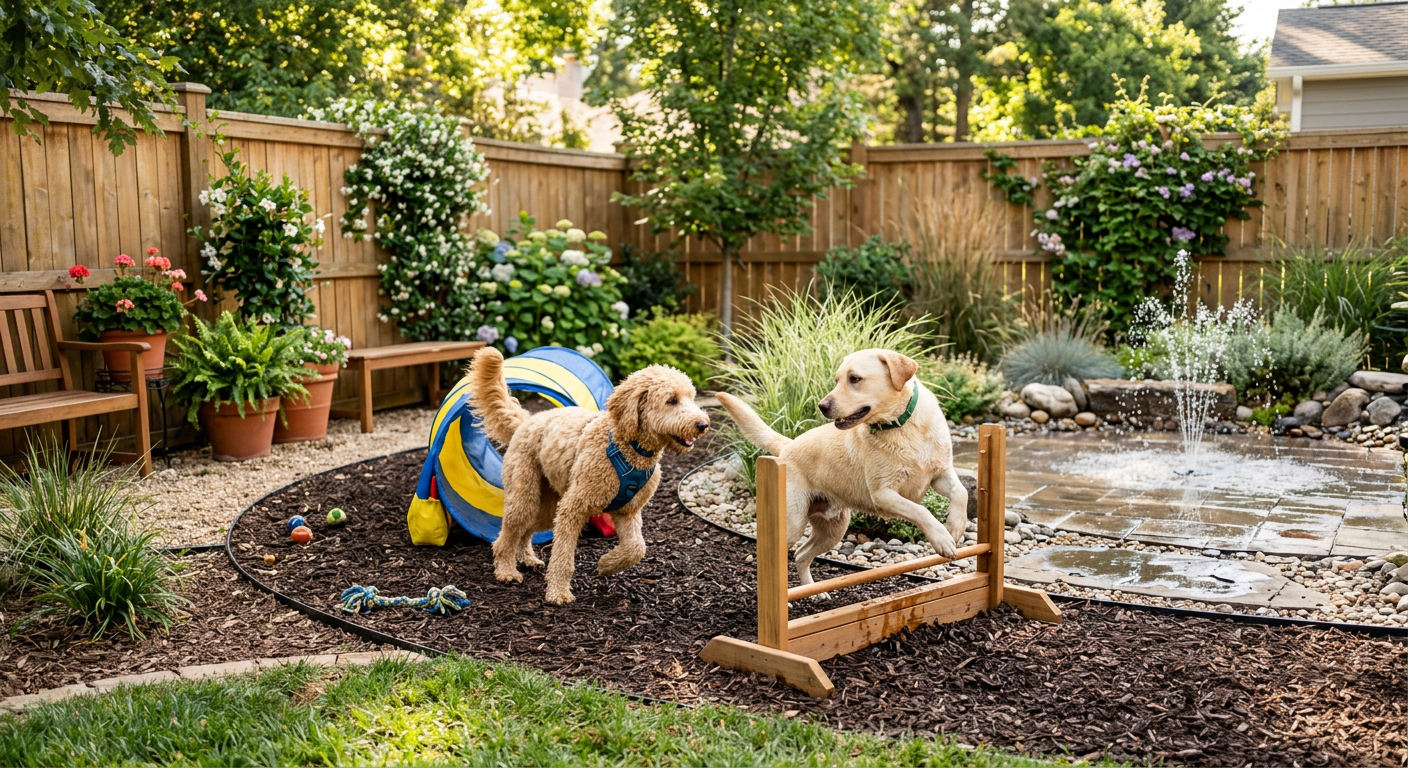
Every great project starts with a plan, and your dog park backyard transformation is no exception. Grab a tape measure (or, if you're like me, just pace it off with your paws) and assess what you're working with.
Evaluate Your Space
You don't need acres of land. Even a 20×30-foot area can become an amazing play zone for one or two dogs. Here's what to consider:
- Terrain: Is it flat? Sloped? Muddy after rain? You'll want to address drainage issues before building anything.
- Sun and shade: Dogs overheat quickly. Make sure there's natural shade from trees or plan to add a shade structure.
- Proximity to neighbors: Your neighbors will appreciate it if the main play zone isn't pressed right up against their fence line — especially during a spirited game of bark-at-the-squirrel.
Sketch a Simple Layout
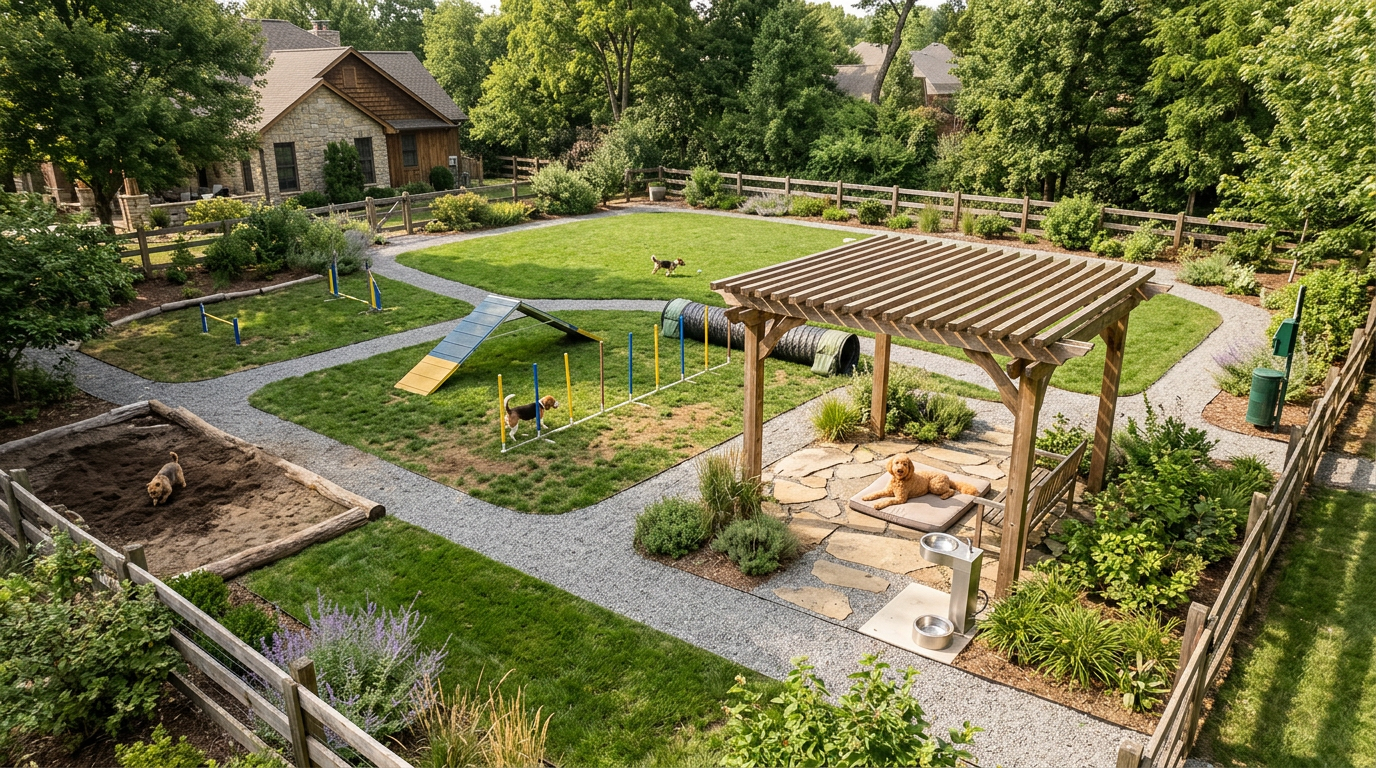
Divide your space into zones:
- Active play area — The biggest section for running, fetching, and wrestling.
- Rest and water station — A shaded corner with fresh water and a comfy spot to recover.
- Agility or enrichment zone — Tunnels, weave poles, or sniff stations to keep things interesting.
- Waste station — A designated cleanup area with bags and a bin.
If you're planning to host dogs of different sizes — say, your neighbor's Chihuahua and your Great Dane buddy — consider separating the area. Research suggests dividing play spaces by dog size (under 25-30 lbs vs. over) to reduce injury risks from mismatched play energies.
Step 2: Install Proper Fencing for Safety
Okay, real talk from a dog who has considered chasing a rabbit into the next county: fencing is non-negotiable. This is the single most important element of any backyard dog park ideas you're working with.
Fencing Height and Material
Perimeter fencing should be at least 6 feet tall with underground barriers to prevent jumping or digging escapes. I know, I know — I look innocent, but even a fluffy Golden Doodle can scale a 4-foot fence when properly motivated by a squirrel.
Popular fencing options include:
- Chain-link fencing — Affordable and durable. Add privacy slats if your pup gets overstimulated by visual triggers.
- Vinyl-coated welded wire — Looks nicer, resists rust, and comes in various heights.
- Wood privacy fencing — Great for reducing barking triggers but more expensive.
For a budget-friendly option that still does the job, my mom Lacey loves this Zippity Outdoor Products Garden Fence for creating interior zone dividers within the larger fenced area. It's perfect for separating small and large dog sections.
Dig Guards
Bury hardware cloth or chicken wire about 12 inches deep along the fence line. Some of my fellow dogs are expert excavators, and you don't want an escape artist tunneling to freedom.
As Fairfax County Park Authority guidelines emphasize, dogs in off-leash areas must be properly contained and removed at signs of aggression — rules that are just as important in your backyard as they are in a public park.
Step 3: Choose the Right Ground Surface
This is where a lot of backyard dog park projects succeed or fail. The wrong surface turns into a mud pit, a paw-scorcher, or a bacteria breeding ground.
Best Ground Cover Options
| Surface | Pros | Cons |
|---|---|---|
| Natural grass | Soft, cool, familiar | Wears down fast, muddy when wet, hard to clean |
| Artificial turf | Low maintenance, drains well, stays green | Higher upfront cost, can heat up in direct sun |
| Pea gravel | Excellent drainage, easy to clean | Can get stuck in paws, uncomfortable for some dogs |
| Rubber mulch | Cushioned, good drainage | Can be ingested, needs replenishing |
| Decomposed granite | Compacts well, drains nicely | Dusty, can irritate eyes |
My personal recommendation? A combination approach. Use artificial turf in the main play area and pea gravel around the perimeter and waste station for drainage. My mom Lacey installed artificial turf in our main run area and it's been a game-changer — no more muddy paw prints across the kitchen floor (well, fewer of them).
For a quality turf option, check out the Petgrow Artificial Grass Turf. It's specifically designed for pets with drainage holes and a non-toxic backing.
Step 4: Add Water Stations and Shade Structures
Hydration isn't optional, friends. When I'm mid-zoomie session, I need water immediately, and I don't have the patience to wait for my human to fill a bowl from the kitchen.
Water Solutions
Set up at least one — ideally two — water stations in your backyard dog park. Options include:
- Automatic water fountain — Keeps water fresh and circulating
- Heavy-duty water bowl — Tip-proof is key (I've knocked over more bowls than I can count)
- Splash pad or kiddie pool — Perfect for summer cooling
The PetSafe Drinkwell Outdoor Dog Fountain is fantastic for backyard use. It holds 3.5 gallons and keeps the water flowing so it stays fresh — way better than stagnant bowl water that becomes a mosquito hotel.
Shade Options
Dogs can overheat dangerously fast, especially brachycephalic breeds (the smooshy-faced cuties) and thick-coated floof balls like me. Include:
- Shade sails or canopy structures
- Covered rest areas with elevated dog beds
- Natural tree shade (just make sure the trees aren't toxic species like black walnut or sago palm)
Step 5: Set Up Enrichment and Agility Equipment
Here's where the fun really begins! A great DIY backyard dog park isn't just an empty field — it's an adventure playground that stimulates your dog's mind and body.
Agility Essentials
- Weave poles — Amazing for coordination and mental focus
- Tunnels — Most dogs go absolutely bonkers for these (guilty as charged)
- Low jumps — Adjustable heights for different skill levels
- A-frame ramp — Great for confidence building
The XiaZ Dog Agility Course Equipment Set comes with a tunnel, weave poles, adjustable hurdles, and a pause box — basically everything you need in one kit. My mom Lacey set this up for me and I swear I've never been more excited about anything (except maybe cheese).
Enrichment Stations
Don't forget mental stimulation! Set up:
- Sniff gardens — Plant dog-safe herbs like rosemary, mint, and lavender in a small raised bed. The smells are incredible.
- Digging pit — Fill a sandbox with loose soil and bury toys or treats. It satisfies the dig-instinct without destroying your lawn.
- Puzzle feeders — Scatter them around the park for scavenger-hunt-style fun.
Step 6: Establish Health and Safety Protocols
Building the park is one thing — keeping it safe is another. This is where my mom Lacey gets serious, and I respect her for it (even when she makes me wait at the gate while she checks things).
Vaccination Requirements
If you're inviting other dogs to enjoy your backyard dog park, every single visitor should be fully vaccinated. According to Saratoga Veterinary Hospital, full vaccination against diseases like kennel cough, parvovirus, and canine influenza is required before entering any dog park — and that rule absolutely applies to controlled backyard setups.
Minimum vaccines for visiting dogs:
- Rabies
- DHPP (distemper, hepatitis, parvovirus, parainfluenza)
- Bordetella (kennel cough)
And here's a critical one for puppy parents: Preventive Vet recommends that puppies should not enter dog parks until at least 17 weeks old to ensure full vaccination protection. I know those puppy eyes are hard to resist, but their immune systems need time to build up.
Daily Maintenance Checklist
Keep your park in tip-top shape with these habits:
- ✅ Remove waste daily (or immediately, if you're hosting guests)
- ✅ Disinfect water bowls every day
- ✅ Inspect fencing weekly for gaps, loose boards, or dig attempts
- ✅ Check for hazardous objects — sticks that could splinter, sharp rocks, toxic plants
- ✅ Sanitize high-traffic areas with veterinary-grade disinfectants to prevent outbreaks
- ✅ Exclude dogs showing illness symptoms like coughing, lethargy, or diarrhea
Supervision Is Everything
This is the golden rule (and not just because I'm a Golden Doodle). Owners must constantly monitor dogs, enforce recall commands, and intervene in rough play. As PetMD emphasizes, dogs need strong socialization and obedience to voice commands before using off-leash areas. Unsupervised interactions significantly heighten bite and injury risks.
My mom Lacey always stays outside with me and our friends. No phone scrolling — eyes on the dogs. It makes all the difference.
Step 7: Consider Monetizing with Sniffspot
Here's a fun bonus step: if you've built an amazing backyard dog park, you can actually earn money by sharing it! Sniffspot is a platform that lets you rent out your private yard to other dog owners in your area who need a safe, enclosed space for their pups.
This is especially appealing if you live near a city or in an area where off-leash options are limited. Dog owners near you may be actively searching for private, clean, supervised spaces — and your beautiful backyard park could be exactly what they need.
The platform lets you set your own pricing, availability, and rules. Some hosts earn a meaningful side income while giving other dogs a wonderful experience. Just make sure your insurance covers it and check local regulations first.
Backyard Dog Park Ideas for Every Budget
Not everyone has a limitless budget, and that's completely fine! Here's a quick breakdown:
Budget-Friendly ($100-$300)
- Basic wire fencing for a small zone
- DIY agility equipment from PVC pipes
- Kiddie pool for water play
- Existing grass with regular maintenance
Mid-Range ($500-$1,500)
- Vinyl-coated wire fencing with dig guards
- Artificial turf in the play zone
- Store-bought agility kit
- Shade sail and automatic water station
Premium ($2,000+)
- Professional 6-foot privacy fencing
- Full artificial turf installation
- Custom agility course
- Built-in dog wash station
- Drainage system and lighting for evening play
The beauty of a DIY backyard dog park is that you can build it in phases. Start with fencing and ground cover, then add enrichment features over time as your budget allows. That's exactly what my mom Lacey did — our park has grown organically over a couple of seasons, and each upgrade makes it better.
Tips for Making Your Dog Park Backyard the Best in the Neighborhood
- Rotate toys and equipment to keep things fresh and exciting. Dogs get bored just like humans (except I never get bored of fetch — that's non-negotiable).
- Host small, curated playdates with dogs you know are well-socialized and vaccinated.
- Add lighting for evening play sessions — solar-powered path lights work great and are easy to install.
- Create a doggy first aid kit and keep it accessible in the park area.
- Consider a dog-safe camera so you can monitor the space when you're inside for a moment.
- Use dog-safe pest control — no chemical pesticides or fertilizers in the play area.
The Bodhi Dog Poo Bags with Dispenser is a must-have for your waste station. They're thick, leak-proof, and come with a handy dispenser you can mount right on the fence post. Clean parks are happy parks!
Well, friends, we've covered a lot of ground today — pun absolutely intended. Building a backyard dog park is one of the most rewarding projects you can take on for your furry best friend. From planning your layout and installing proper fencing to choosing the right ground surface, adding enrichment, and establishing safety protocols, every step brings you closer to creating a tail-wagging paradise right outside your back door.
My mom Lacey says the best investment she ever made was giving me a safe space to run, play, and just be a dog — and I couldn't agree more. So grab that tape measure, sketch out your dream layout, and get started! Your pup (and your pup's friends in your area) will thank you with all the zoomies, face licks, and happy woofs their hearts can muster.
Now if you'll excuse me, I have a tunnel to sprint through. Happy building! 🐾
Have questions about building your own backyard dog park? Drop them in the comments below — I love hearing from fellow pups and their humans!
Frequently Asked Questions
How to make a dog park in your backyard?
Start by assessing your yard space and sketching a layout with zones for active play, rest, enrichment, and waste cleanup. Install secure fencing at least 6 feet tall with underground dig guards. Choose a durable, safe ground surface like artificial turf or pea gravel. Add water stations, shade structures, and agility or enrichment equipment. Finally, establish health protocols including vaccination requirements for visiting dogs and a daily cleaning routine. You can build your backyard dog park in phases based on your budget, starting with fencing and ground cover.
How much do you get paid for Sniffspot?
Sniffspot hosts set their own pricing, and earnings vary widely depending on location, yard size, amenities, and local demand. Most hosts charge between $5 and $30 per dog per hour. Some popular hosts in high-demand urban areas report earning $500 to $2,000+ per month. Sniffspot takes a percentage of each booking, but the rest goes directly to you. Your backyard dog park's earning potential depends on how well it's maintained, how many features it offers, and how many dog owners in your area are looking for private off-leash spaces.
What is the 3 second rule for dogs?
The 3-second rule is a dog socialization guideline used during greetings and introductions. It means you should allow dogs to sniff and greet each other for no more than 3 seconds before gently calling your dog away. After the brief pause, if both dogs show relaxed body language — loose wiggles, play bows, soft eyes — you can let them interact again. This approach prevents overwhelming either dog, reduces the chance of a negative reaction, and gives both dogs a chance to opt in or opt out of further interaction. It's especially useful when introducing new dogs in your backyard dog park.
Why don't dog trainers recommend dog parks?
Many dog trainers have concerns about public dog parks because the environment is largely uncontrolled. Issues include unvaccinated dogs, owners who don't supervise their pets, dogs with poor socialization or aggressive tendencies, and the risk of disease transmission. Negative experiences at a dog park can create lasting behavioral issues like fear, reactivity, or aggression. Trainers often recommend controlled, private play sessions with known, well-socialized dogs instead — which is exactly what a backyard dog park allows you to create. You control the guest list, the environment, and the level of supervision, making it a far safer alternative.
About Auggie
Hi, I'm Auggie! I'm a Golden Doodle who's been to more dog parks than most humans. My mom Lacey and I started Doggie Park Near Me to help every pup find their perfect park. When I'm not sniffing out new spots, you'll find me napping in the sun or begging for treats.
Learn more about us →More From Auggie

DIY Dog Park Equipment You Can Build This Weekend
Woof! I'm Auggie, and I'm here to show you how to build amazing DIY dog park equipment in just one weekend. From PVC agility jumps to A-frame ramps and weave poles, these budget-friendly projects will transform your backyard into a dog park paradise. Let's build something awesome together!

Best Dog Park Equipment: Agility, Obstacles, and Play Structures
Hey there, it's Auggie! I'm breaking down the best dog park equipment — from agility weave poles and tunnels to play structures and must-have safety features. Whether you're upgrading your local park or building a backyard course, this guide covers everything your pup needs to stay fit, happy, and entertained. Let's play!

How I find a doggie park near me, Auggie's quick guide
Hi there, I’m Auggie the Golden Doodle, and I’m here to lead you on my tail-wagging adventure at a doggie park near me. Discover my favorite local spots, essential park etiquette tips, and how each visit boosts my energy and happiness. Join me as I sniff out secrets behind the best dog parks, all wrapped in fun, firsthand insights you won’t want to miss!