
DIY Dog Park Equipment You Can Build This Weekend
Woof, friends! There's nothing I love more than a good romp through an obstacle course — the wind in my curls, the thrill of weaving through poles, and the triumphant tail wag at the finish line. But here's the thing: not every dog park near you has great equipment, and buying commercial-grade stuff can cost a small fortune. That's exactly why my mom Lacey and I became obsessed with DIY dog park equipment you can build right in your own backyard — or even donate to your local community park. Whether you've got a tiny patio or a sprawling yard, I'm going to walk you through (on all fours, naturally) the best projects you can tackle in a single weekend. These builds are budget-friendly, dog-safe, and honestly? Building them might be almost as fun as playing on them. Almost. Let's dig in!
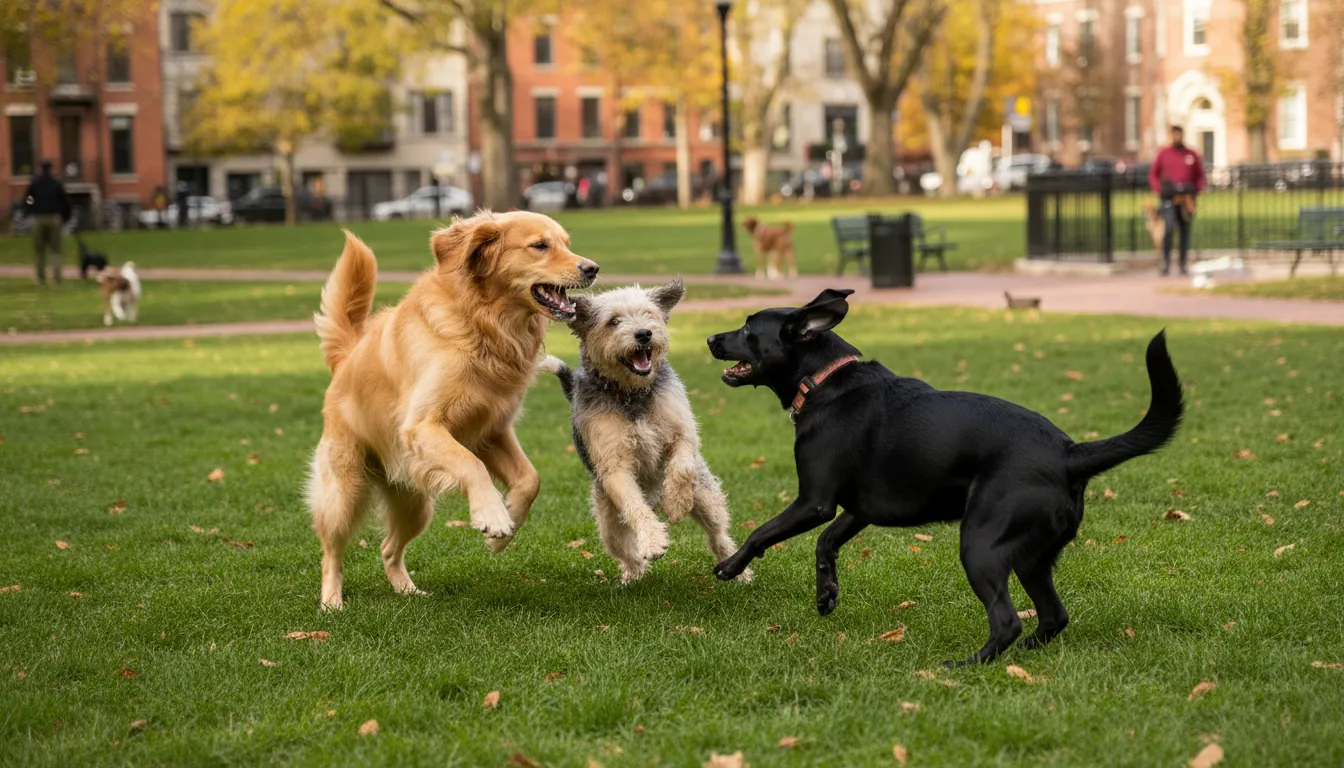
Why Build Your Own DIY Dog Park Equipment?
Let me tell you something from a dog's perspective: we don't care if our agility jump came from a fancy catalog or from a trip to the hardware store. What we care about is that it's fun, it's safe, and it gives us a reason to sprint, leap, and show off for our humans. That's the beauty of DIY dog park equipment — it delivers all the joy at a fraction of the cost.
Commercial dog park equipment can run anywhere from $500 to several thousand dollars per piece. A full agility course? You're looking at $2,000–$10,000 easily. But with some basic lumber, PVC pipe, and a free weekend, you can build a seriously impressive setup for under $200.
Beyond the savings, building your own equipment means you can customize everything to your dog's size, skill level, and preferences. My mom Lacey learned quickly that I'm more of a tunnel guy than a teeter-totter pup — so she built accordingly. You can do the same for your furry best friend.
According to Cunningham Recreation, equipment materials should include reinforced plastic, metal, or treated wood with smooth, rounded edges and paw-friendly, slip-resistant finishes that are UV-stable and repel urine stains. Keep these material guidelines in mind as you plan your builds — they're the foundation of safe DIY dog park equipment.
Essential Safety Considerations Before You Start Building
Before we grab the power drill, let's talk safety. I know, I know — I'd rather talk about treats. But my mom Lacey always says, "Safety first, zoomies second," and she's annoyingly right about that.
Materials Matter
Not all wood and finishes are safe for dogs. Avoid pressure-treated lumber that contains arsenic-based preservatives (older CCA-treated wood). Instead, opt for naturally rot-resistant woods like cedar or use modern ACQ-treated lumber, which is much safer. If you're painting or staining, use pet-safe, non-toxic finishes only. We dogs lick everything — and I do mean everything.
For any metal components, choose galvanized or powder-coated steel to prevent rust. Sharp edges and exposed screws are a big no-no. Sand every surface smooth and countersink all screws and bolts. My delicate paw pads will thank you.
Size and Scale
According to Wagbar, separate play areas should be designated for different dog sizes — under 25–30 pounds for small dogs, over 30 pounds for large dogs — to reduce injury risk. If you're building equipment for a community space or for multiple dogs, consider creating adjustable obstacles that can accommodate different sizes.
Structural Integrity
Every piece of DIY dog park equipment needs to support the dynamic weight of an excited dog. I'm about 55 pounds of pure enthusiasm, and when I launch myself over a jump, the force is significantly more than my standing weight. Over-engineer everything. Use wood screws instead of nails, add corner braces, and always anchor free-standing structures.
A good investment for your build toolkit is the DEWALT 20V MAX Cordless Drill Combo Kit — it'll make every project faster and more precise, and my mom Lacey swears by hers for all our backyard builds.
DIY Dog Agility Jumps: The Perfect Starter Project
If you're new to building DIY dog park equipment, start here. Agility jumps are the easiest, cheapest, and most rewarding project you can tackle. I personally think jumping is one of life's great pleasures — right up there with belly rubs and cheese.
What You'll Need
- 2 PVC pipes (1.5" diameter, 4 feet long) for uprights
- 1 PVC pipe (1" diameter, 4 feet long) for the jump bar
- 4 PVC tee connectors
- 4 PVC end caps
- 2 short PVC sections (about 18" each) for the base feet
- PVC cement (optional for bases; leave the jump bar loose for safety)
How to Build It
- Create the base: Attach a tee connector to the bottom of each upright. Insert 18" PVC sections into each side of the tee to form a stable foot.
- Add jump cup holders: Drill pairs of small holes at various heights along each upright (every 3 inches) so you can insert pegs or dowels to rest the jump bar on.
- Set the bar: Rest the 1" PVC jump bar on the pegs. The bar should fall easily if your dog clips it — this prevents injuries.
- Paint it up: Use bright, non-toxic paint so your dog can see the bar clearly. Dogs see blues and yellows best!
The key safety feature here is that the jump bar should never be fixed in place. It must be knockable so if your pup misjudges, the bar simply falls. No harm, no foul, no vet bill. Speaking of which, common dog park injuries include sprains averaging $225 and lacerations averaging $361, according to industry data — so every safety precaution matters.
DIY Weave Poles for Dog Park Agility Training
Weave poles are my personal nemesis and favorite challenge all wrapped into one. There's something deeply satisfying about threading through them at full speed, even if I sometimes wipe out spectacularly.
Materials
- 6–12 PVC pipes (1" diameter, 3 feet tall)
- A flat board or PVC base rail (8–10 feet long)
- Drill and screws or PVC connectors
Build Instructions
- Create the base: Use a long 2x4 or a length of PVC pipe as your base rail.
- Space the poles: Drill holes or attach connectors every 20–24 inches apart along the base. For small dogs, space them 18–20 inches apart. For big goofballs like me, 24 inches works great.
- Insert poles: Secure each vertical pole into the base. They should be snug but have a tiny bit of flex — rigid poles that don't give at all can cause shoulder injuries.
- Add visibility: Wrap the poles with brightly colored tape or paint the tips yellow and blue.
For the base, I'd recommend using the Gorilla Wood Glue to reinforce any wood-to-wood joints. It's waterproof and incredibly strong — perfect for outdoor dog park equipment that needs to withstand weather and enthusiastic paws.
Building a DIY Dog Tunnel
Oh, tunnels. The pièce de résistance of any dog park. I could run through tunnels all day long. The whooshing sound, the brief darkness, the triumphant emergence on the other side — it's basically a dog's version of a roller coaster.
The Easy Version
The simplest approach is to buy a collapsible play tunnel and secure it to the ground. The HDP 18ft Dog Agility Training Tunnel is an affordable option that sets up in minutes and collapses for storage. Anchor it with garden stakes or sandbags so it doesn't roll when your pup charges through.
The DIY Build Version
If you want something more permanent:
- Frame: Build a series of wooden or PVC arches (think croquet hoops but bigger) every 2 feet.
- Cover: Stretch heavy-duty outdoor fabric or a tarp over the arches and secure with zip ties.
- Anchor: Stake each arch firmly into the ground.
- Dimensions: The tunnel should be at least 24 inches in diameter for medium to large dogs. Smaller dogs can get by with 18 inches.
Make sure there's good traction inside the tunnel. Bare tarp can be slippery, so line the bottom with outdoor carpet or a rubber mat. As The Park Catalog recommends, slip-resistant surfaces are essential for all dog park equipment to prevent injuries.
DIY Pause Table and Platform
The pause table is where your dog gets to feel like a champion standing on a podium. In agility competitions, dogs must jump onto the table and hold a sit or down position. At home, it's just a really fun place to stand and look majestic — which I do exceptionally well, if I do say so myself.
How to Build It
- Build the frame: Use 2x4 lumber to construct a simple box frame, roughly 3 feet by 3 feet.
- Add legs: Attach sturdy 4x4 legs. Height depends on your dog's size — 8 inches for small dogs, 16 inches for medium, 24 inches for large dogs.
- Top it off: Screw a sheet of 3/4" plywood on top.
- Add traction: This is critical! Cover the plywood surface with outdoor carpet, rubber matting, or textured anti-slip paint. A bare wood surface is dangerously slippery for excited paws.
- Reinforce: Add corner braces to every joint. This table needs to handle the impact of a running dog landing on it.
For the non-slip surface, the Rubber-Cal Elephant Bark Rubber Flooring is excellent. It's recycled rubber, incredibly durable, and provides fantastic grip even when wet. My mom Lacey used it on our pause table and ramp, and it's held up beautifully through rain, snow, and an unreasonable amount of drool.
DIY Dog Ramp and A-Frame
The A-frame is the crown jewel of any agility course, and it makes for seriously impressive DIY dog park equipment. It's also the most challenging build on this list, but totally doable in a weekend.
Materials
- Two sheets of 3/4" plywood (4' x 8')
- 2x4 lumber for framing and cross supports
- Heavy-duty hinges (for a foldable design)
- Rubber matting or anti-slip strips
- Wood screws and corner braces
Build Steps
- Frame each ramp: Attach 2x4 framing along the edges and across the back of each plywood sheet for rigidity.
- Add traction strips: Screw thin wooden slats horizontally across each ramp face every 10–12 inches. These act as toe-grips for climbing dogs. Cover the entire surface with rubber matting as well.
- Join at the peak: Connect the two ramp sections at the top with heavy-duty hinges. The peak height should be about 4–5 feet for experienced dogs, but start lower (3 feet) while your pup is learning.
- Stabilize: Add a chain or rope between the two sides at the bottom to prevent them from spreading apart under weight.
- Paint contact zones: In agility, the bottom 36 inches of each ramp side is painted a different color (usually yellow) to mark the "contact zone" where dogs must place their paws.
DIY Dog Park Fencing and Entry Systems
If you're setting up a dedicated dog park area in your yard — or helping your community build one — proper fencing is non-negotiable. According to Wagbar, minimum fencing height of 6 feet is recommended for large dog areas to prevent athletic dogs from jumping over.
For a DIY approach:
- Chain link fencing is the most affordable and durable option for large areas.
- Welded wire fencing works well for smaller backyard setups.
- Always bury the bottom of fencing 6–12 inches underground or add a concrete footer to prevent digging escapes. Trust me, some of my friends are world-class diggers.
The Double-Gate "Doggie Airlock"
This is genius engineering that every dog park needs. As recommended by The Park Catalog, double-gate entry systems with transition spaces between outer and inner gates prevent dogs from escaping during entry and exit. Build a small enclosed vestibule (about 6' x 6') between two gates. You open the first gate, enter with your dog, close it behind you, then open the inner gate. Escape-proof!
Tips for Installing DIY Dog Park Equipment in Your Area
Whether you're building for your backyard or proposing equipment for a local community park near you, here are some practical tips:
- Check local regulations: Many municipalities have specific codes for structures, even in your own backyard. If you're building for a public park, you'll need permits and possibly liability insurance.
- Start small: Build two or three pieces of equipment and see how your dog responds before committing to a full course.
- Rotate equipment: Dogs get bored just like humans. My mom Lacey rearranges our backyard course every few weeks to keep things interesting.
- Maintain regularly: Inspect every piece of equipment weekly for loose screws, splintered wood, cracks, or wear. Outdoor elements are relentless.
- Think about drainage: Place equipment on well-drained ground. Standing water creates slippery, muddy, and bacteria-friendly conditions.
- Add a water station: After all that running and jumping, dogs need fresh water. Keep a sturdy water bowl or automatic waterer near your equipment area.
Budget Breakdown: What DIY Dog Park Equipment Really Costs
Here's a rough breakdown of what each project might cost you:
| Equipment | Estimated Cost | Build Time |
|---|---|---|
| PVC Agility Jumps (2) | $25–$40 | 1–2 hours |
| Weave Poles (set of 8) | $20–$35 | 1–2 hours |
| Pause Table | $40–$70 | 2–3 hours |
| A-Frame Ramp | $80–$120 | 4–6 hours |
| Play Tunnel (purchased) | $40–$80 | 15 minutes |
| Fenced Area (small) | $150–$400 | Full day |
| Full Course Total | $355–$745 | 1 weekend |
Compare that to commercial equipment packages that start at $2,000 and you'll see why DIY dog park equipment is the way to go. The money you save can go toward the important things — like treats. I vote treats.
Bringing Your Community Together with DIY Dog Park Equipment
One of the most rewarding things my mom Lacey and I have experienced is how DIY dog park equipment can bring a neighborhood together. If there's an underserved dog park in your area that lacks equipment, consider organizing a community build day. Reach out to your local parks department, gather some volunteers, pool resources, and spend a Saturday building something amazing for all the dogs (and humans) in your neighborhood.
Many communities have successfully fundraised for materials through local business sponsorships or online campaigns. The labor is the expensive part of commercial installations — and that's exactly what volunteers eliminate. A community of dog lovers with power tools and a shared vision can transform a bare, fenced lot into a vibrant dog park in a single weekend.
You might also check if there are dog park advocacy groups near you that can help with planning, design, and even grant applications for public park improvements.
Well, friends, we've covered a lot of ground today — and I've worked up quite an appetite just thinking about all these projects! Building your own DIY dog park equipment is one of the most rewarding things you can do for your four-legged family members. It saves money, it's fun to build, and the tail-wagging payoff is absolutely priceless.
My mom Lacey and I started with a single PVC jump in our backyard, and now we've got a full agility course that's the envy of the neighborhood dogs. Your weekend project starts with one simple build — pick the one that excites you (and your pup) the most and go for it. Don't forget to share your creations with us! Tag us on social media or drop a comment below. And if you're looking for a great dog park near you to test your pup's new skills, head over to doggieparknearme.com to find one in your area. Now if you'll excuse me, I have some weave poles calling my name. Happy building! 🐾
Frequently Asked Questions
What is the best material for DIY dog park equipment?
The best materials for DIY dog park equipment are PVC pipe, naturally rot-resistant wood like cedar, modern ACQ-treated lumber, and galvanized or powder-coated metal. Avoid older pressure-treated lumber with arsenic-based preservatives. All surfaces should be sanded smooth with rounded edges, and finishes should be non-toxic, UV-stable, and slip-resistant. Rubber matting is excellent for any surface your dog will walk, run, or land on.
How much does it cost to build DIY dog park equipment?
A full DIY dog park agility course including jumps, weave poles, a pause table, an A-frame ramp, and a tunnel can be built for approximately $355–$745 in materials. Individual pieces like PVC agility jumps can cost as little as $25–$40 each. This is significantly less than commercial equipment packages, which typically start at $2,000 and can exceed $10,000.
How tall should dog park fencing be for DIY installations?
Minimum fencing height of 6 feet is recommended for large dog areas to prevent athletic dogs from jumping over. For small dog areas, 4 feet may be sufficient. Always bury the bottom of fencing 6–12 inches underground or add a concrete footer to prevent dogs from digging underneath. A double-gate 'doggie airlock' entry system is also strongly recommended to prevent escapes.
Is DIY dog park equipment safe for all dog sizes?
DIY dog park equipment can be safe for all sizes if built with adjustability in mind. Separate equipment or adjustable heights should be available for small dogs (under 25–30 pounds) and large dogs (over 30 pounds). Jump bars should always be loose so they fall if a dog clips them. All surfaces need anti-slip material, and structures must support the dynamic impact weight of an excited, running dog — not just their standing weight.
Can I install DIY dog park equipment in a public park?
Installing equipment in a public park typically requires approval from your local parks and recreation department, appropriate permits, and potentially liability insurance. Contact your municipality first to understand regulations in your area. Many communities welcome volunteer-built improvements, especially when organized through established neighborhood groups or dog park advocacy organizations. A community build day is a great way to get started.
How do I maintain DIY dog park equipment outdoors?
Inspect all equipment weekly for loose screws, splintered wood, cracked PVC, rust, or general wear. Re-tighten hardware monthly, sand down any rough spots immediately, and reapply non-toxic sealant or paint as needed — typically once or twice per year. Replace rubber matting or anti-slip surfaces when they show significant wear. Store collapsible items like tunnels indoors during extreme weather when possible.
About Auggie
Hi, I'm Auggie! I'm a Golden Doodle who's been to more dog parks than most humans. My mom Lacey and I started Doggie Park Near Me to help every pup find their perfect park. When I'm not sniffing out new spots, you'll find me napping in the sun or begging for treats.
Learn more about us →More From Auggie

Best Dog Park Equipment: Agility, Obstacles, and Play Structures
Hey there, it's Auggie! I'm breaking down the best dog park equipment — from agility weave poles and tunnels to play structures and must-have safety features. Whether you're upgrading your local park or building a backyard course, this guide covers everything your pup needs to stay fit, happy, and entertained. Let's play!

How to Build a Backyard Dog Park (Step-by-Step Guide)
Woof! It's Auggie here with the ultimate step-by-step guide to building a backyard dog park your pup will absolutely love. From fencing and ground surfaces to agility equipment and safety protocols, I'm covering everything you need to create a tail-wagging paradise right in your own yard. Let's get digging!

How I find a doggie park near me, Auggie's quick guide
Hi there, I’m Auggie the Golden Doodle, and I’m here to lead you on my tail-wagging adventure at a doggie park near me. Discover my favorite local spots, essential park etiquette tips, and how each visit boosts my energy and happiness. Join me as I sniff out secrets behind the best dog parks, all wrapped in fun, firsthand insights you won’t want to miss!