
Healthy Dog Treats You Can Make at Home: Auggie's Kitchen-Tested Guide
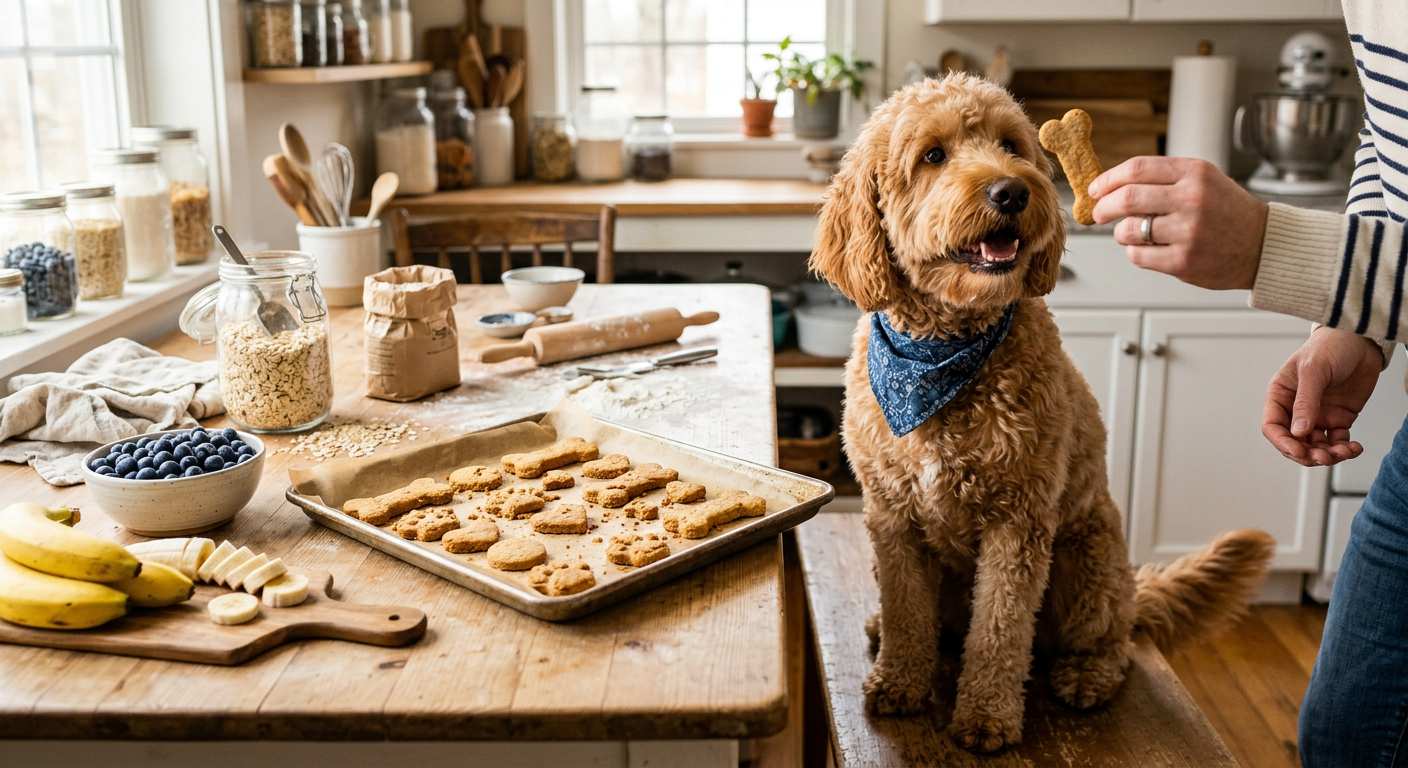
Woof, friends! It's me, Auggie — your favorite curly-haired Golden Doodle and resident treat connoisseur here at Doggie Park Near Me. If there's one thing I know besides finding the best dog parks near you, it's healthy dog food treats. And let me tell you, the tastiest ones don't always come from a store shelf — they come straight from your kitchen! My mom Lacey started making homemade treats for me after I turned my nose up at some overly processed, crunchy mystery biscuits (no offense to whoever made those). Since then, our kitchen has become my favorite room in the house — even more than the room with the couch I'm technically not allowed on. Today, I'm sharing everything my mom and I have learned about making wholesome, tail-wagging treats at home. We're talking safe ingredients, easy recipes, vet-backed guidelines, and a few of my personal favorites that make me do my happy spin. Let's dig in!
Why Homemade Healthy Dog Food Treats Are Worth the Effort
Look, I get it. You're busy. Between walks, belly rubs, and whatever that mysterious thing called "work" is that my mom Lacey does on her laptop, time is precious. But here's the thing — making healthy dog treats at home is one of the best gifts you can give your pup, and it's a lot easier than you might think.
When you make treats at home, you control exactly what goes into them. No artificial preservatives, no mysterious fillers, no unpronounceable chemicals. According to PetMD, many commercial dog treats contain artificial colors and high-carb fillers that offer zero nutritional value and can trigger digestive issues or sensitivities. As a dog with a sensitive tummy (don't tell anyone I said that), I appreciate when my mom keeps things simple and clean.
Homemade healthy dog treats also let you tailor ingredients to your dog's specific needs. Got a senior pup with creaky joints? Add some anti-inflammatory pumpkin. Training a high-energy puppy near you at the local dog park? Whip up tiny, low-calorie training bites. The possibilities are as endless as my enthusiasm for chasing squirrels.
Plus, the bonding time is real. When Lacey is in the kitchen mixing up a batch of peanut butter bites, I sit right there beside her (quality control is important, folks). It's one of our favorite activities together.
The 10% Rule: How Many Treats Should Your Dog Actually Get?
Before we get into recipes, let's talk about something super important that even the most well-meaning dog parents overlook: how many treats are too many.
According to the UC Davis School of Veterinary Medicine, treats should not exceed 10% of a dog's daily caloric intake. The other 90%+ should come from complete and balanced dog food. This is sometimes called the "10% rule," and it's the golden standard (or should I say, Golden Doodle standard?) for keeping your pup at a healthy weight.
For a dog my size — about 45 pounds of pure fluff and charm — that means my daily treat allotment is somewhere around 100-150 calories, depending on my activity level. For smaller dogs, it could be as low as 40-60 calories. That's why low-calorie treats (think 9-12 calories per treat) are so valuable, especially ones packed with functional ingredients like omega-3s, glucosamine, or vitamins for joint health and brain function.
My mom Lacey keeps a little mental note of my treat intake throughout the day, especially on training days at the dog park near us. It sounds like a lot of math, but once you get the hang of it, it becomes second nature.
Safe Ingredients for Healthy Dog Treats from Your Kitchen
One of the best things about homemade treats is that many of the healthiest ingredients are probably already sitting in your kitchen. The NC State University Veterinary Hospital has a fantastic list of safe human foods that double as healthy dog food treats. Here are my top picks:
Fruits
- Blueberries — Tiny little flavor bombs packed with antioxidants. I could eat these all day.
- Watermelon (seedless, no rind) — Hydrating and delicious, perfect after a summer romp in the park.
- Bananas — In moderation, because they're higher in sugar. But oh, so good mashed into a treat.
- Apples (no seeds or core) — Crunchy and full of fiber.
Vegetables
- Carrots — My absolute favorite. Crunchy, naturally sweet, and great for my teeth.
- Green beans — Low calorie and filling. My mom calls them "nature's diet treat."
- Sweet potatoes — Baked or dehydrated, these are a superfood for pups.
- Pumpkin (plain, not pie filling) — Amazing for digestion and incredibly versatile in recipes.
Proteins
- Cooked lean chicken or turkey — No seasoning, no skin. Simple and delicious.
- Eggs — Scrambled or hard-boiled, eggs are a protein powerhouse.
- Plain cooked salmon — Omega-3 rich and great for my coat (which, if I do say so myself, is magnificent).
As the American Kennel Club (AKC) recommends, opting for single-ingredient proteins like real chicken, beef, or fish supports muscle development without the fillers like corn or soy that may cause allergies.
Ingredients to AVOID
Now, just because something is in your kitchen doesn't mean it belongs in my belly. Stay far away from:
- Grapes and raisins
- Onions and garlic
- Chocolate and caffeine
- Xylitol (an artificial sweetener found in some peanut butters — always check the label!)
- Macadamia nuts
- Avocado
My Favorite Homemade Healthy Dog Treat Recipes
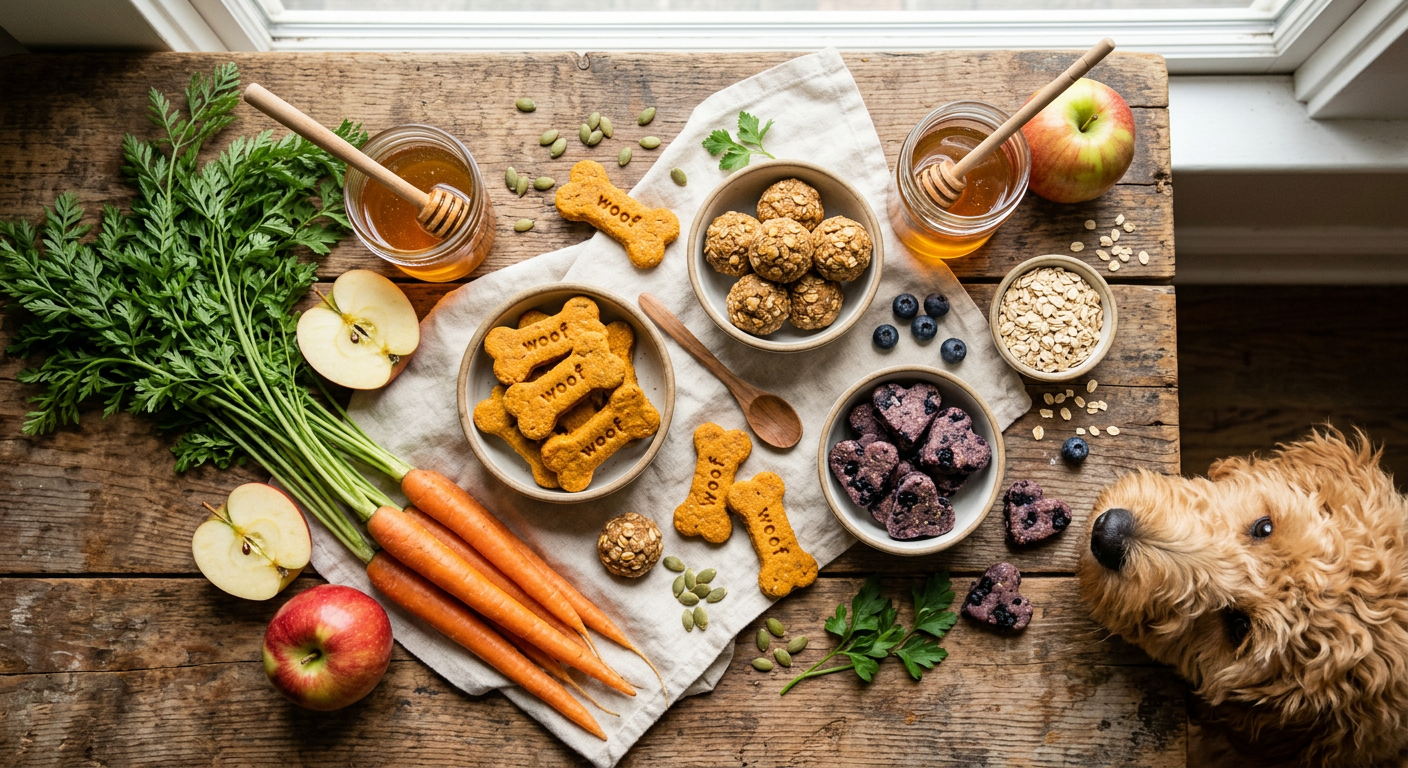
Alright, this is the part I've been waiting for — the recipes! My mom Lacey has tested all of these, and I've taste-tested every single batch. Multiple times. For science.
🥜 Auggie's Peanut Butter Pumpkin Bites
Ingredients:
- 1 cup plain pumpkin puree (not pie filling)
- 2 tablespoons natural peanut butter (xylitol-free!)
- 2 cups oat flour (or blend regular oats into flour)
- 1 egg
Instructions:
- Preheat oven to 350°F.
- Mix pumpkin, peanut butter, and egg in a bowl.
- Gradually stir in oat flour until a dough forms.
- Roll out on a floured surface and cut into shapes.
- Bake for 20-25 minutes until golden and firm.
- Let cool completely before serving.
These are about 12-15 calories each, and they make my tail go absolutely bonkers. For cutting out perfect shapes, my mom loves using a Three Peaks Dog Bone Cookie Cutter Set — it comes with multiple sizes that are perfect for different dog breeds in your area.
🫐 Frozen Blueberry Yogurt Drops
Ingredients:
- 1 cup plain Greek yogurt (no added sugar or xylitol)
- 1/2 cup fresh blueberries
Instructions:
- Blend yogurt and blueberries until smooth (or leave chunky — I like both).
- Spoon small dollops onto a parchment-lined baking sheet.
- Freeze for 2-3 hours.
- Pop them off and store in a freezer bag.
These are heavenly on a hot day after running around at the dog park near you. Each drop is only about 8-10 calories, making them guilt-free and perfectly within that 10% treat guideline.
🍠 Chewy Sweet Potato Strips
Ingredients:
- 2 large sweet potatoes
Instructions:
- Preheat oven to 250°F.
- Slice sweet potatoes into 1/4-inch strips.
- Place on a parchment-lined baking sheet.
- Bake for 2.5-3 hours, flipping halfway through, until chewy and slightly dried.
- Let cool and store in an airtight container.
That's it. One ingredient. No fuss. These are nature's chew toy, and they're packed with fiber, vitamins, and beta-carotene. If you want to speed up the dehydrating process, a COSORI Food Dehydrator is a game-changer. My mom uses hers for sweet potatoes, chicken jerky, and even apple chips for the humans.
🥕 Carrot and Apple Training Bites
Ingredients:
- 1 cup grated carrots
- 1/2 cup unsweetened applesauce
- 1 cup whole wheat flour (or coconut flour for grain-free)
- 1 egg
Instructions:
- Preheat oven to 325°F.
- Mix all ingredients until combined.
- Drop tiny spoonfuls onto a greased baking sheet (small = perfect for training!).
- Bake for 15-18 minutes.
- Cool and store in the fridge for up to a week.
These little bites are my go-to for training sessions. They're small, fragrant, and easy to eat quickly so we can get back to practicing "shake" and "spin." For storing and carrying them to the park, I recommend a PetSafe Treat Pouch Sport — it clips right to Lacey's belt and has a magnetic closure that even I can't break into (believe me, I've tried).
Storing Your Homemade Healthy Dog Treats
Here's one thing a lot of folks forget: homemade treats don't have preservatives, which is the whole point — but it also means they don't last as long as store-bought ones.
Here are my mom Lacey's storage tips:
- Room temperature: Baked, fully dried treats last 1-2 weeks in an airtight container.
- Refrigerator: Most baked or soft treats stay fresh for up to 1 week.
- Freezer: Almost all homemade treats freeze beautifully for up to 3 months. Thaw a few at a time as needed.
For keeping treats fresh in the pantry or on the counter, an Airscape Stainless Steel Canister is my mom's favorite. It pushes out excess air to keep treats from going stale. Plus, it looks pretty on the counter — not that I care about aesthetics; I care about freshness.
Tips for Making Healthy Dog Food Treats a Regular Habit
I know what you might be thinking: "Auggie, this all sounds great, but will I actually keep making these?" Fair question. Here are some tips to make homemade treat-making a sustainable part of your routine:
- Batch cook and freeze. Spend one afternoon a month making 2-3 recipes. Freeze everything in portions. Done.
- Start simple. The sweet potato strips are literally one ingredient. You don't need to be a pastry chef.
- Involve the whole family. Kids love cutting out dog biscuit shapes. It's a craft project that the dog gets to eat. Win-win.
- Use what you have. Leftover chicken from dinner? That's a treat. Baby carrots from the veggie tray? Treat. Plain scrambled egg? Treat!
- Keep a dog-safe ingredient list on your fridge. My mom printed one out so she never has to second-guess what's okay to share with me.
As Tufts University's Petfoodology blog emphasizes, choosing low-calorie, nutrient-dense treat options like fruits and veggies helps avoid diet imbalance while still keeping your pup happy and rewarded.
When to Choose Store-Bought Healthy Dog Treats
Listen, I'm all about the homemade life, but I'm also realistic. Sometimes you're in a rush, or you're heading to a new dog park in your area and forgot to pack treats. In those cases, store-bought healthy dog treats are totally fine — you just need to know what to look for.
Here's my checklist:
- ✅ Short ingredient list (5 or fewer ingredients is ideal)
- ✅ Single-ingredient protein as the first ingredient
- ✅ No artificial colors, flavors, or preservatives
- ✅ Low calorie (under 15 calories per treat for small-to-medium dogs)
- ✅ Functional benefits like added omega-3s, glucosamine, or probiotics
- ❌ No corn, soy, or wheat fillers if your pup has sensitivities
One store-bought option I genuinely love is Zuke's Mini Naturals Training Treats. They're only about 3 calories each, made with real chicken, and they're the perfect size for training. My mom keeps a bag in her car for spontaneous park visits near us.
Healthy Dog Treats for Special Dietary Needs
Every dog is different (though we're all equally adorable, obviously). Some of us have allergies, some have joint issues, and some of us — ahem — need to watch our waistlines. Here's how to adapt your homemade healthy dog food treats:
For Dogs with Allergies
Stick to novel proteins like duck or venison, and use grain-free flours like coconut or chickpea flour. Always introduce new ingredients one at a time so you can spot any reactions.
For Senior Dogs with Joint Issues
Incorporate ingredients rich in omega-3 fatty acids (like salmon or sardines) and anti-inflammatory pumpkin. You can also add a sprinkle of turmeric to baked treat recipes — just a tiny pinch goes a long way.
For Overweight Dogs
Focus on high-volume, low-calorie treats like frozen green bean bites, cucumber slices, or the blueberry yogurt drops recipe above. These let your pup feel rewarded without packing on the pounds.
For Puppies
Keep treats soft and small. Puppies have developing teeth and short attention spans, so tiny, soft training bites are ideal. The carrot and apple training bites recipe above is perfect for young pups exploring dog parks near you for the first time.
Well, friends, there you have it — everything this curly-coated connoisseur knows about making healthy dog food treats right in your own kitchen. From one-ingredient sweet potato chews to frozen blueberry drops that'll make your pup do a happy dance, homemade treats are easier, healthier, and more rewarding than you might think. My mom Lacey and I have made every single recipe in this post, and I can personally vouch for each one with two paws up. Whether you're prepping for training sessions at a dog park near you or just want to spoil your best friend with something wholesome, these recipes have you covered. So go ahead — preheat that oven, grab some pumpkin puree, and watch your pup's tail go wild. And if you try any of these recipes, come back and let us know which one was the biggest hit! Until next time, keep those tails wagging and those treats healthy. 🐾
Snoot boops and belly rubs, Auggie
Frequently Asked Questions
What are the healthiest dog treats for dogs?
The healthiest dog treats are those made with single, whole-food ingredients and no artificial additives. Fresh fruits and vegetables like blueberries, carrots, green beans, and plain pumpkin are excellent low-calorie options. Cooked lean proteins such as chicken, turkey, and salmon are also fantastic. For store-bought options, look for treats with short ingredient lists, real meat as the first ingredient, and no corn, soy, or artificial preservatives. Whether homemade or store-bought, remember the 10% rule — treats should make up no more than 10% of your dog's daily caloric intake, with the rest coming from complete and balanced food.
Can a dog have cottage cheese?
Yes, most dogs can have cottage cheese in moderation! It's a good source of protein and calcium, and its soft texture makes it easy to eat for dogs of all ages. Plain, low-fat cottage cheese is the best option — avoid varieties with added flavors, herbs, or excessive salt. However, some dogs are lactose intolerant, so start with a very small amount and watch for signs of digestive upset like gas, bloating, or diarrhea. If your dog tolerates it well, a spoonful of cottage cheese can be a tasty treat or a great food topper. Always consult your vet if you're unsure about your dog's dairy tolerance.
What fruit can dogs eat?
Dogs can safely enjoy many fruits as healthy treats! Blueberries are packed with antioxidants, watermelon (seedless, no rind) is wonderfully hydrating, bananas provide potassium and natural energy, and apples (without seeds or core) offer fiber and vitamin C. Strawberries, cantaloupe, mango (no pit), and cranberries are also safe options. However, always avoid grapes and raisins, which are toxic to dogs and can cause kidney failure. Fruits should be given in moderation because of their natural sugar content — think of them as occasional treats, not meal replacements. Cut fruits into bite-sized pieces appropriate for your dog's size to prevent choking.
What dog food is good for arthritis?
For dogs with arthritis, look for foods and treats rich in omega-3 fatty acids (found in fish like salmon and sardines), which have natural anti-inflammatory properties. Glucosamine and chondroitin are also beneficial joint-supporting ingredients commonly found in senior dog food formulas. At home, you can incorporate anti-inflammatory foods like plain pumpkin, sweet potatoes, and a tiny pinch of turmeric into homemade treats. Low-calorie treats are especially important for arthritic dogs because maintaining a healthy weight reduces stress on joints. Always work with your veterinarian to develop a complete nutrition plan tailored to your dog's specific arthritis needs and severity.
How long do homemade dog treats last?
Homemade dog treats typically last 1-2 weeks at room temperature if they're fully baked and dried, stored in an airtight container. Softer or moister treats should be refrigerated and will stay fresh for about 5-7 days. The best strategy for longevity is freezing — most homemade dog treats freeze beautifully for up to 3 months. Simply thaw a few at a time as needed. Since homemade treats don't contain artificial preservatives (which is the whole point!), always check for signs of mold or off smells before serving, and when in doubt, toss them out.
Are grain-free treats better for dogs?
Not necessarily. Grain-free treats are beneficial for dogs with specific grain allergies or sensitivities, but for most dogs, whole grains like oats, brown rice, and barley are perfectly healthy and provide valuable fiber and nutrients. The FDA has even investigated a potential link between grain-free diets and heart disease (dilated cardiomyopathy) in some dogs, so grain-free isn't automatically "healthier." The most important thing is choosing treats with high-quality, whole-food ingredients — whether they contain grains or not. If you suspect your dog has a grain allergy, work with your veterinarian to identify the specific trigger before eliminating entire food groups.
About Auggie
Hi, I'm Auggie! I'm a Golden Doodle who's been to more dog parks than most humans. My mom Lacey and I started Doggie Park Near Me to help every pup find their perfect park. When I'm not sniffing out new spots, you'll find me napping in the sun or begging for treats.
Learn more about us →More From Auggie

Grain-Free Dog Diet: Is It Really Better for Your Dog?
Is a grain-free dog diet really better for your pup? I'm Auggie the Golden Doodle, and I dug into the FDA research, vet recommendations, and real science to give you the honest truth. Spoiler: the answer might surprise you. Read on before you fill that bowl!

Dog Weight Management: How to Help Your Overweight Dog Lose Weight Safely
Hey friends, it's Auggie! I've been on my own weight management journey, and I'm sharing everything my mom Lacey and I learned about weight management dog food, safe weight loss plans, and how the right food can transform your overweight pup's life. Vet-backed tips inside!

High Protein Dog Food: Benefits, Risks, and Top Picks for Your Pup
Woof! I'm Auggie, and I'm digging into the world of high protein dog diets — the benefits, the risks, and my top food picks. From weight management to muscle building, discover whether a high protein diet dog food is right for your pup, plus expert tips and product recommendations!