
Dog Separation Anxiety: Signs, Causes, and Solutions That Actually Work
Hey there, friends — it's me, Auggie! Your favorite curly-coated Golden Doodle here to talk about something that hits really close to home: dog separation anxiety. I'll be honest with you — there was a time when my mom Lacey couldn't even grab the mail without me losing my fluffy mind. The whining, the pacing, the unfortunate incident with the couch cushion I'd rather not discuss... yeah, it was rough. But here's the good news: my mom and I worked through it together, and now I'm living proof that separation anxiety in dogs is absolutely manageable. Whether your pup turns into a tornado of destruction the second you leave or just gives you those soul-crushing sad eyes at the door, I've got the real-deal information you need. Let's dig into the signs, causes, and solutions so you and your best friend can find some peace — even when you're apart.
What Is Dog Separation Anxiety, Really?
Let me set the record straight: dog separation anxiety isn't just a dog being dramatic or "badly behaved." Trust me, when I was shredding my mom Lacey's favorite throw pillows, I wasn't trying to redecorate. I was genuinely distressed.
According to VCA Animal Hospitals, separation anxiety is a condition where dogs become overly dependent on their family members and exhibit distress behaviors when separated from them. It's a real behavioral disorder — not a choice, not spite, and definitely not revenge for that time you pretended to throw the ball but didn't actually throw it (though that IS unforgivable).
The ASPCA describes it as one of the most common behavioral issues in dogs, and it can range from mild unease to full-blown panic attacks. Think of it like this: imagine your favorite human leaves the house and your brain tells you they're never coming back. That's what it feels like for us pups with separation anxiety.
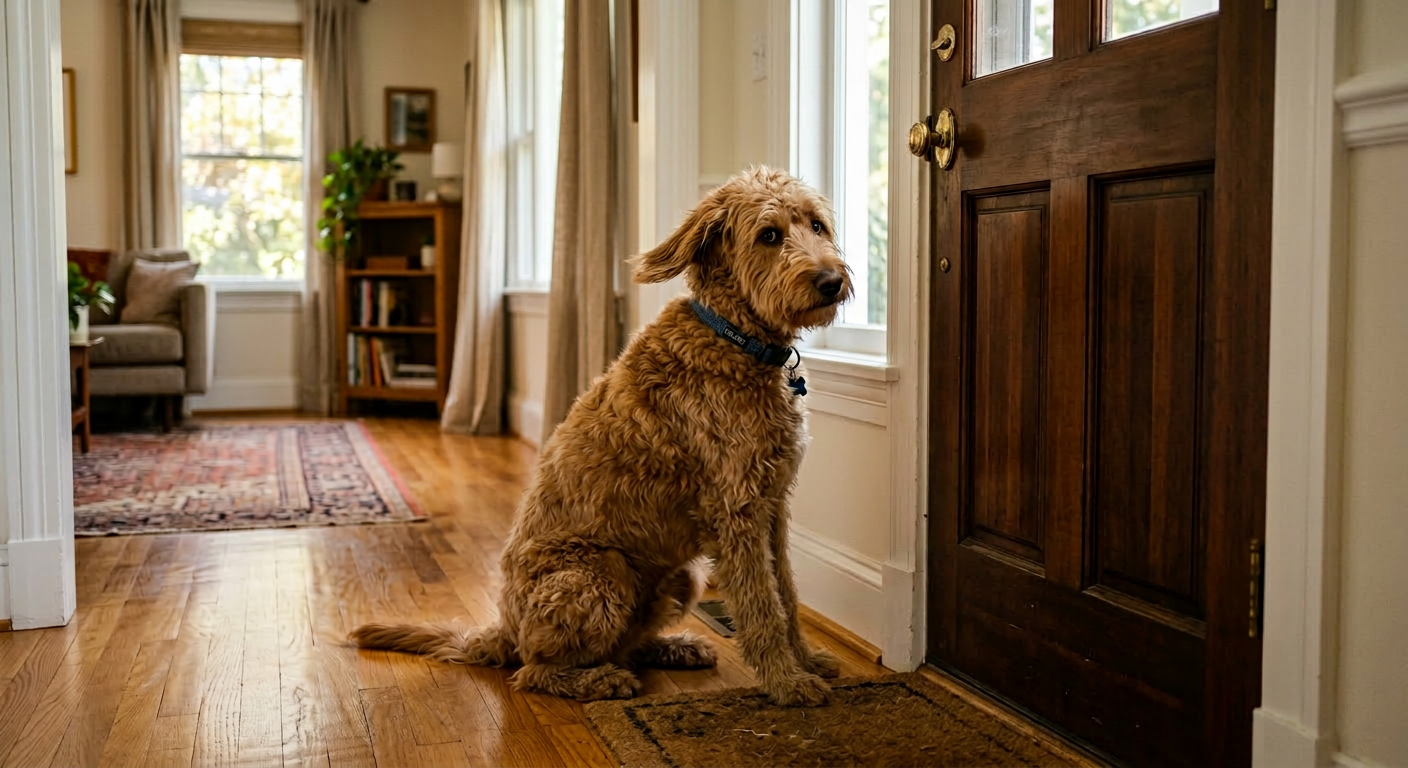
Signs of Dog Separation Anxiety: What to Watch For
So how do you know if your dog is dealing with separation anxiety versus just being a little mischievous? Here are the telltale signs that I know all too well:
Destructive Behavior
Chewing furniture, scratching doors, destroying blinds — this was my specialty. Dogs with separation anxiety often target exit points like doors and windows because we're literally trying to get to you. It's not random destruction; it's targeted panic.
Excessive Barking and Howling
If your neighbors are leaving notes about your dog's daytime concerts, that's a big red flag. Dogs with separation anxiety often bark, howl, or whine persistently — and it typically starts within minutes of you leaving.
Pacing and Restlessness
I used to walk the same path from the front door to the back window over and over again. Some dogs pace in circles; others walk in straight lines. Either way, it's a sign of serious agitation.
House Soiling
If your fully house-trained pup is having accidents only when you're gone, separation anxiety could be the culprit. This one is especially frustrating for humans, but please remember — we're not doing it on purpose.
Escape Attempts
Some dogs go full Houdini. They'll dig under fences, squeeze through baby gates, or claw at crate doors until their paws are raw. This is one of the more dangerous symptoms because dogs can seriously injure themselves.
Drooling, Panting, and Trembling
These physical symptoms are easy to miss if you're not home to see them, but a pet camera can reveal a lot. More on that in a minute.
Refusal to Eat
I love food more than almost anything (except Lacey and tennis balls), so when I stopped eating my treats while she was gone, she knew something was seriously wrong.
If your dog shows several of these signs — and they happen specifically when you're away — you're likely dealing with a separation anxiety dog situation that needs attention.
What Causes Separation Anxiety in Dogs?
Understanding what triggers dog separation anxiety is the first step toward fixing it. Here are the most common causes:
Changes in Schedule or Routine
The ASPCA specifically notes that abrupt schedule changes are a major trigger. When my mom Lacey went from working at home to going back to the office, my world turned upside down. One day she was there all the time; the next, she vanished for eight hours. My little doggie brain did NOT compute.
Rehoming or Shelter Stays
Dogs who have been surrendered, rehomed, or spent time in shelters are significantly more likely to develop separation anxiety. The loss of an attachment figure creates deep insecurity. If you've adopted a rescue near you, be extra mindful of this.
Loss of a Family Member
Whether it's a death, a divorce, or a kid leaving for college, losing a member of the pack can trigger intense anxiety.
Traumatic Events
A scary experience that happened while the dog was alone — like a thunderstorm, fireworks, or a break-in — can create a lasting association between being alone and feeling terrified.
Lack of Early Socialization
Puppies that didn't learn to be comfortable alone during their critical socialization period are more prone to developing separation dog anxiety later in life.
Breed Predisposition
Let's be real — some of us breeds are just clingier than others. Golden Doodles (ahem), Labrador Retrievers, German Shepherds, and Vizslas are known for forming intense bonds that can tip into anxiety. It's because we love you SO much.
Proven Solutions for Dog Separation Anxiety
Okay, here's the part you've been waiting for. Let me walk you through the strategies that actually work — the ones my mom Lacey used with me and the ones backed by veterinary science.
1. Gradual Desensitization Training
This is the gold standard, and every expert agrees on it. The idea is simple: you teach your dog that being alone is safe by starting with very short absences and slowly building up.
Here's how my mom did it:
- She'd pick up her keys and then sit back down (no leaving)
- She'd walk to the door, open it, and come right back
- She'd step outside for 5 seconds, then 10, then 30
- Over weeks, she built up to minutes, then hours
The key is to go at YOUR dog's pace. If your pup panics at the 2-minute mark, don't jump to 10 minutes. Go back to 1 minute and build from there. Patience is everything.
2. Stop Making Departures and Arrivals a Big Deal
I know, I know — it's SO hard not to give your pup a dramatic goodbye and an even more dramatic hello. But according to VCA Animal Hospitals, low-key departures and arrivals help reduce the emotional spike that fuels anxiety.
My mom Lacey started ignoring me for about 10-15 minutes before leaving and after coming home. At first, I was offended. But eventually, it helped me understand that comings and goings are no big deal.
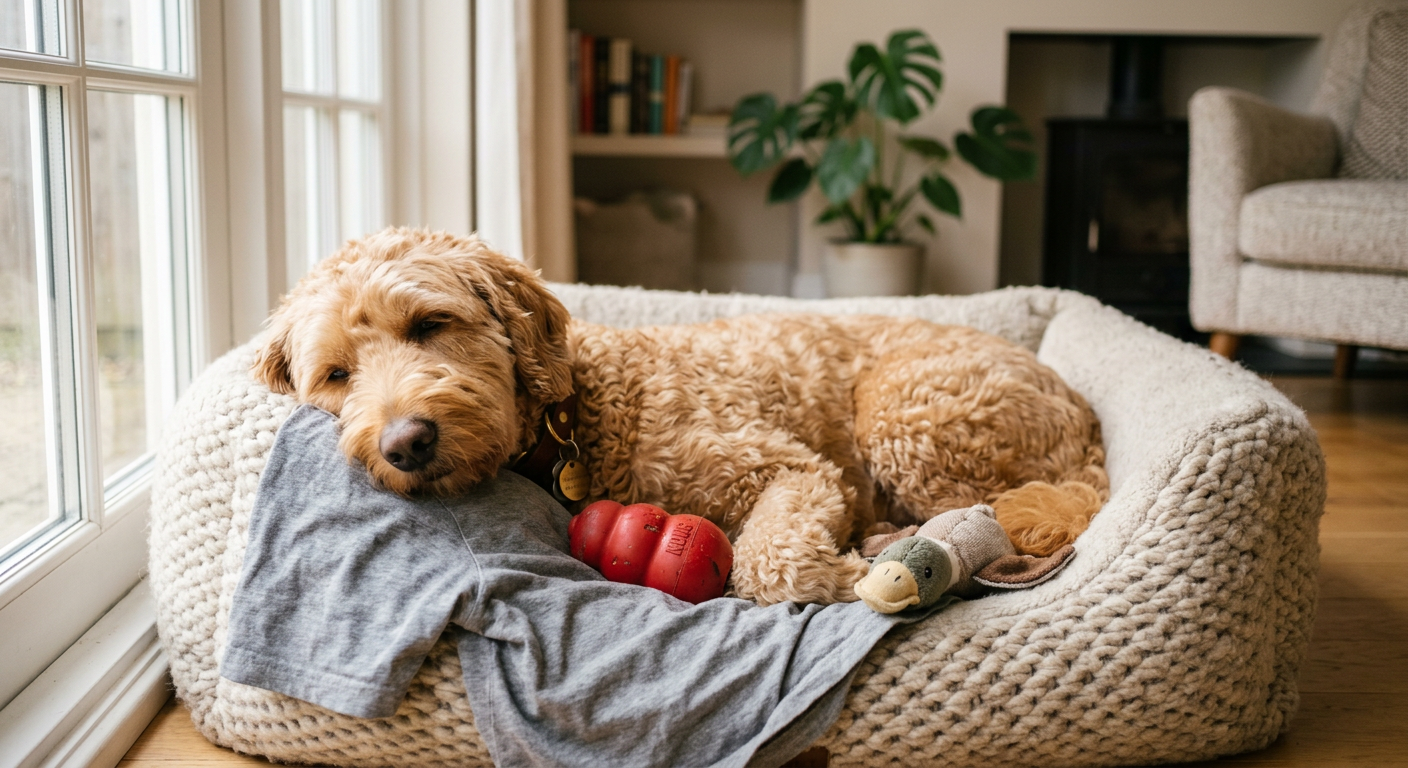
3. Create a Safe, Comfortable Space
Having a designated "safe zone" made a huge difference for me. My mom set up a cozy corner with my favorite bed and some ambient noise. A calming dog bed can work wonders — I personally love the Bedsure Orthopedic Dog Bed. The bolstered edges give us anxious pups something to lean against, which feels like a gentle hug.
Pairing that with a Adaptil Calming Pheromone Diffuser in your dog's safe space can really help. These diffusers release synthetic versions of the pheromone that mother dogs produce to comfort their puppies. Science-backed snuggles, basically.
4. Mental Stimulation and Enrichment
A bored, anxious dog is a destructive dog. Leaving your pup with something engaging can redirect that nervous energy. The KONG Classic Dog Toy stuffed with peanut butter or frozen treats is an absolute game-changer. I still get one every time my mom leaves, and honestly, sometimes I'm so focused on getting every last bit of peanut butter out that I barely notice she's gone.
For dogs who need even more stimulation, puzzle feeders and snuffle mats are fantastic options. The Outward Hound Nina Ottosson Puzzle Toy keeps me occupied for a solid 20-30 minutes — which is usually enough time to get past the initial anxiety spike of my human leaving.
5. Exercise Before You Leave
This one is simple but powerful. A tired dog is a calmer dog. My mom started taking me for a long walk or a solid play session at a dog park near us before heading out for the day. By the time she left, I was ready for a nap instead of a meltdown.
If you're looking for dog parks in your area, check out our dog park finder — burning off that energy before alone time can make a world of difference for a separation anxiety dog.
6. Consider a Pet Camera
Being able to monitor your dog while you're away is incredibly helpful for understanding their anxiety patterns. The Furbo 360° Dog Camera lets you watch, talk to, and even toss treats to your pup remotely. My mom Lacey swears by ours. She could see exactly when my anxiety peaked and how long it lasted, which helped her tailor the desensitization training perfectly.
7. Medication: When Behavioral Solutions Aren't Enough
Let's talk about the big one. Sometimes training and enrichment alone aren't enough, and that's OKAY. There's absolutely no shame in exploring medication for your dog's separation anxiety.
According to PetMD, commonly prescribed medications include fluoxetine, clomipramine, trazodone, and alprazolam. In fact, there are two FDA-approved medications specifically licensed for canine separation anxiety in the United States: fluoxetine (Reconcile®) and clomipramine (Clomicalm®).
Research published in the National Center for Biotechnology Information (NCBI) shows that combination therapy — low-dose fluoxetine combined with behavioral modification — produced large or moderate improvements in 71% of dogs with separation-related problems.
However, here's the critical thing: medication alone is not a solution. Every study and every veterinary expert agrees that medication works best when combined with a behavioral retraining program. The meds reduce the underlying anxiety enough for your dog to actually learn and respond to the training. Think of it as taking the edge off so the real work can happen.
Side effects are worth discussing with your vet. Fluoxetine can cause lethargy in some dogs and decreased appetite, while clomipramine may cause vomiting in rare cases. Your veterinarian can help you weigh the benefits against the risks for your specific pup.
Always consult your veterinarian before starting any medication. Never give your dog human anxiety medication — our bodies process drugs very differently.
Dog Separation Anxiety and Crate Training: Friend or Foe?
This is a hot topic, and I have feelings about it. For some dogs, a crate is a safe den — a cozy little cave where they feel secure. For dogs with dog separation anxiety, however, a crate can sometimes make things worse.
If your dog associates the crate with being confined and abandoned, crating them while you're away can escalate their panic. Dogs have been known to break teeth on crate bars and injure their paws trying to escape.
On the other paw, if your dog was properly crate-trained as a puppy and genuinely views the crate as their happy place, it CAN help. The key is to watch your dog's response. If they enter the crate willingly and settle down, great. If they resist, panic, or hurt themselves, ditch the crate and try an exercise pen or a dog-proofed room instead.
Working with a Professional: When to Get Help
If your dog's separation anxiety is severe — we're talking self-injury, extreme destruction, or complete inability to be alone for even a minute — it's time to call in the pros. Look for a Certified Applied Animal Behaviorist (CAAB) or a board-certified veterinary behaviorist in your area.
These aren't your regular dog trainers (though good trainers are wonderful too). These are specialists who understand the neurochemistry behind anxiety and can create a comprehensive treatment plan tailored to your dog.
Ask your vet for a referral. Many veterinary behaviorists now offer virtual consultations, so even if there isn't one near you, help is accessible.
Prevention: Setting Up Puppies for Success
If you have a puppy or are planning to bring one home, you have a golden opportunity (pun intended, because I'm golden) to prevent separation anxiety before it starts:
- Practice short absences early — leave the room for brief periods during the day
- Don't carry your puppy everywhere — let them explore independently
- Reward calm, independent behavior — when your puppy chills on their own, praise them
- Socialize broadly — expose your puppy to different people, places, and experiences
- Establish a routine — predictability creates security
I wish my mom Lacey had known some of these things when I was a puppy, but hey — we figured it out together, and that's what matters.
Listen, if you're reading this because your dog is struggling with dog separation anxiety, I want you to know something: it gets better. I'm living proof. There was a time when my mom Lacey couldn't step outside without me falling apart, and now I happily snooze on my bed while she's at work (okay, I still watch the door sometimes, but I'm CALM about it).
The journey takes patience, consistency, and a whole lot of love — but you've already got that last one covered, or you wouldn't be here researching solutions for your best friend. Start small with desensitization, create a comfortable safe space, invest in enrichment toys, and don't hesitate to talk to your vet about whether medication might help your pup.
Want more tips on keeping your dog happy, healthy, and living their best life? Sniff around doggieparknearme.com for more of my expert advice. And give your pup an extra belly rub from me tonight. They deserve it.
Woof woof, Auggie 🐾
Frequently Asked Questions
How do you help a dog with separation anxiety?
Helping a dog with separation anxiety requires a multi-pronged approach. Start with gradual desensitization — practice very short absences and slowly increase the duration over weeks. Make departures and arrivals low-key. Provide mental stimulation like puzzle toys and stuffed KONGs. Create a comfortable safe space with calming aids like pheromone diffusers. Ensure your dog gets plenty of exercise before you leave. For moderate to severe cases, consult your veterinarian about whether anti-anxiety medication combined with behavior modification could help. Studies show that combination therapy produces improvements in 71% of dogs with separation-related problems.
What is the 3 3 3 rule for dogs separation anxiety?
The 3-3-3 rule is a general guideline for newly adopted dogs adjusting to their home. In the first 3 days, your dog may feel overwhelmed, scared, and may not eat or drink normally. In the first 3 weeks, your dog is settling in, starting to learn routines, and their true personality begins to emerge — this is often when separation anxiety symptoms first appear. After 3 months, your dog should feel secure and bonded in their new home. Understanding this timeline helps adopters set realistic expectations and implement separation anxiety prevention strategies at the right time.
How long does it take for a dog to get over separation anxiety?
The timeline varies significantly depending on the severity of the anxiety and the consistency of treatment. Mild cases may improve within a few weeks of consistent desensitization training. Moderate cases typically take 2 to 3 months of dedicated behavior modification. Severe cases, especially those requiring medication, may take several months to show significant improvement — research shows that FDA-approved medications like fluoxetine and clomipramine typically require about two months to significantly decrease distressed behaviors when combined with behavior modification. Some dogs may need ongoing management strategies for life, but their quality of life can improve dramatically with proper treatment.
Can dog separation anxiety be cured completely?
While some dogs can overcome separation anxiety entirely — especially mild cases caught early — many dogs with moderate to severe separation anxiety are managed rather than 'cured.' With proper training, environmental modifications, and potentially medication, most dogs can learn to be comfortable alone for reasonable periods. The goal isn't necessarily to eliminate all anxiety but to reduce it to a manageable level where your dog isn't distressed and can relax while you're away. Consistent effort and patience are key to long-term success.
Is separation anxiety more common in certain dog breeds?
While any dog can develop separation anxiety, some breeds are more predisposed due to their strong bonding tendencies. Breeds commonly associated with separation anxiety include Labrador Retrievers, German Shepherds, Golden Retrievers, Golden Doodles, Vizslas, Border Collies, and Cavalier King Charles Spaniels. However, individual temperament, early socialization, life experiences, and how they were raised play equally important roles. Rescue dogs and dogs who have experienced rehoming are also at higher risk, regardless of breed.
Should I get another dog to help with my dog's separation anxiety?
Getting a second dog specifically to treat separation anxiety is generally not recommended. Dog separation anxiety is rooted in the bond with their human, not a need for canine companionship. A second dog won't replace you, and you could end up with two anxious dogs instead of one. In some cases, a well-adjusted companion dog can provide some comfort, but it should never be the primary treatment strategy. Focus on desensitization training, environmental enrichment, and veterinary guidance first.
About Auggie
Hi, I'm Auggie! I'm a Golden Doodle who's been to more dog parks than most humans. My mom Lacey and I started Doggie Park Near Me to help every pup find their perfect park. When I'm not sniffing out new spots, you'll find me napping in the sun or begging for treats.
Learn more about us →More From Auggie

How Auggie finds a doggie park near me, nose first
Hi, I'm Auggie the Golden Doodle, and I'm inviting you to join my tail-wagging adventure to discover the best doggie park near me. In my latest post, you'll learn about essential amenities, safety tips, and insider dog park etiquette that make every visit a joyful romp. Come along to explore local parks, find hidden gems, and ensure your furry friend has the ultimate playtime experience.

Therapy Dogs vs. Service Dogs: What's the Difference?
Hey friends, it's Auggie! Ever wondered about the difference between a therapy dog for mental health and a service dog? I'm breaking it all down — from legal protections to training tips and the science-backed benefits of canine companionship. Let me help you find the right path for you and your pup!

Dog Anxiety Medications: What Vets Recommend in 2025
Hey, it's Auggie! Let's talk dog anxiety meds — from FDA-approved prescriptions like Reconcile and Clomicalm to popular options like trazodone and natural calming supplements. I break down what vets actually recommend, share my own experiences as an anxious Golden Doodle, and help you find the right solution for your pup.