
Bland Diet for Dogs with Diarrhea: What to Feed and When
Okay, friends — let's talk about something that's not exactly glamorous but is super important. I'm talking about the dreaded tummy troubles. Yep, even a magnificent Golden Doodle like me has had a rough belly day or two (don't judge me — that mysterious thing I ate at the dog park near our house had it coming). When my stomach goes sideways, my mom Lacey always reaches for the same tried-and-true solution: a dog bland diet for diarrhea. It's simple, it's soothing, and honestly? The boiled chicken part is kind of amazing. Whether your pup ate something sketchy, is stressed from a big move, or is adjusting to new food, a bland diet can be a real game-changer. Today, I'm breaking down everything you need to know — what to feed, how much, how long, and when it's time to call the vet. Let's get those tummies feeling better, one gentle meal at a time.
Why a Bland Diet for Dog Diarrhea Actually Works
So what's the big deal about a bland diet, and why does every vet seem to recommend it? Well, let me explain it the way I understand it — through my nose and my belly.
When a dog's digestive system is irritated (from dietary indiscretion, stress, parasites, or a sudden food change), the gut goes into overdrive. Everything moves through too fast, water isn't absorbed properly, and the result is... well, you've seen it on your carpet. A bland diet for dog diarrhea works because it's low in fat, low in fiber, and incredibly easy to digest. According to Cornell University College of Veterinary Medicine, a bland diet of boiled chicken or low-fat hamburger mixed with white rice helps soothe the gastrointestinal tract and gives it a chance to heal.
Think of it like this: when you have a stomach bug, you don't eat a spicy burrito. You eat toast and broth. Same concept for us dogs. The bland diet slows stool production, reduces the frequency of those emergency backyard trips, and lets the gut rest and recover.
The Classic Dog Bland Diet for Diarrhea Recipe
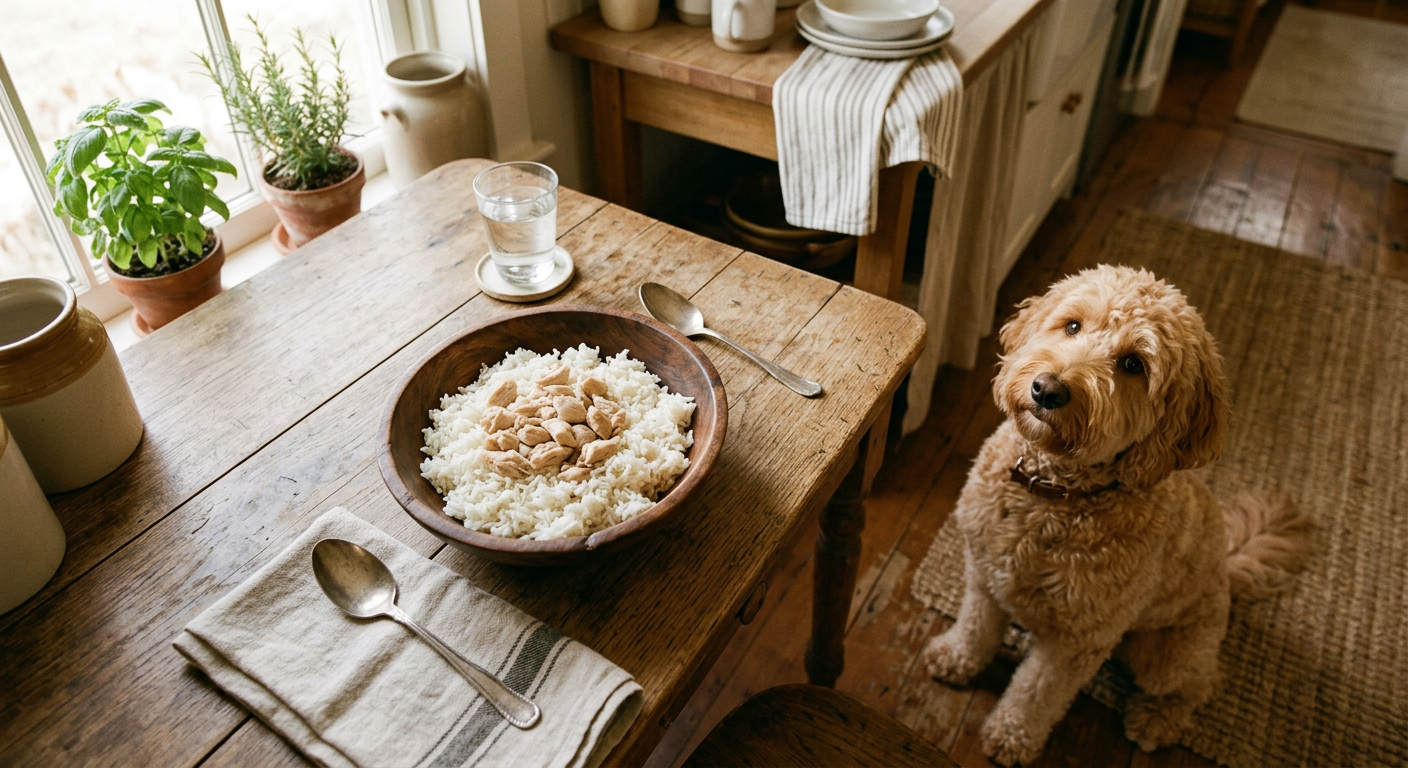
Alright, let's get to the good stuff — the food! The classic dog bland diet for diarrhea is beautifully simple. Here's what my mom Lacey makes for me every time my stomach acts up:
Ingredients
- Boiled, skinless, boneless chicken breast (or lean ground turkey/low-fat hamburger)
- Plain white rice (not brown rice — white is easier to digest)
The Ratio
Most veterinarians recommend a 2:1 or 3:1 ratio of rice to protein. So if you're making a cup of food, that's about ⅔ to ¾ rice and ¼ to ⅓ chicken. All Creatures Veterinary Clinic notes that this high-carbohydrate, low-protein, low-fat composition is specifically designed to slow stool production and reduce defecation frequency.
How to Prepare It
- Boil the chicken in plain water — no salt, no butter, no seasonings. I know it sounds boring, but trust me, my nose still goes crazy for it.
- Cook the white rice according to package directions, using only water.
- Shred the chicken into small, bite-sized pieces and mix it into the rice.
- Let it cool to room temperature before serving. No dog wants to burn their tongue.
My mom sometimes makes a big batch and stores it in the fridge for up to three days. She uses a Fullstar Vegetable Chopper & Food Prep Container to keep everything prepped, portioned, and organized. It's a kitchen lifesaver when you're making multiple small meals a day.
Alternative Proteins
Not every dog does well with chicken (allergies are a thing, even for us fancy doodles). You can substitute:
- Lean ground turkey (drained of fat)
- Low-fat cottage cheese
- Boiled lean ground beef (90% lean or higher, drained thoroughly)
How Much to Feed and How Often
Here's where a lot of pet parents go wrong — they make the bland diet and then serve a huge bowl of it. Nope! The whole point is to give the digestive system small, manageable amounts to process.
Feeding Guidelines by Weight
| Dog Weight | Meal Size | Meals Per Day |
|---|---|---|
| Under 20 lbs | ¼ – ½ cup | 4-6 small meals |
| 20-50 lbs | ½ – ¾ cup | 4-5 small meals |
| 50-80 lbs | ¾ – 1 cup | 4 small meals |
| Over 80 lbs | 1 – 1.5 cups | 3-4 small meals |
These are general guidelines — your vet in your area can give you more specific recommendations based on your dog's individual needs. The key is small, frequent meals spread throughout the day. Think of it as grazing rather than feasting.
The Fasting Period: Should You Withhold Food First?
This is a big question my mom Lacey had the first time I got sick. The answer, according to Cornell University College of Veterinary Medicine, is that withholding food for 12-24 hours before starting a bland diet can help rest the GI tract — but never withhold water.
Here's the protocol my mom follows:
- Remove food for 12-24 hours (for adult dogs only — puppies, seniors, and small breeds may need food sooner; check with your vet near you).
- Offer small amounts of water frequently. If your dog is vomiting, try ice chips or very small sips every 15-20 minutes.
- Start the bland diet with a tiny portion — just a few tablespoons — to see how it sits.
- Gradually increase meal size over the next 24-48 hours if things are going well.
Hydration is absolutely critical during this time. Diarrhea and vomiting can lead to dehydration fast, especially in small dogs and puppies. My mom always keeps a Petmate Replendish Gravity Waterer filled and accessible so I always have fresh water available, even when she's at work.
Boosting Recovery: Probiotics and Supplements
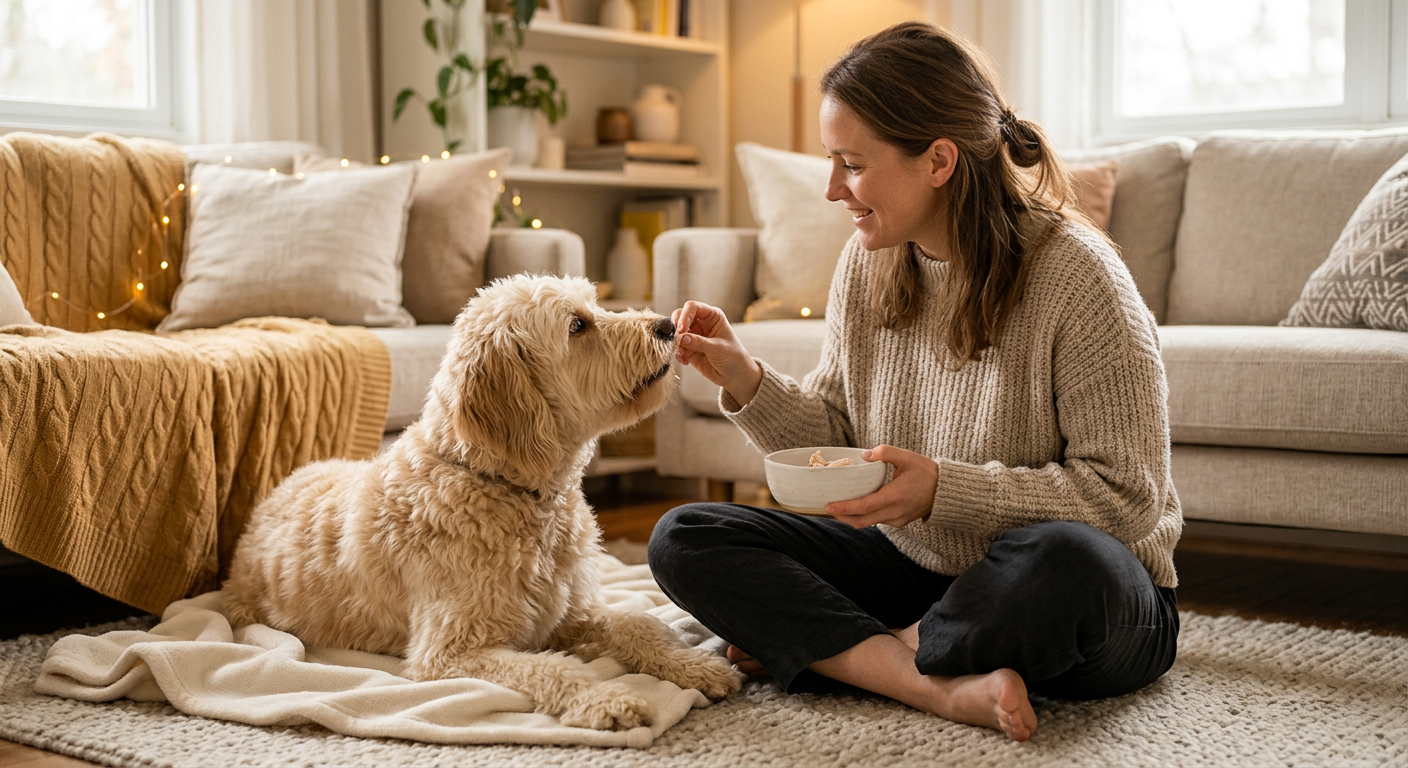
A dog diet for diarrhea doesn't have to stop at chicken and rice. My mom Lacey learned from our vet that adding a probiotic can really speed up recovery by restoring the healthy bacteria in the gut. After a bout of diarrhea, the good bacteria get flushed out along with the bad, so giving them a boost makes a real difference.
I personally take Purina Pro Plan Fortiflora Probiotics for Dogs — it's a powdered probiotic you sprinkle right on the food. It's vet-recommended, and honestly, I think it makes my bland diet taste even better (if that's possible). Neighborhood Veterinary Clinic also recommends considering probiotics to restore gut bacteria during and after a bland diet protocol.
Another thing that can help? Plain canned pumpkin (NOT pumpkin pie filling — that stuff has sugar and spices). Pumpkin is a gentle source of soluble fiber that can help firm up stools. A tablespoon or two mixed into the rice and chicken works wonders. My mom always keeps a few cans of Nummy Tum-Tum Pure Pumpkin for Pets in the pantry. It's organic, has no additives, and is made specifically for pets.
How Long Should a Dog Stay on a Bland Diet for Diarrhea?
This is one of the most common questions my mom sees in our doggie parent community, and the answer requires a little patience. According to Weste Animal Hospital, you should continue the bland diet for 2-3 days after symptoms resolve before beginning the transition back to regular food.
Neighborhood Veterinary Clinic suggests an even more conservative approach: 3-5 days after diarrhea stops, then a gradual transition over one full week.
Here's the transition schedule my mom Lacey uses:
| Day | Bland Diet | Regular Food |
|---|---|---|
| Day 1-2 | 75% | 25% |
| Day 3-4 | 50% | 50% |
| Day 5-6 | 25% | 75% |
| Day 7 | 0% | 100% |
Do NOT rush this transition. I cannot stress this enough. Going back to regular food too quickly is one of the biggest reasons dogs relapse into diarrhea. Slow and steady wins this race, friends.
When to Call the Vet: Red Flags to Watch For
A bland diet for dog diarrhea is a wonderful first-line home remedy, but it's not a cure-all. It treats the symptom, not the underlying cause. Here are the situations where you need to skip the chicken and rice and head straight to your veterinarian near you:
- Diarrhea lasts more than 72 hours despite the bland diet
- Blood in the stool (red or dark/tarry)
- Vomiting that won't stop — especially if your dog can't keep water down
- Lethargy or weakness — if your pup won't get up, play, or seems "off"
- No bowel movement for 24+ hours after starting the bland diet
- Puppies, senior dogs, or dogs with pre-existing conditions — these guys need vet attention sooner rather than later
- Fever (a dog's normal temp is 101-102.5°F)
VCA Animal Hospitals emphasizes that you should always consult a vet first when possible, because the causes of diarrhea vary widely — from something harmless to infections, pancreatitis, or intestinal blockages that need medical intervention.
My mom keeps a Pet Clinic Digital Thermometer in our doggy first-aid kit so she can check my temperature if I ever seem really unwell. It's a small investment that can give you critical information before a vet visit.
Common Mistakes to Avoid with a Dog Bland Diet
I've seen a lot of well-meaning pet parents make these mistakes in our local dog park community. Let me save you the trouble:
- Adding seasonings or oil — I know you want to make it tasty, but garlic, onion, salt, and butter can make things worse (and some are toxic to dogs).
- Using brown rice — Brown rice is higher in fiber, which defeats the purpose. Stick to plain white rice.
- Feeding too much, too fast — Small, frequent meals. Period.
- Skipping the transition back — Going cold turkey from bland to regular food is a recipe for a relapse.
- Using the bland diet as a long-term solution — A bland diet is not nutritionally complete. It lacks essential vitamins, minerals, and fatty acids your dog needs. It's a short-term remedy, not a lifestyle.
- Ignoring hydration — Water, water, water. If your dog won't drink, try adding a splash of low-sodium chicken broth to their water bowl.
Preventing Future Episodes of Diarrhea
Look, I'll be honest — I'm probably going to eat something questionable at the dog park near me again someday. It's in my nature. But there are things you can do to minimize tummy trouble:
- Transition foods gradually over 7-10 days when switching brands or formulas
- Avoid table scraps (I said what I said, even though I personally love them)
- Keep trash cans secured — we dogs are opportunistic, and your garbage is our buffet
- Stay current on parasite prevention — intestinal parasites are a common cause of diarrhea in dogs in every area
- Manage stress — big changes like moving, new pets, or schedule shifts can upset our stomachs
- Feed a high-quality, consistent diet — your dog's gut microbiome thrives on consistency
There you have it, friends — everything you need to know about a dog bland diet for diarrhea, straight from a Golden Doodle who's been through it (more than once, if I'm being honest). The chicken and rice combo is simple, effective, and vet-approved for getting those tummies back on track. Just remember: small meals, plenty of water, add a probiotic, and transition slowly back to regular food. And if things don't improve within a couple of days, please get your pup to a vet near you right away.
My mom Lacey always says that being prepared is the best thing you can do for your dog's health. So bookmark this page, stock your pantry with chicken and rice, and keep those probiotics handy. Your pup's belly will thank you — and so will your carpets.
Have you tried a bland diet for your dog? Drop by our community at doggieparknearme.com and share your experience! I'd love to hear from you. Until next time — stay happy, stay healthy, and stay away from suspicious things at the dog park. 🐾
Frequently Asked Questions
What foods will stop diarrhea in dogs?
The most effective foods for stopping diarrhea in dogs are plain boiled white rice and boiled, skinless chicken breast, served in a 2:1 or 3:1 ratio of rice to protein. Plain canned pumpkin (not pie filling) can also help firm up stools due to its soluble fiber content. Low-fat cottage cheese and boiled lean ground turkey are good alternatives if your dog has a chicken allergy. Always serve these foods plain — no seasonings, butter, or oil — and offer small, frequent meals throughout the day rather than one or two large ones.
What foods firm up dog stools?
Foods that help firm up dog stools include plain cooked white rice, plain canned pumpkin (a great source of soluble fiber), boiled chicken breast, and low-fat cottage cheese. Probiotics like Purina FortiFlora can also help restore healthy gut bacteria, which contributes to firmer stools. The key is to choose foods that are low in fat and low in insoluble fiber. Avoid fatty foods, dairy in large quantities, and high-fiber vegetables, as these can worsen loose stools.
Are scrambled eggs considered bland food for dogs?
Plain scrambled eggs (cooked without butter, oil, salt, or seasoning) can be part of a bland diet for dogs, as they're easy to digest and provide gentle protein. However, they're not the first-choice protein for a traditional bland diet — boiled chicken breast or lean ground turkey is typically preferred because they're lower in fat. If your dog tolerates eggs well and isn't vomiting, plain scrambled eggs mixed with white rice can serve as an alternative bland meal. Always introduce them in small amounts first.
How long should my dog stay on a bland diet for diarrhea?
Your dog should stay on a bland diet for 2-5 days after diarrhea symptoms have fully resolved — not just 2-5 days total. Once stools are consistently normal for at least 24-48 hours, begin transitioning back to regular food gradually over 5-7 days. Start by mixing 25% regular food with 75% bland diet, and increase the regular food proportion every two days. If diarrhea returns during the transition, go back to the full bland diet and consult your veterinarian. A bland diet is not nutritionally complete for long-term feeding.
About Auggie
Hi, I'm Auggie! I'm a Golden Doodle who's been to more dog parks than most humans. My mom Lacey and I started Doggie Park Near Me to help every pup find their perfect park. When I'm not sniffing out new spots, you'll find me napping in the sun or begging for treats.
Learn more about us →More From Auggie

Grain-Free Dog Diet: Is It Really Better for Your Dog?
Is a grain-free dog diet really better for your pup? I'm Auggie the Golden Doodle, and I dug into the FDA research, vet recommendations, and real science to give you the honest truth. Spoiler: the answer might surprise you. Read on before you fill that bowl!

Dog Weight Management: How to Help Your Overweight Dog Lose Weight Safely
Hey friends, it's Auggie! I've been on my own weight management journey, and I'm sharing everything my mom Lacey and I learned about weight management dog food, safe weight loss plans, and how the right food can transform your overweight pup's life. Vet-backed tips inside!

High Protein Dog Food: Benefits, Risks, and Top Picks for Your Pup
Woof! I'm Auggie, and I'm digging into the world of high protein dog diets — the benefits, the risks, and my top food picks. From weight management to muscle building, discover whether a high protein diet dog food is right for your pup, plus expert tips and product recommendations!