
Fenced vs Unfenced Dog Parks: Which Is Safer for Your Pup?
Hey there, fellow four-leggers and the wonderful humans who love us! It's me, Auggie — your favorite Golden Doodle blogger and self-appointed dog park connoisseur. If you've ever typed fenced dog park near me into your phone while your pup yanked you toward the nearest patch of grass, you're not alone. My mom Lacey does it every time we visit a new city, and honestly, I'm grateful she does. Because here's the thing — not all dog parks are created equal, and the difference between a fenced and unfenced park can mean the difference between a tail-wagging good time and a terrifying chase down a busy street. Today, I'm putting my paws to the keyboard to give you the full scoop on fenced versus unfenced dog parks, which is truly safer, and how to make the best choice for your furry family member. Trust me, I've sniffed out the details so you don't have to.
Why the Search for a Fenced Dog Park Near Me Matters So Much
Let me tell you a story. The first time my mom Lacey took me to an unfenced dog park, I was about eight months old — all legs, no impulse control, and absolutely convinced that squirrels were my mortal enemies. Within five minutes, I'd bolted across an open field, cleared a drainage ditch, and was halfway to a parking lot before Lacey caught up with me, breathless and terrified. I wasn't trying to be naughty. I was just being a dog.
That experience is exactly why so many pet parents search for an enclosed dog park near me or a fenced-in dog park near me before heading out for playtime. A fence isn't just a convenience — it's a critical safety feature that can protect dogs from traffic, wildlife encounters, and their own boundless curiosity.
According to Wagbar's comprehensive guide on dog park safety and operations standards, perimeter fencing should be a minimum of 6 feet tall for large dog areas to prevent athletic dogs from jumping over. That's not a suggestion — that's a safety standard that the best parks in the country follow.
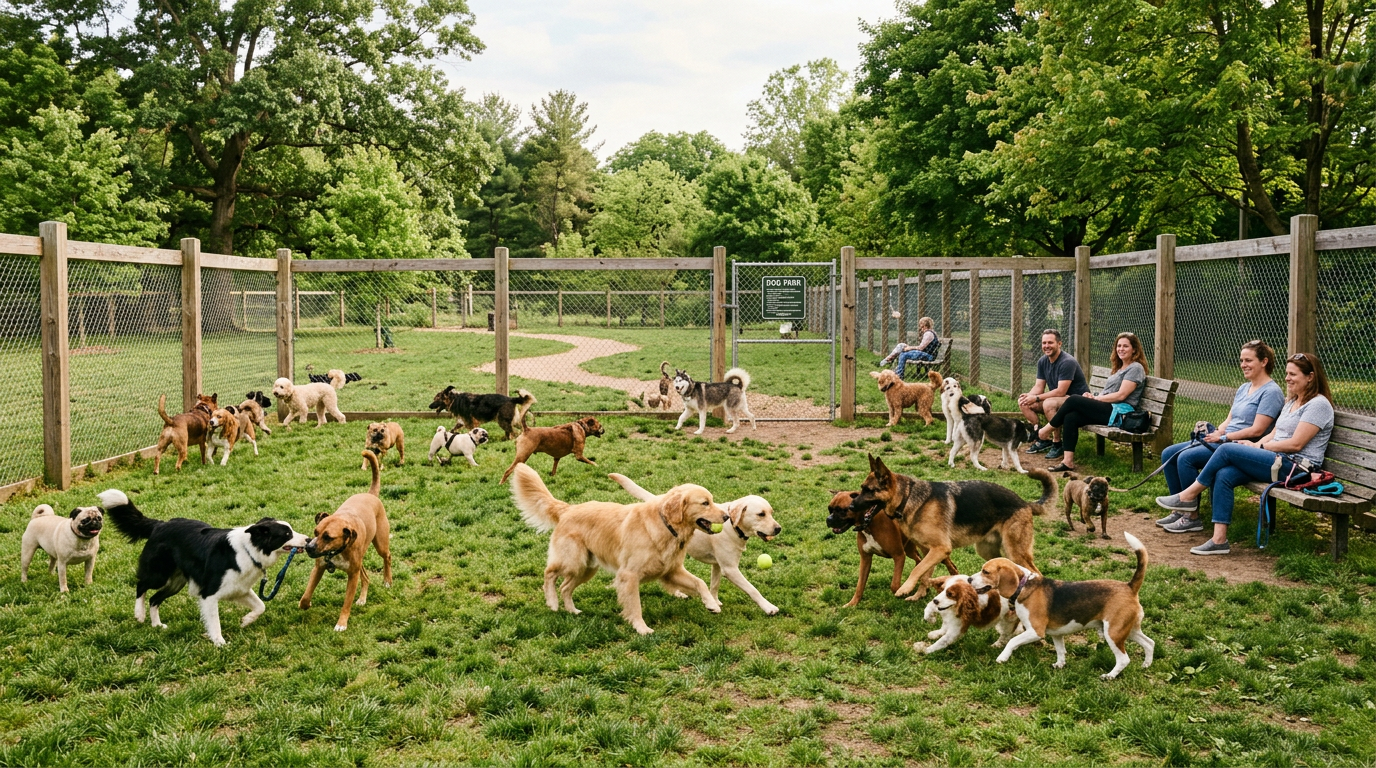
Fenced Dog Parks: The Benefits of Boundaries
Now, I know what you're thinking: "Auggie, doesn't a fence make you feel trapped?" Absolutely not! A good fence makes me feel free. Here's why.
Off-Leash Freedom Without the Risk
The number one benefit of a fenced dog park is that it allows dogs to run, play, and socialize completely off-leash in a contained environment. For dogs like me — high-energy, social butterflies with the attention span of a goldfish — this is paradise. I can sprint full speed without my mom worrying I'll end up in the next zip code.
Separation by Size
Most well-designed fenced dog parks include separate areas for large and small dogs. This is huge. As much as I love making new friends, a 10-pound Chihuahua doesn't always appreciate being body-slammed by a 55-pound Doodle mid-zoomie. Separated, fenced areas keep play sessions safe and appropriately matched.
Double-Gate Entry Systems
The best fenced parks feature double-gate (or "airlock") entry systems — a small enclosed area between two gates that prevents dogs from escaping when the outer gate opens. This feature alone has probably prevented thousands of runaway incidents at parks across the country. When you're searching for a dog park with fence near me, look specifically for this design element.
Peace of Mind for Pet Parents
Let's be honest — dog parks are supposed to be fun for humans too. When Lacey takes me to a fenced park, she can actually relax, chat with other dog parents, and enjoy watching me play instead of white-knuckling my leash or scanning for escape routes. That peace of mind is priceless.
Unfenced Dog Parks: Understanding the Risks and Rewards
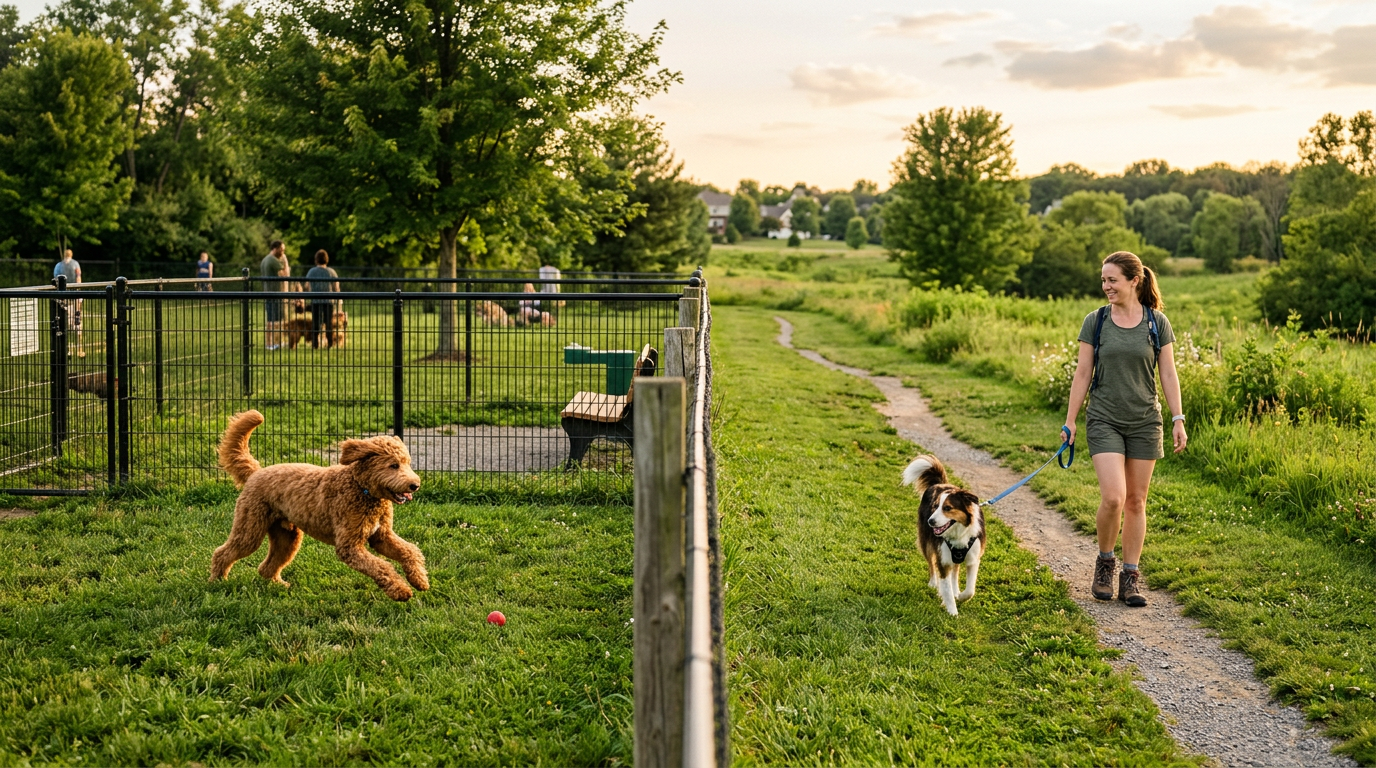
I'm not here to bash unfenced parks entirely. Some of the most beautiful off-leash areas I've visited have been open fields, beaches, and nature trails without a fence in sight. But they come with a very different set of considerations.
The Appeal of Open Spaces
Unfenced dog parks and off-leash areas tend to be larger, more natural, and often more scenic. Think open meadows, wooded trails, and lakefront areas. For dogs with excellent recall and experienced handlers, these spaces can be incredible enrichment opportunities. The variety of terrain, smells, and natural stimuli is something a small fenced lot just can't replicate.
The Very Real Dangers
Here's where I have to get serious for a moment. Unfenced parks carry significant risks that every pet parent needs to understand:
- Traffic exposure: Without a barrier, a dog who spots a squirrel, another dog, or gets spooked can run directly into a road.
- Wildlife encounters: Open areas may border habitats with coyotes, snakes, or other wildlife that can injure or frighten dogs.
- Lost dogs: Even well-trained dogs can become disoriented, especially in unfamiliar areas. A moment of distraction can lead to a lost pet.
- Unreliable recall: Let's be honest — most dogs, myself included, have selective hearing. A 90% recall rate means your dog will ignore you one out of every ten times. In an unfenced area, that one time could be catastrophic.
Dogwood Park Clinic recommends that dogs have multiple forms of identification including collar tags, embroidered collars, and microchips — advice that becomes absolutely critical in unfenced environments.
Health and Safety Considerations at Any Dog Park
Whether you find a perfect fenced dog park near me result or end up at an unfenced area, certain health and safety precautions apply universally.
Vaccinations Are Non-Negotiable
According to Mountainside Veterinary, infectious diseases like kennel cough, giardia, and flea-borne parasites are prevalent at dog parks. Before you ever step paw in a park, make sure your dog is up-to-date on vaccinations for rabies, distemper, parvovirus, and bordetella at minimum.
My mom Lacey keeps my vaccination records in a folder in her car — which I think is a little extra, but I also respect the dedication. She also makes sure I'm on year-round flea and tick prevention, especially during park season.
Speaking of which, I highly recommend the Seresto Flea and Tick Collar for Dogs. It lasts up to 8 months and gives Lacey peace of mind every time we visit a park. It's one of those "set it and forget it" solutions that actually works.
Age Matters
PetMD notes that dogs should not be brought to dog parks until they are at least 4 months of age, after they've received their core vaccinations. Puppies have developing immune systems and are more vulnerable to diseases that circulate in communal environments. I know it's tempting to socialize your new pup right away, but patience pays off.
Basic Commands Save Lives
Before heading to any park — fenced or unfenced — your dog should reliably respond to basic commands like "come," "sit," "leave it," and "stay." In a fenced park, these commands help manage play and prevent conflicts. In an unfenced park, they can literally save your dog's life.
For training reinforcement, I'm a big fan of the PetSafe Treat Pouch Sport. My mom clips it to her belt every time we go to the park, and let me tell you — when I hear that pouch unzip, I come running faster than you can say "good boy."
Essential Gear for Visiting a Fenced Dog Park Near You
Alright, let's talk gear. Whether you're a first-time park visitor or a seasoned regular, having the right equipment makes every outing safer and more enjoyable.
A Reliable Leash for Transit
Even at a fenced park, you'll need a leash to get from the car to the gate. I love the Max and Neo Double Handle Traffic Leash — the short traffic handle gives Lacey extra control in parking lots, and it's made from heavy-duty nylon that can handle my enthusiastic pulling.
Portable Water and Bowl
Hydration is critical, especially during warm months. Shared water bowls at parks can harbor bacteria and parasites, so bringing your own is always smarter. The RUFFWEAR Trail Runner Collapsible Dog Bowl is lightweight, clips right to Lacey's bag, and holds enough water to keep me refreshed between zoomie sessions.
Waste Bags — Always
I shouldn't have to say this, but… pick up after your dog, humans. Every time. The Earth Rated Dog Poop Bags are leak-proof, unscented (or lavender if that's your thing), and come in a dispenser that clips right to your leash. No excuses.
How to Find the Best Fenced Dog Park Near You
So you're convinced — a fenced-in dog park near me is the way to go. But how do you actually find one worth visiting? Here are my best tips.
Use DoggieParkNearMe.com
Shameless plug? Maybe. But our site at doggieparknearme.com is genuinely one of the best resources for locating dog parks in your area. You can filter by features, read reviews, and find parks that meet your specific needs — including fence status.
Check Municipal Parks Departments
Your local city or county parks department often maintains detailed information about dog park amenities. For example, the City of Alexandria, VA provides an official dog park guide that includes rules, regulations, and park specifications. Many municipalities offer similar resources — a quick web search with your city name plus "dog park rules" usually does the trick.
Visit Before You Commit
Don't just show up with your dog on the first visit. Lacey always scouts a new park without me first. She checks the fence condition (any gaps or damage?), evaluates the gate system, looks at the ground surface for hazards, and observes how other dogs and owners behave. If the park passes her inspection, then I get the green light.
Read Online Reviews
Google Reviews, Yelp, and local Facebook groups are goldmines for real-world dog park experiences. Look for recurring complaints about broken fences, aggressive dogs, or poor maintenance. Conversely, parks that consistently earn praise for cleanliness, friendly regulars, and solid infrastructure are usually safe bets.
What to Look for in a Fenced Dog Park
Here's my personal checklist for the ideal fenced dog park:
- ✅ Minimum 6-foot fence in good repair
- ✅ Double-gate entry system
- ✅ Separate areas for large and small dogs
- ✅ Clean, well-drained ground surface (no standing mud puddles)
- ✅ Shaded areas and benches for humans
- ✅ Fresh water source or water fountain
- ✅ Clearly posted rules and regulations
- ✅ Waste bag stations
- ✅ Adequate space for the number of dogs using it
Fenced vs Unfenced: The Verdict from This Golden Doodle
After years of park-hopping across multiple states with my mom Lacey, here's my honest take: fenced dog parks are safer for the vast majority of dogs and their humans.
Unfenced areas can be wonderful for exceptionally well-trained dogs with bombproof recall in low-risk settings. But for everyday play — especially for puppies, newly adopted dogs, high-prey-drive breeds, or dogs still working on recall — a fenced park provides the safety net that allows everyone to enjoy the experience.
The fence isn't a limitation. It's liberation. It means I can run full speed, chase a ball to my heart's content, and wrestle with my buddies without anyone worrying about what's on the other side. It means Lacey can breathe easy. And at the end of the day, isn't that what a great dog park experience is all about?
Dog Park Etiquette: Rules Every Visitor Should Follow
Before I sign off, a quick refresher on park manners — because even the best fenced dog park falls apart without responsible humans.
- Always supervise your dog. Put the phone down. Watch your pup.
- Leave toys at home unless the park specifically allows them. Resource guarding is real and can trigger fights.
- Remove your dog at the first sign of aggression — yours or theirs. No exceptions.
- Don't bring female dogs in heat. This is a recipe for chaos.
- Pick up waste immediately. I cannot stress this enough.
- Respect size separations. If there's a small dog area, keep your big dog out of it.
- Limit treats in public areas to avoid attracting unfamiliar dogs.
- Leave if you feel unsafe. Trust your gut — or your dog's body language.
So there you have it, friends — everything this Golden Doodle knows about the great fenced versus unfenced dog park debate. Whether you're typing fenced dog park near me for the first time or you're a seasoned park regular looking to upgrade your experience, I hope this guide helps you make the safest, happiest choice for your pup. My mom Lacey and I believe every dog deserves a safe space to run, play, and just be a dog — and more often than not, that space has a fence around it. Now go sniff out an amazing park in your area, gear up with the essentials, and make some memories! And don't forget to check out doggieparknearme.com to find the perfect spot near you. Happy trails, tail wags, and lots of zoomies — see you at the park! 🐾
Frequently Asked Questions
How do I find a fenced dog park near me?
The easiest way to find a fenced dog park near you is to use a dedicated park finder like doggieparknearme.com, where you can filter by amenities including fencing. You can also search Google Maps for 'fenced dog park near me,' check your local city or county parks department website, or browse reviews on Yelp and Google. Always visit the park without your dog first to confirm the fence is in good condition and the park meets your standards.
How tall should the fence be at a dog park?
According to dog park safety standards, perimeter fencing should be a minimum of 6 feet tall for large dog areas. This height prevents most athletic or large-breed dogs from jumping over. For small dog areas, a 4-foot fence may suffice, but 6 feet is the gold standard for overall park safety. Chain-link fencing is the most common material, though vinyl-coated options offer better durability.
Are unfenced dog parks safe for puppies?
Unfenced dog parks are generally not recommended for puppies. Puppies under 4 months old shouldn't visit any dog park due to incomplete vaccinations. Older puppies often lack reliable recall and impulse control, making unfenced areas particularly dangerous. A fenced, enclosed dog park with a separate small-dog area is the safest option for puppies who are old enough and fully vaccinated.
What vaccinations does my dog need before visiting a dog park?
At minimum, your dog should be up-to-date on vaccinations for rabies, distemper, parvovirus, and bordetella (kennel cough) before visiting any dog park. Some parks and municipalities may require additional vaccinations. Dogs should also be on current flea, tick, and heartworm prevention, as parasites like giardia and fleas are commonly transmitted at communal dog areas.
What is a double-gate entry system at a dog park?
A double-gate entry system (sometimes called an airlock or sally port) is a small enclosed area between two gates at the entrance of a fenced dog park. You open the first gate, enter the enclosed area with your dog, close the first gate behind you, and then open the second gate to enter the park. This prevents dogs inside the park from escaping when someone enters or exits — it's one of the most important safety features to look for.
Can I take my dog to an unfenced off-leash area safely?
You can, but only if your dog has a very reliable recall command, is well-socialized, and the area is away from busy roads and known wildlife hazards. Bring multiple forms of identification on your dog (collar tags, microchip, embroidered collar), keep visual contact at all times, and carry high-value treats for recall reinforcement. For most dogs, a fenced dog park is the significantly safer option.
About Auggie
Hi, I'm Auggie! I'm a Golden Doodle who's been to more dog parks than most humans. My mom Lacey and I started Doggie Park Near Me to help every pup find their perfect park. When I'm not sniffing out new spots, you'll find me napping in the sun or begging for treats.
Learn more about us →More From Auggie

How Auggie finds a doggie park near me in one happy sniff
Hey pals, I'm Auggie the Golden Doodle! In my latest blog post, I share my adventures exploring the best doggie park near me and uncover all the fun details about local dog parks. You'll discover cool safety tips, ideal park features, and handy advice for planning stress-free visits. Come along for a tail-wagging journey that makes every park visit a true treat for both you and your furry buddy!

Free Dog Parks in Every State: A Complete Directory
Hey friends, it's Auggie! I sniffed out the best free dog parks in all 50 states so you and your pup can find off-leash fun near you. From safety tips and etiquette to a complete state-by-state directory, this guide has everything you need. Let's go play!

How to Find the Best Dog Park Near You (Complete Guide)
Woof! I'm Auggie, and I've sniffed out everything you need to know about finding the perfect dog park near me. From safety tips and etiquette rules to what gear to pack and what red flags to avoid, this complete guide will help you and your pup enjoy off-leash adventures with confidence. Let's find your new favorite park!