
Dog Park Rules Every Owner Should Know (From a Dog Who Lives for the Park)
Woof, friends! I'm Auggie, a Golden Doodle with a deeply held opinion that the dog park is quite literally the best place on Earth. The smells, the zoomies, the new friends — there's nothing like it. But here's the thing: not every dog park visit goes smoothly, and that's usually because someone didn't follow the dog park rules. I've seen it all — unvaccinated puppies stumbling in way too young, humans buried in their phones while their dogs start trouble, and that one guy who always brings a whole bucket of fried chicken (okay, I didn't hate that, but my mom Lacey was NOT pleased). Whether you're a first-time dog parent or a seasoned park veteran, understanding the rules of a dog park keeps every pup safe, happy, and able to enjoy the off-leash magic. So grab a treat, settle in, and let this curly-haired expert walk you through everything you need to know before your next visit.
Why Dog Park Rules Matter More Than You Think
Look, I get it. When you pull into that parking lot and your dog is losing their absolute mind with excitement, the last thing you want to think about is a list of rules. But dog park rules exist for a reason — they protect dogs like me, dogs who might be nervous or small, and yes, even the humans who bring us.
Without clear rules and respectful behavior, dog parks can quickly become stressful or even dangerous environments. According to veterinary cost data, common injuries from dog park incidents can be surprisingly expensive: bite wounds average around $361 to treat, head trauma can cost approximately $591, heat stroke runs about $579, and even a case of kennel cough — one of the most common park-acquired illnesses — averages $174 in vet bills. Those numbers add up fast, and most of these incidents are entirely preventable when everyone follows the dog park rules and regulations.
My mom Lacey always says, "A good dog park visit starts before you even open the gate." She's right (don't tell her I said that — she'll get a big head).
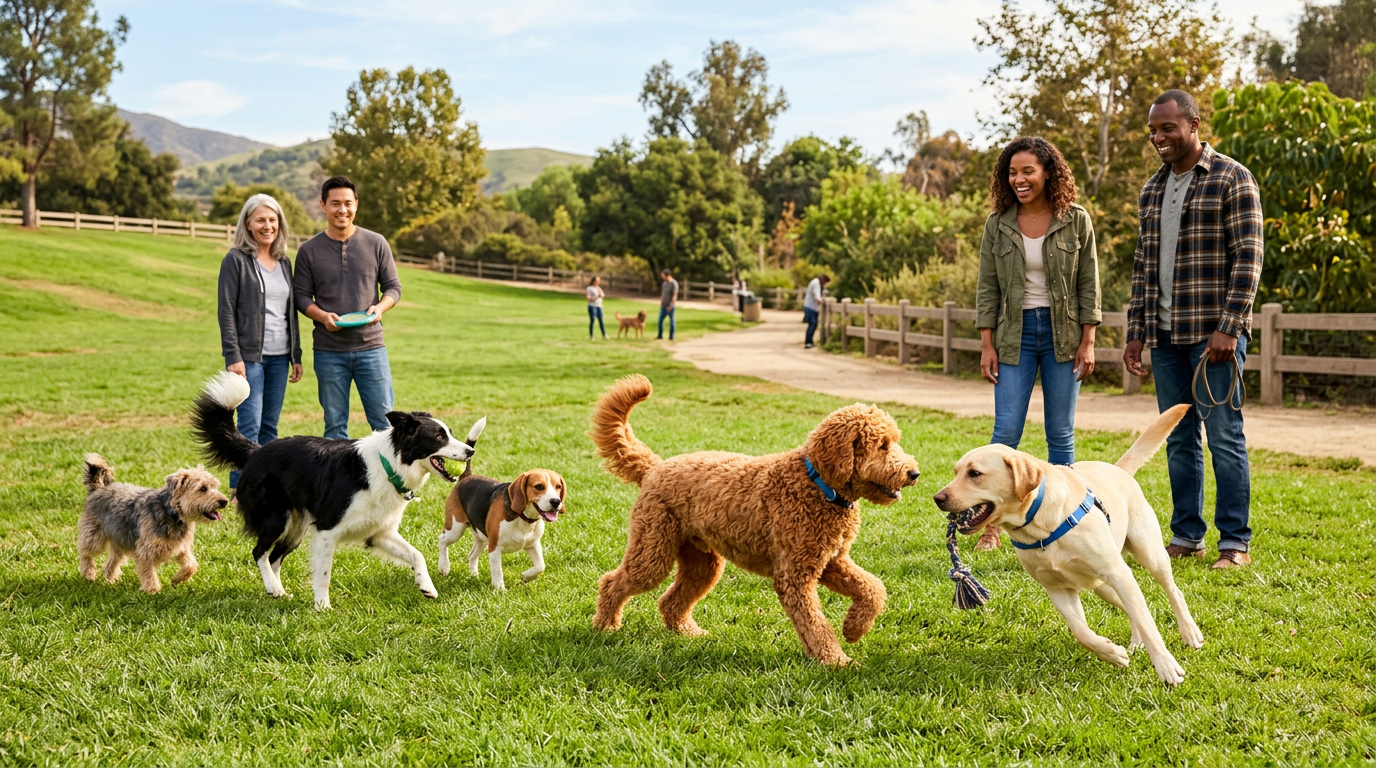
The Essential Dog Park Rules and Regulations
While every park near you might have slightly different posted signs, there's a core set of rules of a dog park that are pretty universal. Let me break down the big ones:
1. Vaccinations Must Be Current
This is non-negotiable, folks. Before any dog steps paw into a park, they need to be up to date on their core vaccinations. That means rabies, DHPP (distemper, hepatitis, parvovirus, parainfluenza), and bordetella (kennel cough). Many facilities and municipalities in your area are now also requiring the canine influenza vaccine, especially after recent outbreaks across the country.
I remember when I was a little fluffball and my mom Lacey had to wait what felt like FOREVER before I could go to the park. I didn't understand it then, but puppies typically need to complete their full vaccination series — usually around 16 weeks of age — before it's safe for them to mingle with unknown dogs. The American Kennel Club (AKC) has an excellent guide on puppy vaccination schedules that every new dog parent should read.
Keeping a copy of your dog's vaccination records in your car or on your phone is a smart move. Some parks near you may even check them at the gate.
2. Age Minimums Exist for Good Reason
Most dog parks require dogs to be at least 4 to 6 months old before entering. This isn't just about vaccinations — it's about socialization readiness. Very young puppies haven't yet learned the body language and social cues that keep dog-to-dog interactions civil.
I'll be honest: even at six months, I was a clumsy, over-eager goofball who didn't know the difference between a play bow and a warning growl. My mom Lacey took me to smaller, controlled playgroups first before graduating me to the big park. If your puppy is still young, consider doing the same at a local training facility in your area.
3. Spay and Neuter Requirements
Many premium dog parks and private facilities require dogs over 6 to 8 months old to be spayed or neutered. This isn't about judging anyone's breeding choices — it's about safety. Intact dogs can display more territorial and aggressive behaviors, and a female in heat at a dog park is basically a recipe for chaos.
Even at public parks where it's not formally enforced, it's considered one of the most important dog park rules to follow voluntarily.
4. Supervise Your Dog at All Times
Oh boy, this is my biggest pet peeve (pun absolutely intended). The dog park is NOT a drop-off daycare. Every single time I've seen a scuffle break out, there's been at least one human completely zoned out on their phone, oblivious to what their dog is doing.
Active supervision means watching your dog's body language, knowing when they're getting overwhelmed, and being ready to intervene immediately. The ASPCA's guidelines on dog park safety emphasize that owners should always be within voice and visual range of their dogs.
My mom Lacey watches me like a hawk — lovingly, of course — and she's pulled me out of situations before they escalated more times than I can count. That's good parenting.
5. Leash Rules: On at Entry, Off Inside
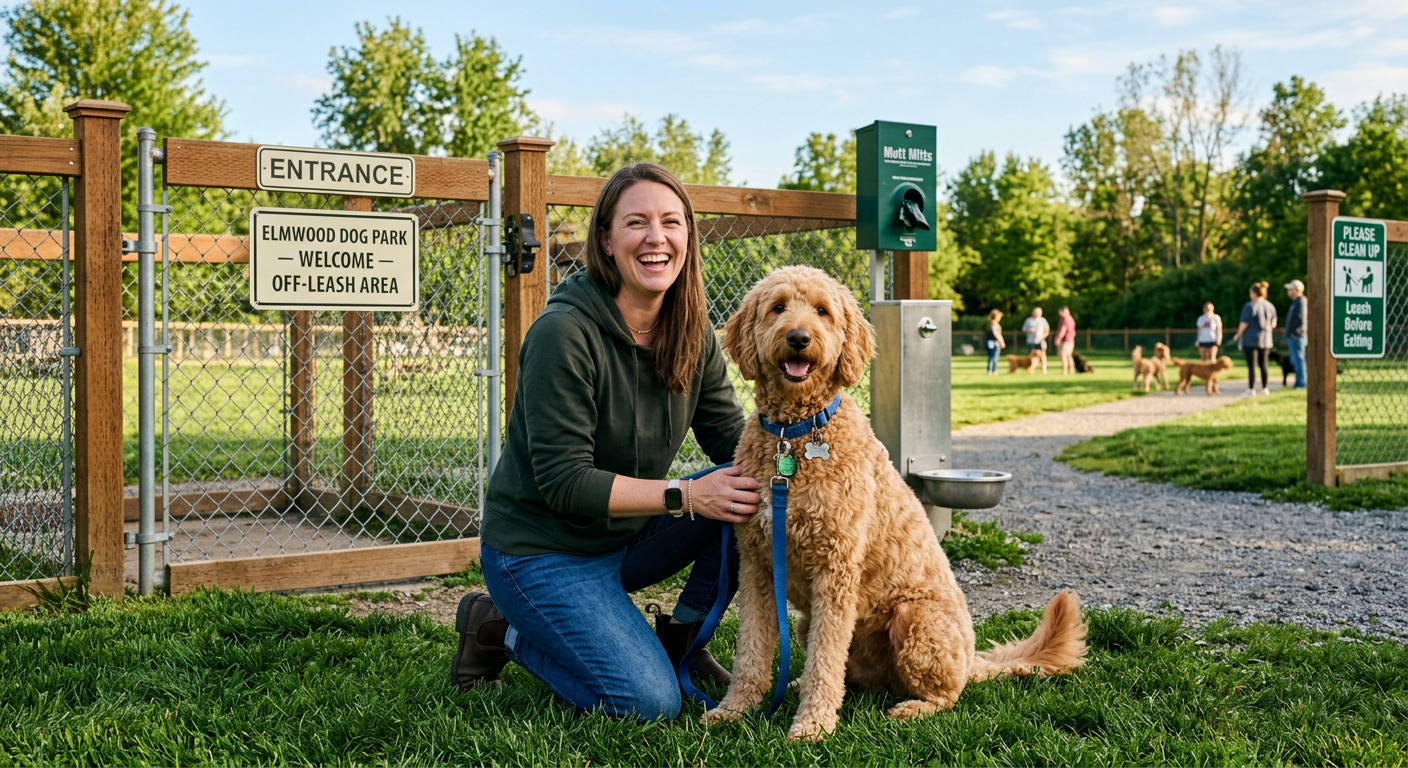
Here's one that confuses a lot of newcomers: most dog parks have a double-gated entry system for a reason. You enter the first gate with your dog ON leash, close it behind you, and THEN remove the leash before opening the second gate into the park.
This airlock-style system prevents dogs from bolting out when the gate opens. Once inside, your dog should be off-leash (that's the whole point!), but keeping a leash with you at all times is one of those dog park rules and regulations that's easy to forget and critical to follow. I love the Mighty Paw Hands-Free Dog Leash because my mom can clip it around her waist and have it ready to go without fumbling.
6. Pick Up After Your Dog — Every. Single. Time.
I cannot stress this enough. Nobody — not humans, not dogs — wants to step in or roll in someone else's business. (Okay, some dogs do want to roll in it, but that's a whole other issue.) Responsible waste cleanup is one of the most fundamental rules of a dog park, and failure to do it is the number one complaint at parks everywhere.
Keep bags on you at all times. I recommend the Earth Rated Dog Poop Bags — they're lavender-scented, biodegradable, and my mom Lacey clips the dispenser right to my leash so she's never without them.
7. No Aggressive Dogs — Period
This should be obvious, but it bears repeating: if your dog has a history of aggressive behavior — real aggression, not just being a loud player — the dog park is not the right environment. Period. Not yet, anyway. Work with a certified trainer first.
Knowing the difference between play and aggression is crucial. Play involves loose, bouncy body language, play bows, and voluntary role reversal (I chase you, then you chase me). Aggression involves stiff posture, hard stares, raised hackles, and snapping. The PetMD guide on dog body language is an excellent resource for learning to read these signals.
8. Leave Food and Treats at Home (Sorry!)
This one hurts me personally, but it's important. Bringing food, treats, or even heavily scented chew toys into a dog park can trigger resource guarding — a behavior where dogs become possessive and potentially aggressive over high-value items.
If you need treats for training on the walk to and from the park, keep them sealed in a bag in your pocket and don't pull them out inside the fence.
9. No Small Children in the Dog Area
Many parks have explicit rules prohibiting children under a certain age (often 8-12 years old depending on local regulations in your area). Even the friendliest dog can accidentally knock down a toddler during an enthusiastic zoomie session. Trust me — when I get the zoomies, I have zero spatial awareness. ZERO.
Dog Park Safety Gear Every Owner Should Bring
Following the dog park rules isn't just about behavior — it's also about being prepared. Here's what my mom Lacey always has in her park bag:
A collapsible water bowl: Shared water bowls at parks can spread bacteria and viruses. The RUFFWEAR Quencher Collapsible Dog Bowl folds flat and clips right to a belt loop or bag.
A well-fitting harness: For those moments when you need control fast. I wear the Rabbitgoo No-Pull Dog Harness — it gives my mom Lacey great control without putting pressure on my throat.
Fresh water from home: Staying hydrated is critical, especially during hot months. Heat stroke costs an average of $579 to treat and can be fatal.
Poop bags: Already covered this. No excuses.
Your phone: Not for scrolling Instagram — for emergencies. Have your vet's number saved.
Understanding Fencing and Park Design Standards
When choosing a dog park near you, pay attention to the infrastructure. Good dog park rules and regulations start with good park design:
- Perimeter fencing should be at least 6 feet tall for large dog areas. Athletic breeds (and motivated escape artists) can easily clear a 4-foot fence.
- Separate areas for small and large dogs prevent accidental injuries. A 15-pound Yorkie and a 90-pound Lab playing together might seem cute, but size mismatches are a leading cause of injuries.
- Shade structures and water stations reduce heat-related risks.
- Proper drainage keeps the ground from becoming a muddy, bacteria-rich mess.
If your local park doesn't meet these standards, consider searching for a better-equipped option. My mom Lacey always scopes out a park before bringing me for the first time — she checks the fencing, cleanliness, and even visits during off-peak hours to see how well-maintained it is.
Dog Park Etiquette: The Unwritten Rules of a Dog Park
Beyond the posted dog park rules, there's a whole code of etiquette that experienced park-goers follow:
- Don't bring toys unless you're willing to share them. Seriously. Every dog in the park WILL want that tennis ball.
- Don't crowd the entrance. Hovering near the gate creates tension and barrier frustration. Move into the park.
- Intervene early. If your dog is bullying, mounting, or fixating on another dog, recall them or leave. Don't wait for things to escalate.
- Ask before petting someone else's dog. I love attention, but not every dog does.
- Know when to leave. If your dog is stressed, overstimulated, or not having fun, it's okay to cut the visit short. There's no shame in a 10-minute park trip.
- Communicate with other owners. A simple "Is your dog friendly with big dogs?" goes a long way.
Common Dog Park Rule Violations (And How to Handle Them)
Even at the best parks, you'll encounter people who ignore the dog park rules. Here's how my mom Lacey handles common situations:
| Violation | Response |
|---|---|
| Unvaccinated or sick dog | Politely mention the vaccination requirement; leave if they stay |
| Owner not supervising | Keep extra distance; be ready to protect your dog |
| Aggressive dog | Alert the owner firmly; report to park management if needed |
| No poop cleanup | Offer a bag (sometimes people genuinely forget); if refused, report it |
| Food/treats in the park | Politely explain the resource guarding risk |
You don't have to be the park police, but advocating for your dog's safety is always the right call.
Seasonal Dog Park Rules to Keep in Mind
The rules of a dog park don't change with the seasons, but your precautions should:
- Summer: Avoid peak heat hours (10 AM–4 PM), bring plenty of water, check the ground temperature with your hand (if it's too hot for you, it's too hot for our paws), and watch for signs of heat stroke.
- Winter: Watch for ice, antifreeze puddles, and salt irritation on paws. A quick paw rinse after winter park visits is a game-changer.
- Spring/Fall: These are peak tick and flea seasons. Make sure your preventative treatments are current. My mom Lacey keeps me on year-round flea and tick prevention, and I also wear the Seresto Flea and Tick Collar for Dogs as an extra layer of protection during heavy tick months.
How to Find a Well-Regulated Dog Park Near You
Not all dog parks are created equal. Here's how to find a great one in your area:
- Check your local parks and recreation department website (usually a .gov site) for officially maintained dog parks with posted rules and regulations.
- Read reviews on Google Maps and Yelp — other dog parents will tell you exactly what to expect.
- Visit during off-peak hours first to assess the park's condition, fencing, and cleanliness.
- Ask your vet — they often know which parks in your area have the best reputations and the fewest incident reports.
- Use apps like BringFido or Sniffspot to discover parks and private play spaces near you.
Well, friends, we've covered a LOT of ground today — almost as much ground as I cover during a good zoomie session. Understanding and following dog park rules isn't about being uptight or ruining anyone's fun. It's about creating a safe, joyful space where every dog and every human can have the best possible experience. My mom Lacey and I have visited dozens of parks, and the best visits always happen when everyone respects the rules of a dog park — from vaccinations and supervision to basic cleanup and etiquette. So before your next visit, do a quick mental checklist: vaccinations current? Poop bags packed? Water bottle filled? Great. You're already ahead of the game. Now go find an amazing dog park near you and let your pup have the time of their life — safely and responsibly. And if you see a curly Golden Doodle doing zoomies at top speed, that's probably me. Come say hi! 🐾
Have questions about dog park rules in your area? Drop them in the comments below — I love hearing from fellow park lovers!
Frequently Asked Questions
What is the 3-3-3 rule for dogs?
The 3-3-3 rule is a guideline for newly adopted or rescued dogs. The first 3 days, your dog may feel overwhelmed and shut down — they're decompressing. After 3 weeks, they start settling into your routine and showing more of their true personality. After 3 months, they feel fully bonded and secure in their new home. This rule is especially important to understand before taking a new dog to a dog park — rushing the process can cause stress and behavioral issues. My mom Lacey waited the full 3 months before bringing me to a busy park, and it made all the difference.
What is the etiquette for dog parks?
Dog park etiquette includes always supervising your dog, picking up waste immediately, not bringing food or treats inside the park, keeping your dog's vaccinations current, and intervening quickly if your dog is playing too rough or showing signs of aggression. You should also avoid crowding the entrance gate, ask before petting other dogs, and be willing to leave if your dog isn't having a good time. Good etiquette also means communicating openly with other owners and respecting the posted dog park rules and regulations at your local facility.
What is the 7 7 7 rule for dogs?
The 7-7-7 rule is a socialization guideline suggesting that by the time a puppy is 7 weeks old, they should have walked on 7 different surfaces, played with 7 different toys, been to 7 different locations, met 7 different people, and been exposed to 7 different challenges. This early socialization helps dogs become well-adjusted and confident, which directly impacts how they behave at dog parks later in life. Well-socialized dogs are generally safer and more enjoyable park companions.
Why don't vets recommend dog parks?
Some veterinarians express caution about dog parks — not necessarily recommending against them entirely, but highlighting the risks. Concerns include exposure to infectious diseases like kennel cough, canine influenza, and parvovirus (especially for puppies or immunocompromised dogs), the risk of bite injuries from poorly supervised dogs, parasites from contaminated soil and shared water bowls, and the potential for heat stroke during warm months. Treatment costs for common dog park injuries range from $174 for kennel cough to $591 for head trauma. Vets generally recommend ensuring vaccinations are current, supervising closely, and avoiding parks during peak hours to minimize these risks.
Can I bring my puppy to a dog park?
Most dog parks require dogs to be at least 4 to 6 months old, and puppies should have completed their full vaccination series (typically around 16 weeks) before visiting. Even after vaccinations are complete, it's wise to start with smaller, controlled playgroups before introducing your puppy to a busy off-leash park. Puppies are still learning social cues and can easily be overwhelmed or injured by larger, more energetic dogs.
What should I do if an aggressive dog is at the park?
If you encounter an aggressive dog at the park, prioritize your dog's safety first. Calmly recall your dog and leash them. Alert the aggressive dog's owner in a firm but non-confrontational way. If the owner is unresponsive or the situation escalates, leave the park immediately. Report the incident to your local parks department or the facility management. It's always better to cut a park visit short than to risk a serious injury — bite wound treatment averages around $361, and the emotional trauma can affect your dog's behavior long-term.
About Auggie
Hi, I'm Auggie! I'm a Golden Doodle who's been to more dog parks than most humans. My mom Lacey and I started Doggie Park Near Me to help every pup find their perfect park. When I'm not sniffing out new spots, you'll find me napping in the sun or begging for treats.
Learn more about us →More From Auggie

How I, Auggie, zero in on a doggie park near me
Hey there, fellow dog lovers—I'm Auggie the Golden Doodle! My latest blog post spills all the secrets to finding a doggie park near me, sharing my adventures and top tips on locating local hotspots. You'll learn about park amenities, safety tricks, and review insights that keep my tail wagging. Explore with me and discover how to enjoy the best dog parks in your area!
How I choose a doggie park near me like a pro doodle
Hi there, I'm Auggie the Golden Doodle, and I can't wait to share my adventures at a doggie park near me. In this guide, I'll show you how to find the perfect local spot, discuss all the fun amenities and safety tips, and reveal my personal favorite park experiences. Join me for a tail-wagging journey that promises playful tips, socializing tricks, and plenty of pawsitive vibes.

Dog Park Etiquette: The Unwritten Rules Every Pup Parent Should Know
Hey, it's Auggie! I'm sharing the unwritten rules of dog park etiquette that every pup parent needs to know. From vaccination must-haves to body language basics and my favorite gear picks, this guide will make your next dog park visit near you safer and way more fun. Let's go!