
Dog Park Etiquette: The Unwritten Rules Every Pup Parent Should Know
Woof! Hey there, friends — it's me, Auggie, your favorite curly-haired Golden Doodle and self-appointed ambassador of all things dog park related. If there's one thing I've learned after countless afternoons chasing tennis balls and sniffing every blade of grass, it's that dog park etiquette matters more than most humans realize. Trust me, I've seen it all — the clueless newbies, the phone-scrolling parents, and the overly enthusiastic pups who haven't quite learned the art of a proper greeting. My mom Lacey and I have spent years perfecting our park routine, and today I'm sharing everything we've learned so you and your four-legged best friend can have the safest, most tail-wagging experience possible. Whether you're a first-timer or a seasoned regular, these unwritten rules will make every dog park visit near you a whole lot better. Let's dig in!
Why Dog Park Etiquette Matters More Than You Think
Look, I get it — when you pull into that parking lot and your pup is losing their mind with excitement, the last thing on your mind is a rulebook. But here's the thing: dog park etiquette isn't just about being polite. It's about keeping every dog and every human safe.
I've personally witnessed what happens when etiquette goes out the window. One time, a brand-new dog barreled through the gate without pausing — no sniff-check, no calm introduction — and within thirty seconds, three dogs were in a scuffle. My mom Lacey scooped me up (well, tried to — I'm 55 pounds of fluff) and we had to leave early. Not fun.
According to VCA Animal Hospitals, scouting the park before you even step inside is one of the most important things you can do. Take a moment to observe the energy level, the size of the dogs already there, and whether the current crew seems calm or chaotic. This single habit can prevent a world of trouble.
The bottom line? Dog park rules exist — written and unwritten — to protect pups like me. And when everyone follows them, magic happens: zoomies, happy play bows, and tired dogs who sleep like logs on the car ride home.
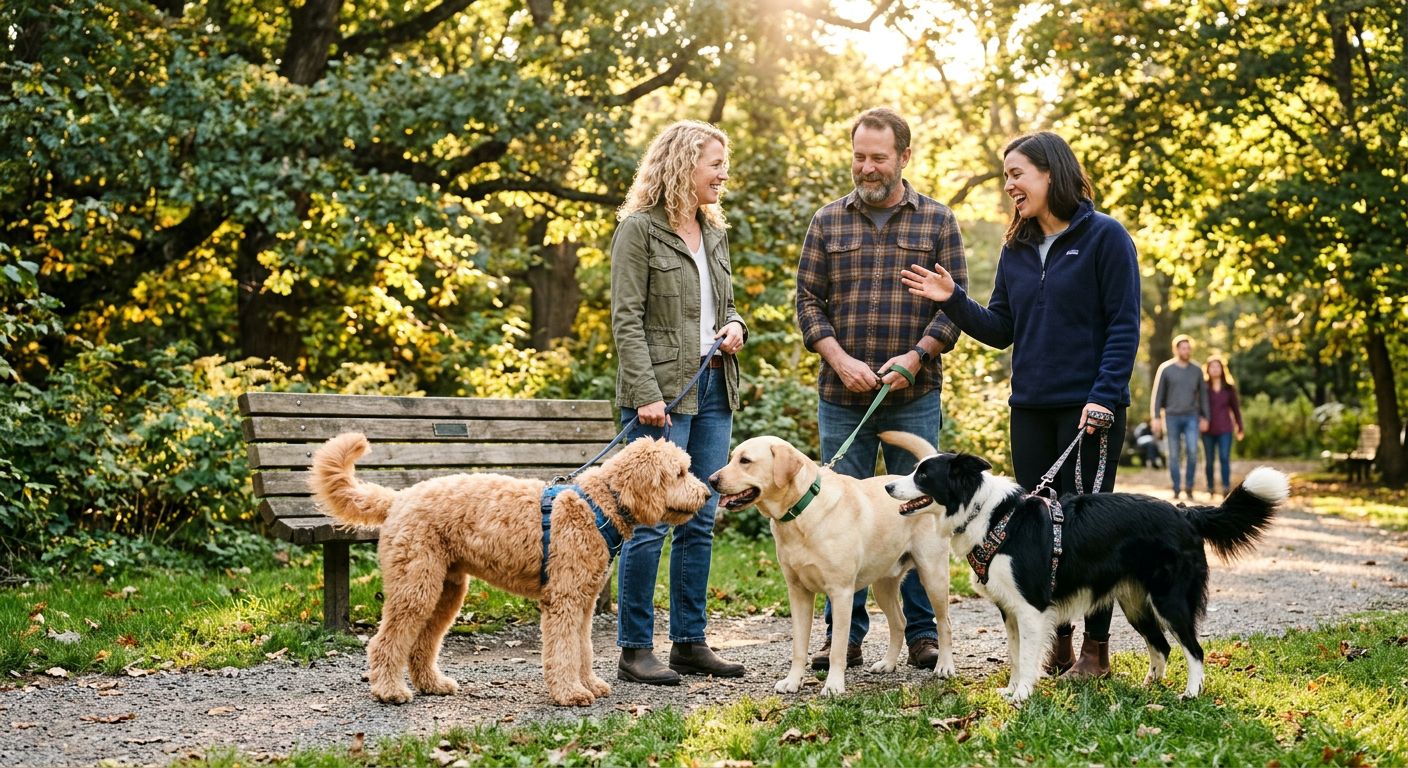
The Essential Dog Park Rules You Need to Follow
Every dog park near you will likely have posted rules on a sign by the entrance. But there are also a bunch of dog park rules that nobody writes down — the ones us experienced park dogs just know. Let me break them all down for you.
Keep Your Vaccinations Current
This one is non-negotiable, friends. Before you even think about visiting the park, make sure your dog's vaccinations are completely up to date. We're talking rabies, DHPP (distemper, hepatitis, parainfluenza, and parvovirus), and ideally the Bordetella (kennel cough) vaccine too.
As Zoetis Pet Care explains, dog parks are hotspots for transmissible diseases like kennel cough, parvo, and canine influenza. I personally get my shots on schedule because my mom Lacey doesn't play around with my health. Parasite prevention is equally important — fleas, ticks, and intestinal parasites love communal spaces where lots of dogs gather.
If you want to stay on top of parasite prevention between vet visits, my mom always keeps Vet's Best Flea and Tick Home Spray on hand. She gives me a light spritz before we head out, and it uses natural ingredients like peppermint oil and eugenol. Smells way better than chemical stuff, if you ask my nose.
Understand the Leash Protocol
Here's one that confuses a lot of new park visitors: leash on or leash off? The answer depends on where you are.
In designated off-leash areas, you should actually remove your dog's leash. I know that sounds counterintuitive, but keeping a dog leashed in an off-leash zone can actually cause defensive behavior. When I'm on a leash and an unleashed dog runs up to me, I feel trapped — and that's when things can go sideways. Zoetis Pet Care notes that leashed dogs in off-leash areas are more likely to react defensively because they can't move freely.
But — and this is a big but — always leash up in transition areas, parking lots, and anywhere outside the designated off-leash zone. My mom uses the TUG 360° Tangle-Free Retractable Dog Leash for those in-between moments. It gives me enough room to sniff around without getting tangled up in other dogs' leashes.
Master the Double-Gate Entrance
Most well-designed dog parks have what's called an "airlock" double-gate system — two gates that create a small holding area between the parking lot and the park. The idea is simple: you enter the first gate, close it behind you, and then open the second gate.
This prevents dogs from bolting out into the parking lot when someone enters. I've seen dogs nearly dash into traffic because someone propped both gates open. Please, please, please — one gate at a time. It takes three extra seconds and could save a life.
Scoop the Poop (Yes, Every Single Time)
I shouldn't have to say this, but... I'm going to say it. Pick up after your dog. Every. Single. Time. Not only is it basic courtesy, but dog waste can spread parasites and diseases to other pups in your area. I always notice when a park is well-maintained versus one where humans get lazy about cleanup.
My mom keeps Earth Rated Dog Poop Bags clipped to my leash at all times. They're unscented (my preference — my nose is sensitive!), thick enough that you never get any, um, surprises, and they're made with recycled materials. No excuses, humans.
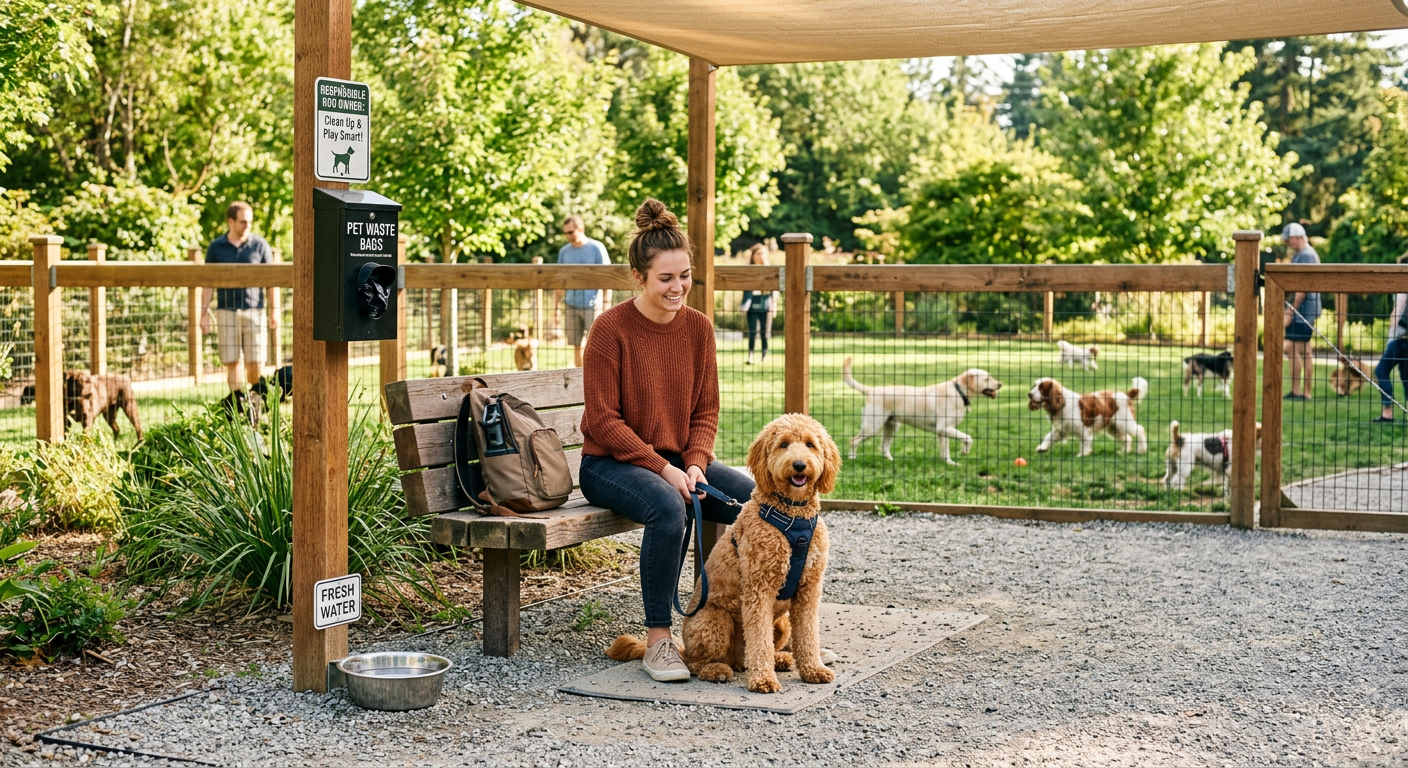
Dog Park Safety Tips From a Dog Who's Been There
Now let's talk about dog park safety tips — the stuff that keeps visits fun instead of stressful. I've compiled these from my own experience and from what my mom Lacey has researched over the years.
Always Supervise Your Dog
I cannot stress this enough: the dog park is not a place to catch up on emails, scroll through social media, or chat with other humans while ignoring what your pup is doing. According to Vets in Cranbourne, owners must maintain constant visual contact with their dogs and be prepared to intervene when play becomes too rough.
My mom Lacey is a pro at this. She watches my body language like a hawk (ironic, I know). She knows the difference between my happy play bow and my "I'm getting overwhelmed" whale eyes. If I start showing stress signals — lip licking, yawning, tucked tail, stiff posture — she calmly calls me over and we take a break.
Know When to Leave
This might be the hardest unwritten rule of all: sometimes, you just need to go. If your dog is showing aggression, extreme anxiety, or if the energy of the park has shifted into chaos mode, it's time to leash up and head out. There's no shame in it. In fact, it's the most responsible thing you can do.
Genius Vets highlights that dogs who are unsocialized, in heat, or showing signs of illness (coughing, sneezing, vomiting, diarrhea) should skip the dog park entirely. I've had days where I just wasn't feeling it, and my mom respected that. We went for a quiet walk instead. No big deal.
Be Careful With Treats and Toys
I love a good treat as much as the next dog — probably more, honestly — but bringing high-value treats or favorite toys to the dog park can be a recipe for resource guarding. Some dogs (not me, I'm very generous... mostly) get possessive over tennis balls, squeaky toys, or especially smelly treats.
If you do bring water or snacks, use a portable setup that's easy to manage. I'm a fan of the RUFFWEAR Trail Runner Collapsible Dog Bowl — my mom clips it to her belt and fills it up when I need a drink. It's lightweight, dries fast, and doesn't attract the same attention as a big bag of bacon treats.
Size Matters — Use the Right Area
Most dog parks near you will have separate areas for small dogs and large dogs. Please, for the love of belly rubs, use the correct section. I'm a medium-to-large guy, and I play rough sometimes. A tiny Chihuahua in my play zone isn't safe, no matter how brave that little warrior thinks they are.
Genius Vets confirms that most parks enforce weight or size limits for different enclosures. This isn't snobbery — it's safety.
How to Introduce Your Dog to the Dog Park
If you've got a puppy or a dog who's new to the park scene, take it slow. My mom Lacey introduced me to the dog park in stages:
- First visit — observation only. We walked around the outside of the fence so I could see, hear, and smell the other dogs without the pressure of interacting.
- Second visit — off-peak hours. We went early on a Tuesday morning when there were only two or three calm dogs inside. Low stakes, low stress.
- Third visit — short session. We went in for about 15 minutes during a moderately busy time. Mom watched me closely and we left on a positive note.
- Ongoing — building confidence. Over weeks, we gradually increased our time and visited during busier periods.
This gradual approach is especially important if you've recently adopted a dog. The 3-3-3 rule (which I'll cover in the FAQ below) is a great framework for helping newly adopted pups adjust before throwing them into the social deep end of a dog park.
What to Bring to the Dog Park: My Essentials Checklist
Before every park trip, my mom Lacey runs through a quick checklist. Here's what we never leave home without:
- Poop bags — Earth Rated Dog Poop Bags are our go-to
- Fresh water and a collapsible bowl — communal water bowls can harbor bacteria
- A sturdy leash — for the walk in and out
- Updated ID tags and microchip info — accidents happen; make sure your dog can be identified
- A positive attitude — dogs read energy. If you're stressed, we're stressed
Saratoga Veterinary Hospital recommends that all dogs wear collar identification and have an updated microchip before visiting any off-leash area. I've got my tag and my chip — I'm basically a walking business card.
For extra security, my mom also invested in the Fi Series 3 Smart Dog Collar which has GPS tracking. If I ever did manage to escape (highly unlikely — I'm too food-motivated to go far), she'd know exactly where to find me.
Common Dog Park Etiquette Mistakes to Avoid
Let me put on my serious face for a moment (picture a Golden Doodle trying to look stern — adorable, right?). These are the most common dog park etiquette mistakes I see humans make:
- Bringing an unneutered or unspayed dog. Intact dogs can cause tension and trigger reactive behavior in other dogs. Many parks actually prohibit them.
- Ignoring your dog to talk to other humans. Socializing is great — for YOU. But your dog needs your eyes on them.
- Bringing kids into the dog play area. Small children running and screaming can trigger prey drive in some dogs. Keep kids outside the fence or in designated human areas.
- Not intervening during rough play. Play bowing, chasing, and wrestling are normal. Pinning, excessive mounting, and cornering are not. Learn the difference.
- Staying too long. Overtired dogs get cranky. Thirty minutes to an hour is usually the sweet spot. Quality over quantity, friends.
Reading Your Dog's Body Language at the Park
One of the best dog park safety tips I can offer is this: learn to read your dog's body language. We communicate constantly — you just have to pay attention.
Happy signals:
- Loose, wiggly body
- Play bows (front end down, back end up)
- Relaxed open mouth
- Bouncy movements
Stress signals:
- Whale eyes (showing the whites of the eyes)
- Lip licking or yawning when not tired
- Tucked tail
- Stiff, frozen posture
- Turning away or trying to hide
Danger signals:
- Hard staring
- Raised hackles
- Low growling with a stiff body
- Snapping or lunging
If you see danger signals — in any dog, not just yours — calmly and quickly remove your dog from the situation. Don't yell, don't run, don't panic. Just be the calm, confident human your dog needs you to be.
Well, friends, there you have it — everything I know about dog park etiquette wrapped up in one big, slobbery package. From keeping vaccinations current and mastering the double-gate entrance to reading body language and knowing when it's time to call it a day, these unwritten rules make the dog park a better place for every tail-wagger in your area.
My mom Lacey and I hope this guide helps you and your pup have safer, happier park visits. Remember: a well-mannered dog starts with a well-informed human. So share this post with your fellow dog park regulars, bookmark it for new puppy parents, and above all — get out there and have some fun! If you're looking for an amazing dog park near you, head over to doggieparknearme.com and find your next adventure.
Now if you'll excuse me, I hear the jingle of my leash and that can only mean one thing... 🐾
Wags and wiggles, Auggie 🐕
Frequently Asked Questions
What is good dog park etiquette?
Good dog park etiquette includes keeping your dog's vaccinations current, always supervising your dog, picking up after them immediately, using the correct size-designated area, understanding leash-on versus leash-off zones, mastering the double-gate entrance system, avoiding bringing high-value treats or toys that could trigger resource guarding, and being prepared to leave if your dog (or any dog) shows signs of aggression or stress. It also means keeping your phone in your pocket and your eyes on your pup!
What is the 3-3-3 rule for dogs?
The 3-3-3 rule is a widely used guideline for newly adopted dogs. In the first 3 days, your dog may feel overwhelmed, shut down, or scared — they might not eat, drink, or want to explore. In the first 3 weeks, they start settling in, learning your routine, and showing more of their personality. After 3 months, your dog typically feels secure and bonded in their new home. This rule is important for dog park etiquette because newly adopted dogs should be given time to decompress before being introduced to the high-stimulation environment of a dog park.
What is the 7 7 7 rule for dogs?
The 7-7-7 rule is a socialization guideline, particularly for puppies. By the time a puppy is 7 weeks old, they should have walked on 7 different surfaces, eaten from 7 different containers, been in 7 different locations, met 7 different people, been exposed to 7 different challenges, eaten from 7 different surfaces, and played with 7 different objects. This early socialization helps build confidence and adaptability, which are essential traits for a dog who will visit dog parks and public spaces.
What is 'I love you' in dog language?
Dogs say 'I love you' in many ways! Soft, relaxed eye contact (sometimes called 'soft eyes') is one of the biggest signs of affection — studies show that mutual gazing between dogs and humans releases oxytocin in both parties. Other signs include leaning against you, bringing you their favorite toy, following you from room to room, licking your face, sleeping near or on you, and excited tail wagging when you come home. A full-body wiggle? That's basically a dog screaming 'I LOVE YOU' at the top of their lungs.
How long should I stay at the dog park?
Most dogs do best with 30 minutes to one hour at the dog park. Staying too long can lead to overtiredness, which often results in cranky behavior, overstimulation, or even aggression. Watch your dog's energy level — when they start slowing down, panting heavily, or losing interest in play, that's your cue to wrap things up. Always leave on a positive note so your dog associates the park with good experiences.
Can I bring my puppy to the dog park?
Most veterinarians recommend waiting until your puppy has completed their full vaccination series (typically around 16 weeks or 4 months old) before visiting a dog park. Puppies are especially vulnerable to diseases like parvovirus and distemper that can be present in areas where many dogs gather. Once fully vaccinated, introduce your puppy gradually — start with off-peak visits and short sessions to build their confidence without overwhelming them.
About Auggie
Hi, I'm Auggie! I'm a Golden Doodle who's been to more dog parks than most humans. My mom Lacey and I started Doggie Park Near Me to help every pup find their perfect park. When I'm not sniffing out new spots, you'll find me napping in the sun or begging for treats.
Learn more about us →More From Auggie

How I, Auggie, zero in on a doggie park near me
Hey there, fellow dog lovers—I'm Auggie the Golden Doodle! My latest blog post spills all the secrets to finding a doggie park near me, sharing my adventures and top tips on locating local hotspots. You'll learn about park amenities, safety tricks, and review insights that keep my tail wagging. Explore with me and discover how to enjoy the best dog parks in your area!
How I choose a doggie park near me like a pro doodle
Hi there, I'm Auggie the Golden Doodle, and I can't wait to share my adventures at a doggie park near me. In this guide, I'll show you how to find the perfect local spot, discuss all the fun amenities and safety tips, and reveal my personal favorite park experiences. Join me for a tail-wagging journey that promises playful tips, socializing tricks, and plenty of pawsitive vibes.

Dog Park Rules Every Owner Should Know (From a Dog Who Lives for the Park)
Woof! I'm Auggie, and I've sniffed out every dog park rule you need to know. From vaccination requirements and leash etiquette to the unwritten rules of a dog park, this guide covers everything to keep your pup safe and happy. Let's make every park visit a tail-wagging success!