
Dog Park Red Flags: When to Leave Immediately | Dog Park Safety Tips
Hey there, friends — it's your pal Auggie, the fluffiest Golden Doodle on the internet, and today we need to have a serious (but still tail-waggingly helpful) conversation about dog park safety tips that could literally save your pup's life. Look, I love the dog park more than I love peanut butter — and that's saying something. The smells! The zoomies! The glorious, unbridled freedom of an open field! But my mom Lacey and I have learned the hard way that not every trip to the dog park ends with happy panting and belly rubs. Some days, you walk through that gate and something just feels off. Maybe there's a dog with stiff body language. Maybe the humans are all glued to their phones. Maybe the water bowl looks like a science experiment. These are the red flags we're going to talk about today — and more importantly, when it's time to grab your leash and go.
Why Dog Park Safety Should Be Your Top Priority
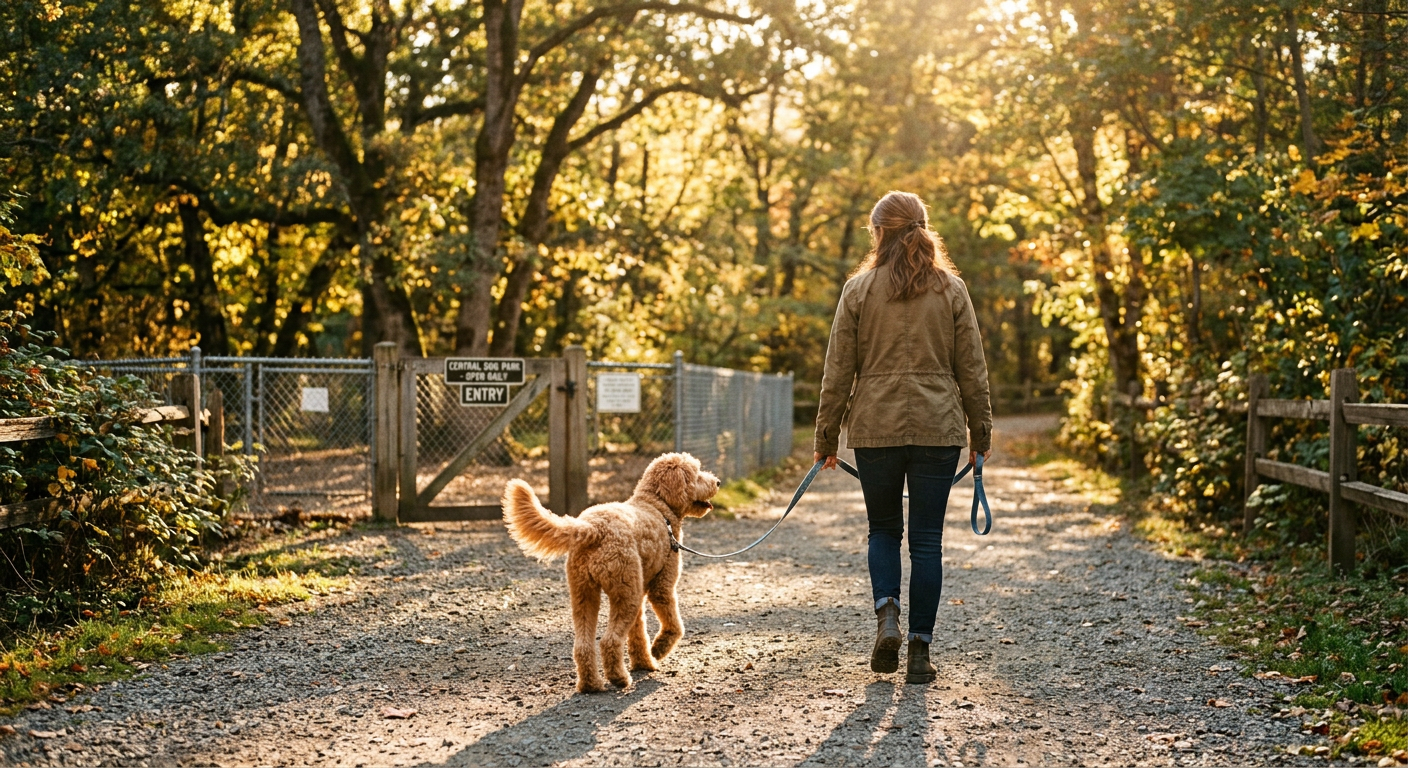
Let me paint you a picture. It's a beautiful Saturday morning. My mom Lacey loads me into the car, and my tail is going a million miles per hour because I know exactly where we're headed — the dog park near us. We pull up, she clips on my leash, and we walk toward the gate. But instead of charging in like a furry golden cannonball, Lacey pauses. She scans the park. She watches the dogs already inside. She checks the fencing. And then she decides if we go in.
That pause? That's dog park safety in action, and it's why I'm still a happy, healthy, bite-free boy.
According to DVM360, common dog park injuries are more frequent — and more expensive — than most humans realize. Lacerations and bite wounds average $361 to treat, head trauma runs about $591, and heat stroke can cost around $579. Even something as "minor" as kennel cough sets you back an average of $174. Those numbers add up fast, and every single one of those incidents could potentially be avoided by recognizing red flags early.
So are dog parks safe? They absolutely can be — but only when humans stay vigilant and dogs are set up for success.
Red Flag #1: Unattended Dogs and Distracted Owners
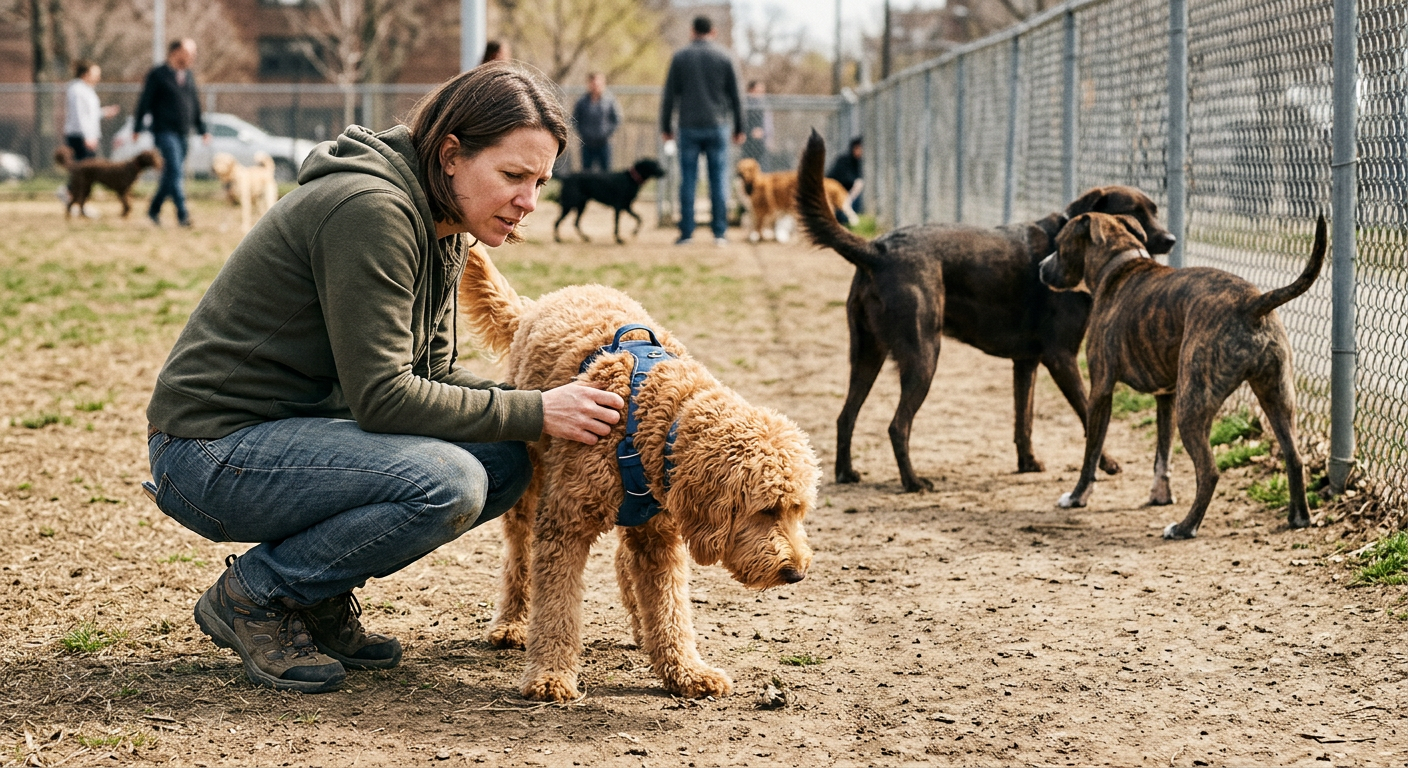
Okay, this is my number one pet peeve (pun absolutely intended). I cannot tell you how many times my mom Lacey and I have arrived at a dog park only to find dogs running around with zero human supervision. Their owners? Sitting on a bench, scrolling through Instagram, completely oblivious to the chaos unfolding in front of them.
Here's the thing — dogs communicate with their bodies, not their words. A play bow means "let's have fun!" But a stiff tail, hard stare, and raised hackles? That means trouble is brewing. If no human is watching, nobody catches those signals before they escalate into a fight.
Texas A&M College of Veterinary Medicine emphasizes that owners should always actively monitor their dog's body language and be ready to interrupt play when it gets too intense. The experts are crystal clear: never leave your dog unattended or unsupervised at dog parks.
If you walk into a park and most of the humans are checked out, that's a red flag. Leash up and leave.
Red Flag #2: Aggressive or Overly Aroused Dogs
Let me be honest with you — I'm a lover, not a fighter. I want to sniff butts, play chase, and maybe share a tennis ball. But not every dog at the park is in the same headspace, and that's where things get dangerous.
Here are the body language signals my mom Lacey taught me to watch for (well, she watches for them on my behalf):
- Hard, unblinking stare directed at another dog
- Raised hackles (the fur standing up along the spine)
- Stiff, rigid posture with weight shifted forward
- Excessive mounting that doesn't stop when corrected
- Growling, snarling, or snapping — especially over resources like toys or water
- Ganging up — multiple dogs targeting or cornering one dog
If you see any of these behaviors — especially if the offending dog's owner isn't intervening — that's your cue to leave. It doesn't matter if you just got there. It doesn't matter if your pup hasn't had their zoomies yet. Your dog's safety is more important than a play session.
One product that has genuinely helped my mom feel more confident at the park is the SprayShield Animal Deterrent Spray. It's citronella-based — not harmful — but it can break up a dog altercation quickly without causing injury. Lacey keeps it clipped to her belt loop every single visit.
Red Flag #3: Unsanitary Conditions and Environmental Hazards
I know, I know — dogs aren't exactly known for our cleanliness. I've rolled in things that made my mom gag. But there's a big difference between normal dog park messiness and genuinely hazardous conditions.
Here's what to watch for:
- Uncollected dog waste everywhere. According to The Animal Medical Center, parasites and viruses are easily transmitted through dog feces. If the park is littered with poop, your dog is at serious risk for giardia, hookworms, roundworms, and other nasty parasites.
- Standing water or filthy communal bowls. Stagnant water is a breeding ground for bacteria and parasites like leptospirosis.
- Broken fencing, damaged gates, or sharp debris. I've seen parks with holes in fences big enough for a small dog to escape through. Hard pass.
- Mushrooms, toxic plants, or litter. The ASPCA warns that wild mushrooms in parks can be deadly to dogs, and discarded food wrappers or other trash can cause choking or intestinal blockages.
For hydration on the go, my mom always brings the MalsiPree Dog Water Bottle so I never have to drink from a questionable communal bowl. It's portable, leak-proof, and I get my own clean water every single time.
Red Flag #4: Size Mismatches and No Separated Areas
I'm a solid 45 pounds of curly golden goodness, which puts me right on the border between the small dog and big dog areas at most parks. My mom Lacey is very careful about which side she puts me in, and here's why: size matters at the dog park.
A well-designed dog park near you should have at least two separated areas — one for smaller dogs and one for larger dogs. Most parks set the dividing line somewhere around 25-30 pounds. This isn't about being snobby; it's about physics. A 90-pound German Shepherd playing with a 10-pound Chihuahua isn't trying to be mean — but one enthusiastic body slam could break bones or worse.
If the park you visit doesn't have separated areas, or if people are ignoring the size designations, that's a significant dog park safety concern.
Southcentral Veterinary Services outlines that parks typically enforce weight and size limits for these separated areas, along with age restrictions and vaccination requirements, specifically to prevent injuries and disease spread.
Red Flag #5: Your Dog Is Telling You They Want to Leave
This one is all about listening to us — the dogs. Because trust me, we'll tell you when we're not having a good time.
Signs your dog is stressed or uncomfortable at the park:
- Tucked tail or cowering
- Excessive lip licking or yawning (when not tired)
- Whale eye (showing the whites of their eyes)
- Trying to hide behind you or between your legs
- Refusing to move or "shutting down"
- Excessive drooling or panting not caused by exercise
If your dog is giving you any of these signals, please don't force them to "socialize through it." Some dogs just don't enjoy the dog park environment, and that's perfectly okay. There are plenty of other ways to exercise and socialize your pup.
My mom always watches me closely for the first five minutes after we enter. If I'm not my usual wiggly, happy self, we leave. No questions asked. No guilt. Just good dog park safety.
Red Flag #6: Lack of Vaccination Compliance
Here's a red flag that's harder to spot but critically important: you have no idea if the other dogs at the park are vaccinated.
Dog parks in your area typically have posted rules requiring dogs to be current on vaccinations including rabies, distemper, bordetella, and canine influenza. But let's be real — nobody is checking vaccine records at the gate.
This is why my mom Lacey makes absolutely sure I'm always up to date on my shots, and she uses year-round flea and tick prevention. The Animal Medical Center emphasizes that flea and tick protection is necessary all year, even in dog parks without grass coverage.
To keep parasites at bay after every park visit, Lacey gives me a thorough once-over with a Hertzko Self-Cleaning Slicker Brush. It's perfect for my doodle coat and helps her spot any ticks, burrs, or skin irritations I might have picked up during our adventure.
What to Do Before, During, and After a Dog Park Visit
Let's break these dog park safety tips down into a simple checklist my mom Lacey and I follow every single time:
Before You Go:
- ✅ Ensure vaccinations are current
- ✅ Apply flea and tick prevention
- ✅ Pack fresh water, a portable bowl, and waste bags
- ✅ Bring a deterrent spray for emergencies
- ✅ Check the weather — avoid extreme heat (concrete and asphalt burn paws!)
At the Park:
- ✅ Do a perimeter scan before entering
- ✅ Watch your dog's body language constantly
- ✅ Stay off your phone
- ✅ Keep your leash accessible at all times
- ✅ Intervene immediately if play escalates
- ✅ Never bring food or high-value treats that could trigger resource guarding
After the Visit:
- ✅ Check for ticks, cuts, or debris in paws and fur
- ✅ Offer fresh water
- ✅ Watch for signs of illness over the next 48-72 hours (lethargy, vomiting, coughing, diarrhea)
- ✅ Wash paws to remove any chemical residues
For the post-park paw cleanup, we swear by the Dexas MudBuster Portable Dog Paw Cleaner. You just add water, insert the paw, twist, and it removes mud, dirt, and debris in seconds. It's a game-changer, especially during rainy seasons.
Are Dog Parks Safe? The Honest Answer
I get asked this question a lot (well, my mom does — I mostly get asked "Can I pet your dog?"). The honest answer is: dog parks can be safe, but they require active participation from every human in the park.
A dog park with attentive owners, clean conditions, proper fencing, size-separated areas, and well-socialized dogs? That's doggy paradise. A dog park with distracted owners, aggressive dogs, filthy grounds, and no rules enforcement? That's an emergency vet visit waiting to happen.
The best dog park safety tips I can give you come down to three principles:
- Trust your gut. If something feels wrong, leave.
- Watch your dog, not your phone. Your pup is counting on you.
- Be the owner you wish everyone else would be. Pick up waste. Control your dog. Pay attention.
You can also use our dog park finder tool to discover well-maintained parks near you with reviews from other dog parents who prioritize safety.
Alternative Exercise Options When Dog Parks Aren't Safe
For the days when the dog park in your area just isn't cutting it — maybe it's overcrowded, the conditions are poor, or your pup is recovering from an illness — here are some great alternatives:
- Sniffaris (leashed neighborhood walks focused on letting your dog sniff) — mentally exhausting in the best way
- Private playdates with dogs you know and trust
- Hiking trails that allow dogs
- Backyard agility courses (my mom Lacey set one up for me and I am obsessed)
- Indoor puzzle toys and enrichment for rainy days
- Dog-friendly beaches or swimming spots if you're lucky enough to live near one
Remember, the dog park isn't the only way to give your dog a fulfilling life. A safe, happy dog is always better than a well-socialized but injured one.
For at-home enrichment, the Outward Hound Nina Ottosson Puzzle Toy is one of my all-time favorites. It keeps my brain busy for ages and tires me out just as much as a good park session.
Well, friends, that's the full scoop on dog park safety tips from your favorite Golden Doodle. I know it might seem like a lot to remember, but honestly, it all comes down to paying attention, trusting your instincts, and always putting your pup's wellbeing first. My mom Lacey and I have had hundreds of amazing dog park experiences — but the reason they've been amazing is because she's never afraid to turn around and walk away when something doesn't feel right. You don't owe anyone an explanation. You don't need to feel guilty. If your gut says go, you go.
Want to find a safe, well-reviewed dog park near you? Head over to doggieparknearme.com and explore parks in your area with honest reviews from real dog parents. And hey — if this post helped you, share it with a fellow dog lover. The more humans who know these red flags, the safer our parks become for all of us. Now if you'll excuse me, I have a very important nap to attend to. 🐾
Frequently Asked Questions
What is the 7 7 7 rule for dogs?
The 7-7-7 rule is a socialization guideline that recommends your puppy be exposed to 7 new surfaces, 7 new people, and 7 new experiences every week during their critical socialization period (typically up to 16 weeks of age). This helps build confidence and adaptability, which directly contributes to better behavior at dog parks and in public settings. A well-socialized dog is less likely to exhibit fear-based aggression, making every dog park visit safer for everyone.
What is the 3-3-3 rule with dogs?
The 3-3-3 rule applies primarily to newly adopted or rescued dogs. It suggests that dogs need approximately 3 days to decompress in their new environment, 3 weeks to start learning your routine and feeling more comfortable, and 3 months to fully settle in and show their true personality. This is especially important for dog park safety — you should wait until your new dog has fully adjusted (usually at least the 3-month mark) before introducing them to the overstimulating environment of a dog park.
How to keep your dog safe at a dog park?
Keeping your dog safe at a dog park starts with preparation and vigilance. Ensure vaccinations are current, use year-round flea and tick prevention, and bring your own clean water. At the park, scan the environment before entering, actively supervise your dog at all times (no phone scrolling!), and watch for body language red flags in both your dog and others. Keep your leash accessible, know how to break up an altercation safely, and never hesitate to leave if conditions feel unsafe. After the visit, check your dog for ticks, cuts, and signs of illness.
What is the 90 10 rule for dogs?
The 90-10 rule is a nutrition guideline stating that 90% of your dog's daily caloric intake should come from a complete, balanced dog food, while no more than 10% should come from treats, snacks, or table scraps. This is relevant to dog park safety because bringing high-value food treats to the park can trigger resource guarding and aggression in nearby dogs. If you do bring training treats to the park, keep them small, low-value, and hidden — and be mindful of other dogs in your area.
When is the safest time to visit a dog park?
Generally, the safest times to visit a dog park are during off-peak hours — early mornings on weekdays or mid-afternoon when most dogs and their owners are elsewhere. Overcrowded parks increase the risk of altercations, resource guarding, and disease transmission. In hot climates, avoid midday and afternoon visits to prevent heat stroke and paw pad burns. Visit the park near you at different times to learn its traffic patterns and find the sweet spot that works for your dog.
Should puppies go to the dog park?
Most veterinarians and behaviorists recommend waiting until your puppy has completed their full vaccination series (typically around 16 weeks of age) before visiting a dog park. Puppies with incomplete vaccinations are highly susceptible to parvovirus, distemper, and other serious illnesses that can be transmitted through contact with infected dogs or contaminated ground. Even after vaccinations are complete, introduce the dog park gradually and supervise closely, as the experience can be overwhelming for young dogs.
About Auggie
Hi, I'm Auggie! I'm a Golden Doodle who's been to more dog parks than most humans. My mom Lacey and I started Doggie Park Near Me to help every pup find their perfect park. When I'm not sniffing out new spots, you'll find me napping in the sun or begging for treats.
Learn more about us →More From Auggie

How I, Auggie, zero in on a doggie park near me
Hey there, fellow dog lovers—I'm Auggie the Golden Doodle! My latest blog post spills all the secrets to finding a doggie park near me, sharing my adventures and top tips on locating local hotspots. You'll learn about park amenities, safety tricks, and review insights that keep my tail wagging. Explore with me and discover how to enjoy the best dog parks in your area!
How I choose a doggie park near me like a pro doodle
Hi there, I'm Auggie the Golden Doodle, and I can't wait to share my adventures at a doggie park near me. In this guide, I'll show you how to find the perfect local spot, discuss all the fun amenities and safety tips, and reveal my personal favorite park experiences. Join me for a tail-wagging journey that promises playful tips, socializing tricks, and plenty of pawsitive vibes.

Dog Park Etiquette: The Unwritten Rules Every Pup Parent Should Know
Hey, it's Auggie! I'm sharing the unwritten rules of dog park etiquette that every pup parent needs to know. From vaccination must-haves to body language basics and my favorite gear picks, this guide will make your next dog park visit near you safer and way more fun. Let's go!