
How Much Exercise Does Your Dog Really Need? A Golden Doodle's Honest Guide
Woof, friends! It's me, Auggie — your favorite curly-haired Golden Doodle and self-appointed expert on all things dog exercise. If there's one thing I know better than where my mom Lacey hides the treats (top shelf, left cabinet — I've got my eye on you, Mom), it's how to burn off energy the right way. Whether you're a zoomy puppy who can't sit still or a distinguished senior who prefers a leisurely sniff-walk, getting the right amount of exercise is one of the most important things your human can do for you. I've chased enough tennis balls, splashed through enough puddles, and logged enough miles at dog parks near me to know: not all dogs need the same workout plan. So grab a chew toy, settle in, and let this fluffy fitness guru walk you through everything you and your human need to know about exercising your dog — safely, joyfully, and with plenty of tail wags along the way.
Why Dog Exercise Matters More Than You Think
Let me be real with you, pals. I've seen too many dogs at the park who are carrying extra fluff — and I don't mean the adorable Doodle kind. According to PetMD, regular dog exercise is one of the most effective ways to prevent obesity, which is a primary health risk for our species. And trust me, when I skip my daily walks because of a rainy day, even I start getting a little... rambunctious. My mom Lacey can confirm — one missed walk and suddenly the couch cushions look very chewable.
But dog exercise isn't just about keeping our waistlines trim. It also helps with:
- Behavioral issues: Destructive chewing, excessive barking, and digging often stem from pent-up energy. A well-exercised dog is a well-behaved dog.
- Mental health: Yes, we dogs get anxious and bored too! Physical activity releases those feel-good endorphins.
- Joint and muscle health: Keeping our bodies moving helps maintain mobility, especially as we age.
- Bonding: Some of my best memories with my mom Lacey are from our morning walks through the neighborhood. Exercise time is love time.
Research from Michigan State University even found that dog owners who walk their pets regularly exercise about 30 minutes more per week than non-pet owners, as noted by PetMD. So when you exercise your dog, you're also exercising yourself. Win-win, am I right?
How Much Exercise Does a Dog Need by Age?
One of the biggest questions my mom Lacey gets from other dog parents at the park is: "How much exercise does my dog actually need?" The answer depends a lot on age, and getting it right is crucial — especially for the little ones.
Puppies (Under 1 Year)
Okay, I remember being a puppy. I was basically a furry tornado with zero off-switch. But here's the thing humans need to understand: more is not better when it comes to puppy exercise. According to PetMD's puppy exercise guidelines, puppies should avoid high-impact activities until their growth plates close, which typically happens between 12 to 15 months of age.
Puppies under 3 months should avoid stairs entirely and limit off-leash play to soft surfaces. Studies have linked early stair use to increased hip dysplasia risk in certain breeds. A good rule of paw is 5 minutes of exercise per month of age, twice a day. So a 4-month-old puppy gets about 20 minutes of structured play, twice daily.
Keep puppy exercise gentle and playful:
- Short walks on soft ground
- Supervised free play in a fenced yard
- Gentle tug-of-war
- Puzzle toys for mental stimulation
A great option for young pups is the KONG Classic Dog Toy — stuff it with peanut butter and let your puppy work their brain while giving their growing joints a rest.
Adult Dogs (1-7 Years)
This is prime time, baby! Adult dogs generally need a minimum of 30 minutes of activity daily, though many breeds — like yours truly — thrive with 60 to 90 minutes. As a Golden Doodle, I'm a medium-to-high energy breed, so my mom Lacey makes sure I get a solid walk plus some fetch or park time every single day.
The baseline of 30 minutes daily should be adjusted based on breed, size, and individual fitness level. Smaller breeds may be satisfied with shorter, more frequent sessions, while high-energy breeds like Border Collies, Australian Shepherds, and Huskies might need closer to two hours.
Senior Dogs (7+ Years)
Just because a dog's muzzle is turning gray doesn't mean exercise for a dog should stop. Senior dogs still benefit enormously from daily movement — it just needs to be gentler. Shorter walks, swimming, and low-impact activities are ideal. According to PetMD's guide to urban pet fitness, swimming is especially beneficial for dogs with arthritis because it builds muscle without stressing the joints.
For senior pups who need extra joint support during their exercise routine, I recommend the Zesty Paws Mobility Bites — my mom Lacey has friends whose older dogs swear by them (well, their humans swear by them — the dogs just enjoy the chicken flavor).
Dog Exercise by Breed and Size: Finding the Right Fit
Not all of us were built the same, and that's what makes the dog park such a beautiful tapestry of shapes, sizes, and sniffing styles. Here's a general guide:
| Breed Type | Daily Exercise Needed | Best Activities |
|---|---|---|
| Small breeds (Chihuahua, Pomeranian) | 20-30 minutes | Short walks, indoor play |
| Medium breeds (Beagle, Cocker Spaniel) | 30-60 minutes | Walks, fetch, agility |
| Large breeds (Lab, Golden Retriever) | 60-90 minutes | Hiking, swimming, running |
| Giant breeds (Great Dane, Mastiff) | 30-45 minutes | Moderate walks (joint care!) |
| High-energy breeds (Border Collie, Husky) | 90-120 minutes | Running, advanced fetch, dog sports |
| Brachycephalic breeds (Bulldog, Pug) | 20-30 minutes | Short, cool-weather walks |
Remember — these are guidelines, not gospel. Every dog is an individual. My buddy at the park is a Greyhound, and you'd think he'd run marathons, but that dude is the biggest couch potato I've ever met. Meanwhile, a Jack Russell I know could power a small city with her energy.
Best Types of Dog Exercise to Try Near You
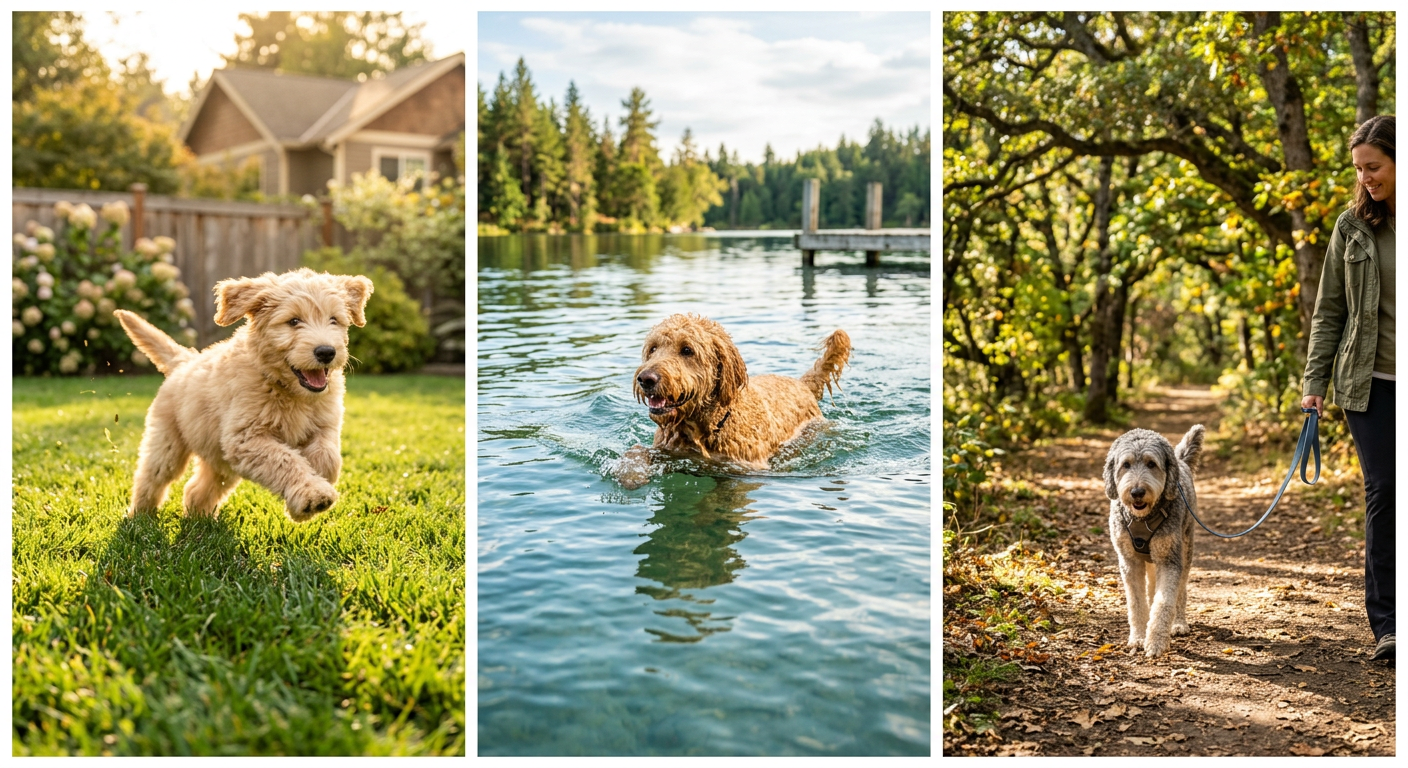
Variety is the spice of life — and the key to great dog exercise! Here are some of my all-time favorite activities that you and your pup can enjoy in your area:
1. Daily Walks and Neighborhood Sniff Safaris
Never underestimate the power of a good walk. For us dogs, walks aren't just physical exercise — they're a full sensory experience. Every fire hydrant, every patch of grass, every suspicious squirrel is information. Let your dog sniff! It's mental stimulation wrapped in physical activity.
For a comfortable walking experience, my mom Lacey loves the rabbitgoo Dog Harness. It's no-pull, adjustable, and doesn't chafe my magnificent fur. Highly recommend for daily walks in your neighborhood.
2. Fetch and Retrieval Games
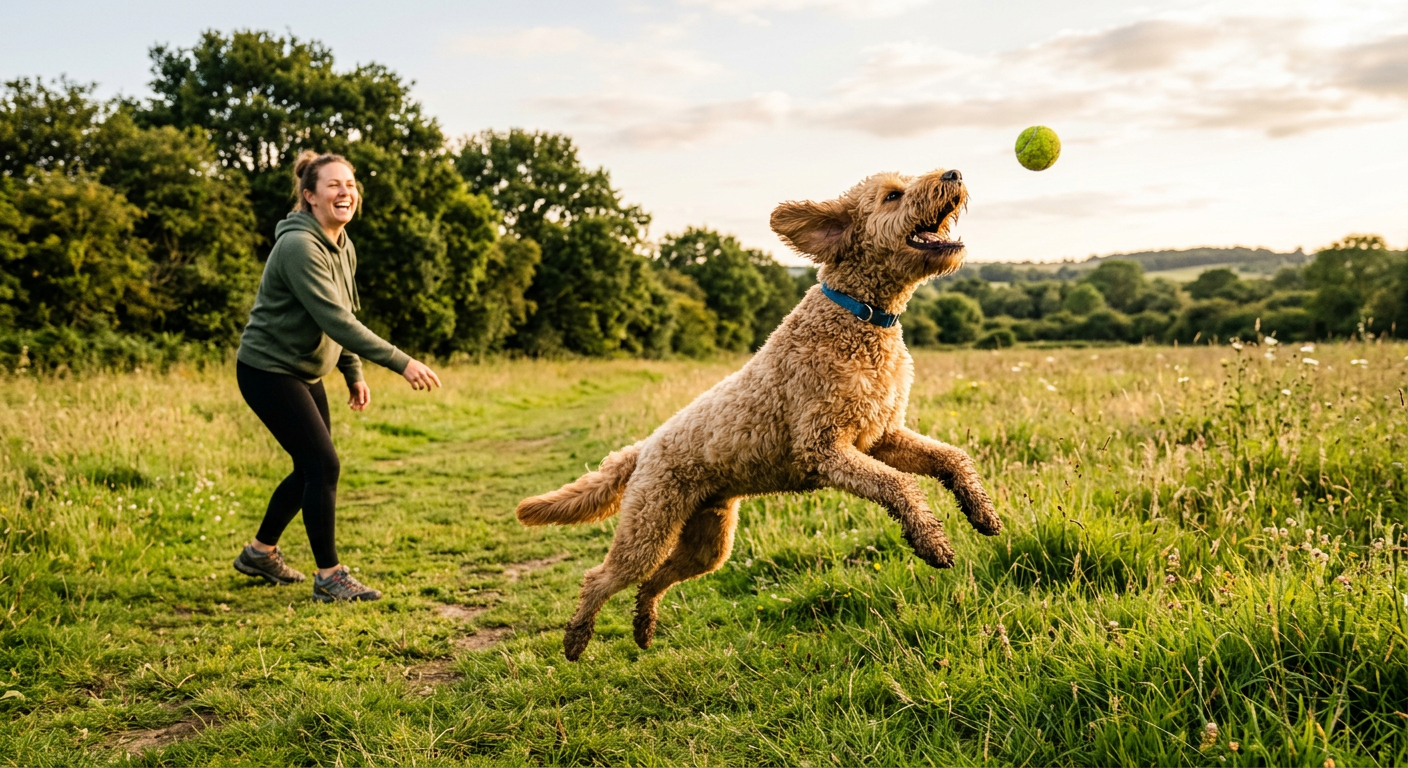
I'm a Doodle — fetch is basically in my DNA. A good game of fetch provides explosive bursts of cardio that tire us out fast. If your dog loves fetch, consider upgrading from a regular tennis ball to the Chuckit! Ultra Ball Launcher. My mom Lacey's arm was getting tired before we discovered this thing. Now she can launch balls across the entire park without breaking a sweat, while I get the workout of a lifetime.
3. Swimming
Swimming is a phenomenal low-impact exercise for a dog, particularly for those with joint issues or recovering from surgery. PetMD's guide on dog physical therapy highlights hydrotherapy as one of the best rehabilitation exercises available, building muscle without putting strain on joints. Check for dog-friendly beaches, lakes, or even canine swimming pools near you.
4. Dog Park Play Dates
Oh, you knew I was going to mention dog parks! There's nothing quite like off-leash play with other dogs. The wrestling, the chasing, the butt-sniffing diplomacy — it's exercise for a dog's body and social skills. Look for well-maintained dog parks near you that separate areas for large and small dogs. (Check out doggieparknearme.com for parks in your area — shameless plug, but hey, it's literally my website!)
5. Agility and Obstacle Courses
If your dog is the athletic type, agility training is an incredible workout that combines physical exercise with mental challenge. You can find agility classes in your area or even set up a DIY course in your backyard.
6. Joint Human-Dog Workouts
Here's something cool — you can actually work out with your dog. PetMD details exercises like wall sits, lunges, and step-ups that you can do while your dog participates alongside you. My mom Lacey sometimes does yoga in the living room, and I provide moral support by lying directly on her mat. I call it "doga."
Signs Your Dog Isn't Getting Enough Exercise
How do you know if your dog needs more dog exercise? Watch for these telltale signs:
- Destructive behavior: Chewing furniture, shoes, or anything they can get their paws on
- Excessive barking or whining: Pent-up energy has to go somewhere
- Weight gain: If your dog's waist has disappeared, it's time to move more
- Hyperactivity: Zoomies are cute, but constant bouncing-off-the-walls energy is a signal
- Attention-seeking behavior: Nudging, pawing, or staring you down (okay, I do this for treats too, but you get the point)
- Restlessness at night: A dog that can't settle down at bedtime probably didn't burn enough energy during the day
If you notice these signs, gradually increase your dog's daily activity. Start with an extra 10-15 minutes of walking and build from there.
Signs You're Over-Exercising Your Dog
On the flip side — and this is important — too much exercise can be harmful, especially for puppies, senior dogs, and brachycephalic breeds. Watch for:
- Excessive panting or drooling that doesn't stop after rest
- Limping or reluctance to move after exercise
- Worn or bleeding paw pads
- Lagging behind on walks when they normally lead
- Stiffness or soreness the day after activity
If your pup shows any of these signs, dial it back and consult your vet. Exercise should be enjoyable, not exhausting. For dogs who need recovery support, the PetFusion Ultimate Dog Bed with memory foam is a great investment. My mom Lacey got me one, and I can tell you — my post-park naps have never been more glorious.
Tips for Exercising Your Dog Safely
As a seasoned park-goer, here are my top safety tips for dog exercise:
- Always bring water: Dehydration is real, especially in warmer months. Carry a collapsible water bowl on every outing.
- Check the pavement temperature: If it's too hot for your human's hand, it's too hot for our paws. Walk during cooler morning or evening hours.
- Warm up first: Just like humans, dogs benefit from a gentle warm-up before intense activity. Start with a 5-minute walk before launching into fetch or running.
- Know your dog's limits: Brachycephalic breeds (Bulldogs, Pugs, French Bulldogs) overheat quickly. Giant breeds are prone to joint stress. Senior dogs need gentler sessions.
- Keep vaccinations current: Dog parks and communal exercise areas mean exposure to other dogs. Make sure your pup is up to date.
- Use a proper leash and harness: For your dog's safety and the safety of others, always use appropriate gear when exercising in public spaces.
- Watch the weather: Extreme heat, cold, and humidity all affect how much exercise for a dog is safe on any given day.
Indoor Dog Exercise Ideas for Rainy Days
Listen, I love the outdoors as much as the next Doodle, but sometimes the weather has other plans. Here are my favorite indoor dog exercise options:
- Hide and seek: Have your human hide and call you. It's a cardio and brain workout rolled into one!
- Tug-of-war: Great for building strength and burning energy
- Stair climbing: For adult dogs with healthy joints, running up and down stairs is a quick workout (skip this for puppies and seniors)
- Puzzle toys and treat dispensers: Mental exercise counts! A tired brain equals a tired dog.
- Indoor fetch: If you've got a long hallway, a soft ball and some enthusiastic throwing can do wonders
- Treadmill training: PetMD's urban fitness guide recommends home treadmills as a viable option for dogs who need exercise despite weather or space constraints. Always supervise and introduce gradually!
Creating a Dog Exercise Routine That Sticks
The best dog exercise plan is one you and your human can maintain consistently. Here's what my mom Lacey and I do:
- Morning: 30-minute walk through the neighborhood (sniff breaks included)
- Midday: 15 minutes of backyard fetch or tug
- Evening: 20-30 minute walk or dog park session
- Throughout the day: Puzzle toys, training sessions, and the occasional zoom around the house
That gives me about 60-90 minutes of physical activity daily, which is perfect for my breed and energy level. Your routine will look different based on your dog's needs — and that's totally fine! The key is consistency. Dogs thrive on routine, and once exercise becomes a daily habit, you'll notice massive improvements in behavior, health, and happiness.
Well, friends, there you have it — everything this Golden Doodle knows about dog exercise, served up with a side of tail wags and real talk. Whether your pup is a tiny Chihuahua who needs a quick trot around the block or a high-octane Husky who could run a marathon, the right amount of exercise makes all the difference in their health, happiness, and behavior. My mom Lacey and I have built our entire routine around daily movement together, and honestly? It's the best part of both our days. So lace up those sneakers, clip on that leash, and get moving with your best friend. Check out doggieparknearme.com to find an amazing dog park near you, and don't be shy — come say hi if you see a ridiculously handsome Doodle prancing around with a tennis ball. Until next time, stay active and keep those tails wagging! 🐾
— Auggie
Frequently Asked Questions
What is the best exercise for a dog?
The best exercise for a dog depends on their breed, age, and health, but brisk daily walks are the gold standard recommended by veterinarians. For most dogs, a combination of walking, fetch, and free play provides excellent physical and mental stimulation. Swimming is especially beneficial for dogs with joint issues or arthritis, as it builds muscle without straining joints. The key is variety — mix it up to keep your dog engaged and happy!
What is the 7 7 7 rule for dogs?
The 7-7-7 rule is a socialization guideline suggesting that by the time a puppy is 7 weeks old, they should have been on 7 different surfaces, eaten from 7 different containers, been in 7 different locations, met 7 different people, been exposed to 7 different challenges, eaten from 7 different containers, and been handled and touched in 7 different ways. This helps puppies develop into confident, well-adjusted adult dogs.
What is 'I love you' in dog language?
Dogs say 'I love you' in many beautiful ways! Soft eye contact (sometimes called 'soft eyes' or 'puppy dog eyes') is one of the strongest expressions of love — studies show it releases oxytocin in both dogs and humans. Other signs include leaning against you, following you around, bringing you their favorite toy, licking your face, and that full-body wiggle when you come home. Sleeping near you or on your feet is also a major sign of trust and affection.
What is the 3-3-3 rule for dogs?
The 3-3-3 rule is a helpful framework for adopting a new dog. In the first 3 days, your dog may feel overwhelmed, not eat much, and hide or test boundaries. In the first 3 weeks, they'll start settling in, learning routines, and showing more of their personality. After 3 months, your dog should feel fully at home, bonded with your family, and comfortable in their new environment. It's a reminder to be patient — adjustment takes time!
About Auggie
Hi, I'm Auggie! I'm a Golden Doodle who's been to more dog parks than most humans. My mom Lacey and I started Doggie Park Near Me to help every pup find their perfect park. When I'm not sniffing out new spots, you'll find me napping in the sun or begging for treats.
Learn more about us →More From Auggie

Dog-Friendly Restaurants and Patios: A Guide to Dining With Your Dog
Looking for dog friendly places to eat near you? I'm Auggie, a Golden Doodle who loves patio dining with my mom Lacey. In this guide, I'm sharing everything you need to know about finding dog-friendly restaurants, patio etiquette, essential gear, and safe food tips to make every outing a tail-wagging success!

Dog-Friendly Vacation Stays: Where to Travel with Your Pup
Woof! I'm Auggie, and my mom Lacey and I have sniffed out the best dog-friendly places to stay across the country — from dreamy Carmel-by-the-Sea to cozy mountain cabins. Get my insider tips on pet-friendly hotels, vacation rentals, what to pack, and how to be the best-behaved guest on four legs!

Indoor Dog-Friendly Activities for Rainy Days: Auggie's Ultimate Guide
Rainy day got you and your pup stir-crazy? I'm Auggie the Golden Doodle, and I've got the ultimate guide to indoor dog friendly places near me — from indoor dog parks and pet-friendly stores to at-home games that'll tire out even the most energetic furball. Let's make rainy days fun!