
Dog Dental Care 101: Everything You Need to Know About Your Pup's Pearly Whites
Hey there, friends — it's me, Auggie! Your favorite curly-haired Golden Doodle and resident expert on all things dog life. Today I want to talk about something that's near and dear to my heart (and my mouth): dog dental care. I know, I know — it doesn't sound as exciting as chasing squirrels or finding the perfect dog park near you, but trust me, keeping those chompers healthy is one of the most important things your human can do for you. My mom Lacey learned this the hard way when our vet pointed out some early tartar buildup on my back molars during a routine checkup. That was a wake-up call! Since then, she's become a total dog dental care champion, and I've become the Golden Doodle with the sparkling smile. So grab a treat (I won't judge), settle in, and let me walk you through everything you need to know to keep your dog's mouth healthy, fresh, and ready for all those sloppy kisses.
Why Dog Dental Care Matters More Than You Think
Let me hit you with a stat that made even my floppy ears perk up: 80% of dogs over age 3 have some form of periodontal disease. That's 8 out of 10 of us! According to the American Animal Hospital Association (AAHA), periodontal disease is the most common clinical condition in companion animals — and it's entirely preventable.
Now, I'm not trying to scare anyone. But as a dog who loves his kibble, his bully sticks, and the occasional sneaky bite of whatever my mom Lacey drops on the kitchen floor, I need my teeth to be in top shape. And so does your pup.
Dental care for dogs goes way beyond bad breath (though if your dog's breath could peel paint, that's definitely a sign something's up). Untreated dental issues can lead to serious symptoms like nasal or eye discharge, face pawing, drooling, loose teeth, and even organ damage when bacteria from the mouth enters the bloodstream. The Colorado State University Veterinary Teaching Hospital emphasizes that oral health is directly linked to overall pet well-being — and I couldn't agree more.
Understanding Periodontal Disease in Dogs
Before we dive into the how-to of a dog dental care routine, let's talk about what we're actually fighting against. Periodontal disease is a progressive condition that starts with plaque — that sticky film of bacteria that builds up on teeth after eating. If plaque isn't removed, it hardens into tartar (also called calculus), which irritates the gums and leads to inflammation.
Here's how it progresses, according to the AAHA dental care guidelines:
- Stage 1 — Gingivitis: Red, swollen gums. This is reversible with proper cleaning and home care.
- Stage 2 — Early Periodontitis: Up to 25% attachment loss around the tooth. You might notice some gum recession.
- Stage 3 — Moderate Periodontitis: 25-50% attachment loss. Pain and infection become real concerns.
- Stage 4 — Advanced Periodontitis: More than 50% attachment loss. Tooth extraction is often necessary.
The sneaky thing about dental disease? We dogs are masters at hiding pain. I could have a toothache and still wag my tail at dinner time. That's why regular dental checkups and a consistent dog dental care routine at home are so critical.
Building a Dog Dental Care Routine at Home
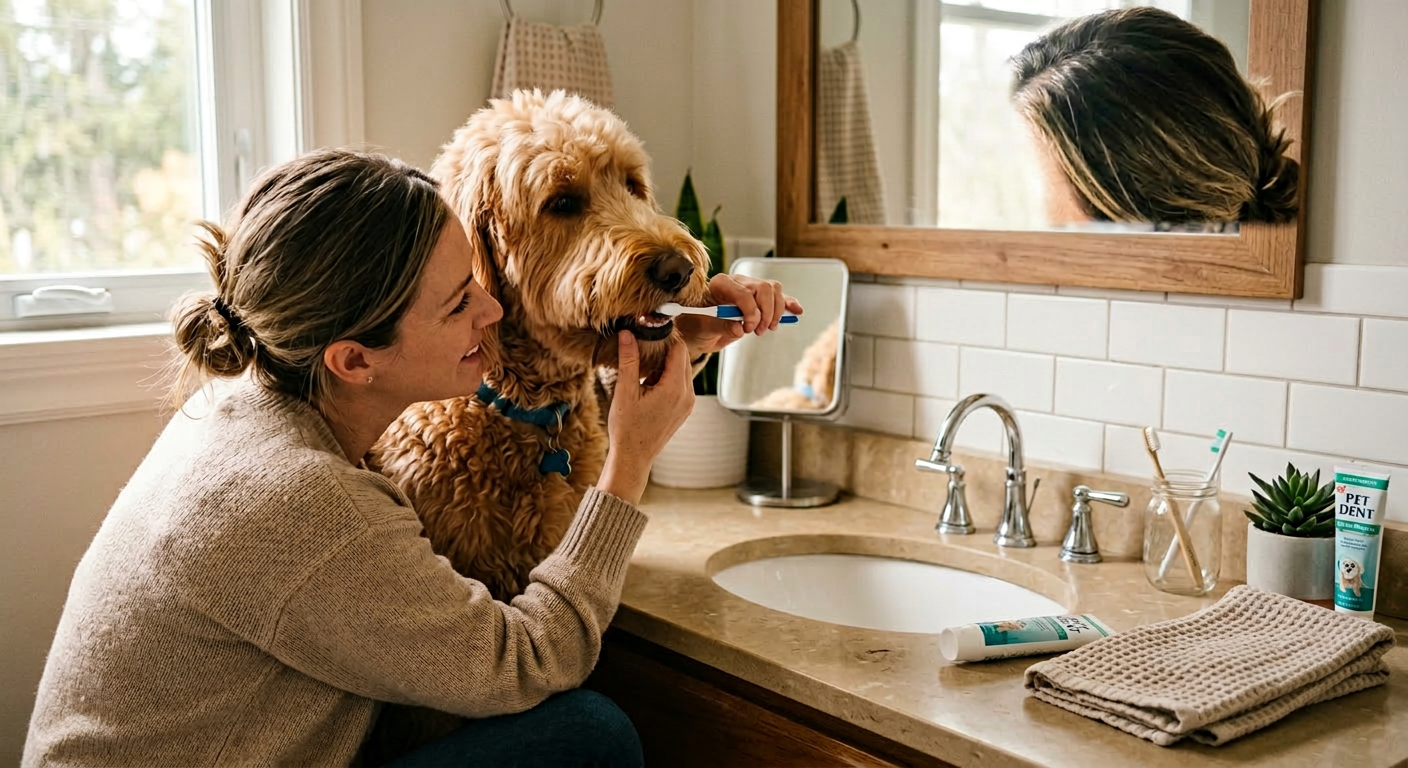
Alright, here's where the rubber meets the road — or the toothbrush meets the canine, if you will. The Veterinary Oral Health Council (VOHC) considers daily brushing the gold standard for oral hygiene in dogs. And before you roll your eyes and say "my dog would never let me brush their teeth" — I get it. I wasn't a fan at first either. But my mom Lacey was patient, she used tasty toothpaste, and now I actually look forward to it. (Okay, I mostly look forward to the chicken-flavored toothpaste, but still.)
Here's how to build a dental care routine for your dog, step by step:
Step 1: Start Slow and Make It Positive
Don't just shove a toothbrush in your dog's mouth on day one. Start by letting them lick some dog-safe toothpaste off your finger. Then gradually work up to rubbing their gums with your finger, then a finger brush, and eventually a real toothbrush. Reward every step with praise and treats.
Step 2: Choose the Right Tools
You'll want a toothbrush designed for dogs — they have softer bristles and angled heads that fit our mouths better. I personally love when my mom uses the Virbac C.E.T. Enzymatic Dog Toothpaste — it's enzymatic, which means it keeps working even after brushing, and the poultry flavor is chef's kiss. She pairs it with a H&H Pets Dog Toothbrush Set that comes with multiple sizes, so you can find the perfect fit whether you have a Chihuahua or a Great Dane.
Step 3: Brush Gently, Focus on the Gum Line
Angle the brush at 45 degrees toward the gum line and use gentle circular motions. Focus on the outside surfaces of the teeth — that's where plaque builds up the most. You don't need to pry your dog's mouth open to do the insides; our tongues do a decent job of keeping those surfaces cleaner.
Step 4: Make It a Daily Habit
Consistency is key. My mom Lacey brushes my teeth every evening after our last walk. It takes about two minutes, and it's become such a part of our routine that I trot over to the bathroom when I see her grab the toothbrush.
Beyond Brushing: Dental Chews, Toys, and Supplements
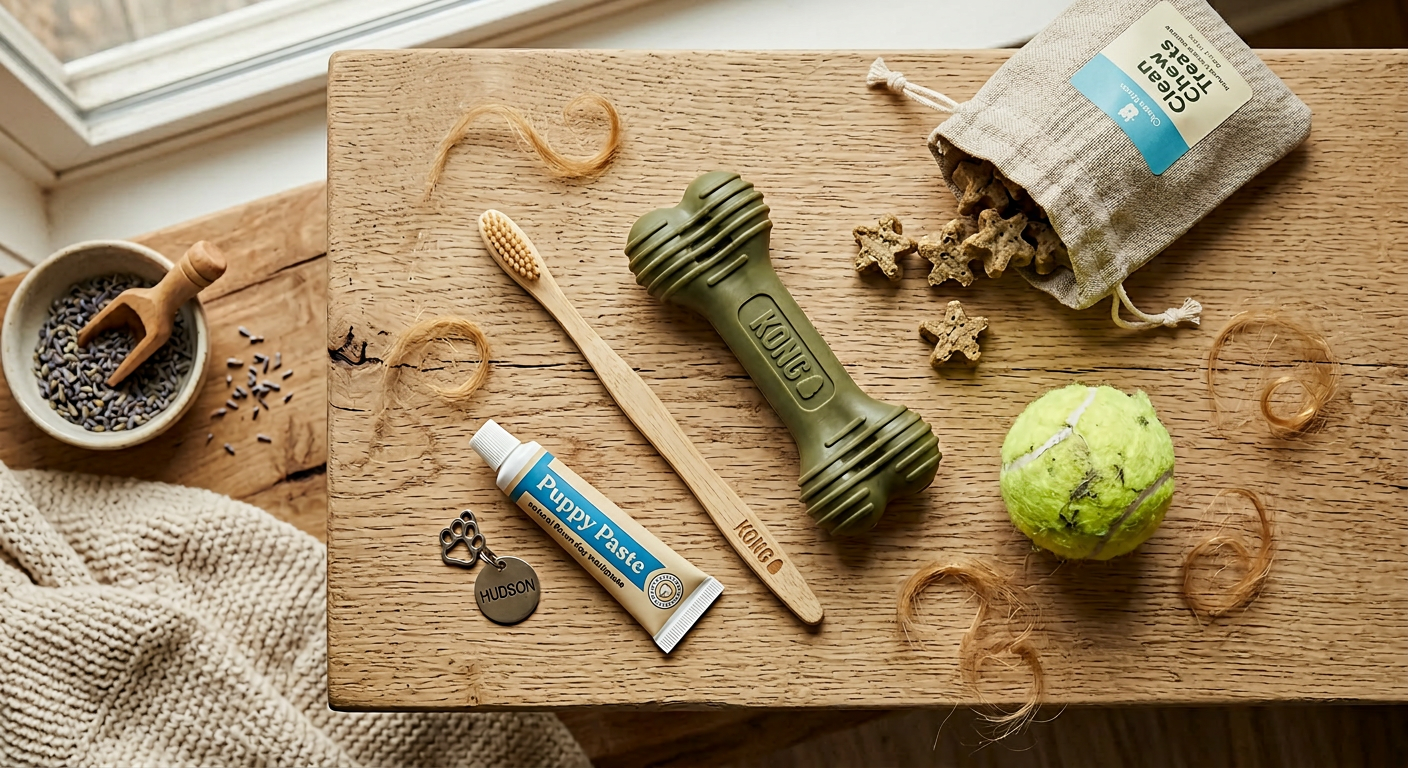
Now, I'm a realist. I know not every dog is going to sit still for daily brushing, and not every human has the time to make it happen seven days a week. The good news? There are fantastic supplemental products that can support your dog dental care efforts.
Dental Chews
Look for chews that carry the VOHC Seal of Acceptance — this means they've been clinically proven to reduce plaque or tartar. I'm a big fan of Greenies Original Dental Dog Treats. They're tasty, they clean my teeth as I chew, and they come in different sizes for dogs of all breeds. My mom always keeps a bag on hand at our house.
Dental Toys
Textured rubber toys can help scrape plaque off teeth during play. Look for ones with nubs and ridges. It's like getting a teeth cleaning while playing fetch — my kind of multitasking!
Water Additives and Dental Powders
These are becoming increasingly popular, and they can be a great addition (not replacement) to a dog dental care routine. Products like TropiClean Fresh Breath Oral Care Water Additive are tasteless and easy to use — you just add them to your dog's water bowl. They help reduce plaque-forming bacteria and freshen breath.
For dental powders, look for ones containing natural zeolites or seaweed-based ingredients. They can help soften tartar over time, making it easier to remove with brushing or professional cleaning. However — and this is important — none of these products replace brushing or professional dental care. Think of them as the dog equivalent of mouthwash: helpful, but not a substitute for the real deal.
Dental Diets
Some veterinary-formula kibbles are designed with larger kibble sizes and specific textures that help mechanically clean teeth as your dog chews. Ask your vet if a dental diet might be right for your pup, especially if they're prone to dental issues.
Professional Dental Cleanings: What to Expect
Even with the best at-home dog dental care routine, your pup will need professional dental cleanings. The American Veterinary Medical Association (AVMA) recommends annual veterinary checks of your pet's teeth and gums for early detection of problems.
The Colorado State University Veterinary Teaching Hospital recommends that dental cleanings under general anesthesia begin at age 1 for small-breed dogs and age 2 for large breeds. I'm a medium-to-large guy, so my mom Lacey scheduled my first professional cleaning right around my second birthday.
Here's what a professional dental cleaning typically involves:
- Pre-anesthetic bloodwork to make sure your dog is healthy enough for anesthesia
- General anesthesia (this is non-negotiable — dogs need to be fully asleep for a thorough, safe cleaning)
- Full oral examination including dental X-rays to check below the gum line
- Scaling to remove plaque and tartar above and below the gum line
- Polishing to smooth the tooth surface and slow future plaque buildup
- Treatment of any issues found, which may include extractions if necessary
The WSAVA global dental guidelines emphasize that anesthesia-free dental cleanings are not recommended because they only address cosmetic tartar on the visible tooth surface and cannot access the subgingival areas where the real disease process occurs.
I'll be honest — I don't remember a thing about my cleaning (thanks, anesthesia!), but I woke up feeling great and my teeth were sparkling. My mom Lacey said it was like watching a brand-new set of teeth emerge.
Signs Your Dog Needs Dental Attention
As I mentioned, us dogs are pretty stoic. But there are signs you can watch for that suggest dental problems:
- Bad breath (beyond normal "dog breath")
- Red, swollen, or bleeding gums
- Yellow or brown tartar buildup on teeth
- Difficulty eating or dropping food
- Pawing at the face or mouth
- Excessive drooling
- Loose or missing teeth
- Nasal discharge or sneezing (can indicate advanced dental disease)
- Reluctance to play with chew toys
- Behavioral changes like irritability or withdrawal
If you notice any of these signs, don't wait for your annual checkup — get your pup to the vet. Early detection can mean the difference between a simple dental cleaning and a painful, costly extraction.
How to Find Dog Dental Care Resources Near You
Finding the right dental care for your dog in your area is easier than you might think:
- Ask your regular vet. Most general practice veterinarians perform dental cleanings and can refer you to a veterinary dentist for complex cases.
- Search for AAHA-accredited hospitals near you. These practices meet higher standards of care, including dental protocols.
- Check VOHC.org for a list of accepted dental products available in your area.
- Look for veterinary dental specialists. If your dog needs advanced care like root canals or oral surgery, a board-certified veterinary dentist is your best bet.
- February is National Pet Dental Health Month — many vet clinics in your area offer discounted dental cleanings during this time!
My mom Lacey always says the best investment she makes in my health isn't the fancy dog bed or the organic treats — it's keeping my teeth clean. And honestly? I think she's right. (Don't tell her I said that though; I have a reputation to maintain.)
Dog Dental Care on a Budget: Tips That Actually Work
I know professional cleanings and dental products can add up. Here are some budget-friendly tips to keep your dog's dental care on track:
- Brush daily with an affordable toothbrush and enzymatic toothpaste. This is the single most effective thing you can do, and it costs pennies per day.
- Use raw carrots or apple slices as natural teeth cleaners. The crunchy texture helps scrape off plaque. (I personally love carrots!)
- Invest in a quality dental chew toy like the Benebone Dental Chew Toy — it lasts for weeks and provides ongoing dental benefits during play.
- Don't skip annual vet visits. Catching dental issues early saves money in the long run.
- Look for pet dental discount plans or pet insurance that covers dental procedures in your area.
Remember: prevention is always cheaper than treatment. A tube of dog toothpaste costs about $8. A dental extraction can cost $500-$3,000. The math speaks for itself.
Well, friends, there you have it — Auggie's complete guide to dog dental care! From daily brushing to professional cleanings, dental chews to knowing the warning signs, you now have everything you need to keep your pup's smile bright and healthy. My mom Lacey always says that taking care of my teeth is one of the simplest ways she shows me love, and I feel it every single day (especially when she pulls out that chicken-flavored toothpaste!).
If there's one thing I want you to take away from this post, it's this: don't wait until there's a problem. Start your dog dental care routine today, find a great vet near you, and make those pearly whites a priority. Your dog's whole body will thank you.
Now if you'll excuse me, I've got a Greenie calling my name. 🐾
Want more tips on keeping your pup happy and healthy? Explore our other guides on doggieparknearme.com and find the best dog parks, nutrition advice, and lifestyle tips near you!
Frequently Asked Questions
What is the average cost of a dental for a dog?
The average cost of a professional dental cleaning for a dog ranges from $300 to $800, depending on your location, the size of your dog, and the extent of care needed. If extractions or advanced procedures are required, costs can climb to $1,500-$3,000 or more. Many vet clinics near you offer payment plans, and some pet insurance policies cover dental procedures. February is National Pet Dental Health Month, so look for discounted cleanings in your area during that time.
What is the best way to care for your dog's teeth?
The best way to care for your dog's teeth is a combination of daily brushing with an enzymatic dog toothpaste, VOHC-approved dental chews, and annual professional dental cleanings under anesthesia at your vet. Daily brushing is considered the gold standard by the Veterinary Oral Health Council (VOHC). Supplement with dental toys, water additives, and regular vet checkups for a comprehensive dog dental care routine.
What removes plaque off dogs' teeth?
Daily brushing with a dog-specific toothbrush and enzymatic toothpaste is the most effective way to remove plaque from your dog's teeth. VOHC-approved dental chews and treats can also help reduce plaque buildup through mechanical scraping action. For tartar (hardened plaque), a professional dental cleaning under anesthesia is necessary — tartar cannot be safely or effectively removed at home. Water additives and dental powders can help slow plaque formation between brushings.
Do dental powders really work for dogs?
Dental powders can be a helpful supplement to a dog dental care routine, but they should not replace brushing or professional cleanings. Some powders containing natural zeolites or seaweed-based ingredients (like kelp) have shown promise in helping soften tartar and reduce plaque buildup over time. Look for products with the VOHC Seal of Acceptance for verified effectiveness. Always consult your vet before adding a new dental product to your dog's routine.
About Auggie
Hi, I'm Auggie! I'm a Golden Doodle who's been to more dog parks than most humans. My mom Lacey and I started Doggie Park Near Me to help every pup find their perfect park. When I'm not sniffing out new spots, you'll find me napping in the sun or begging for treats.
Learn more about us →More From Auggie

Doggie park near me: Auggie the Golden Doodle's guide
Hey there, I'm Auggie the Golden Doodle, and I'm excited to share my adventures at a doggie park near me! In this post, you'll discover insider tips on finding local dog parks, learn about park safety, health benefits, and even pick up handy gear recommendations. Join me as I sniff out the best spots, from hidden neighborhood gems to park reviews backed by reputable studies. Let the park adventure begin!

Dog Dental Treats That Actually Clean Teeth: A Golden Doodle's Honest Guide
Hey, it's Auggie! I've chewed my way through dozens of dog dental care treats to find the ones that actually clean teeth — not just taste good. In this guide, I share VOHC-approved picks, vet-backed tips, and my personal favorites to keep your pup's smile sparkling between brushings.

Dog Dental Care on a Budget: Affordable Options That Work
Hey, it's Auggie! I sniffed out the best affordable dog dental care options so your pup can keep their pearly whites sparkling without emptying your wallet. From budget-friendly products to low-cost clinics near you, I've got all the tail-wagging tips your human needs.